

How To Create A Self-Sufficient Tiny Home
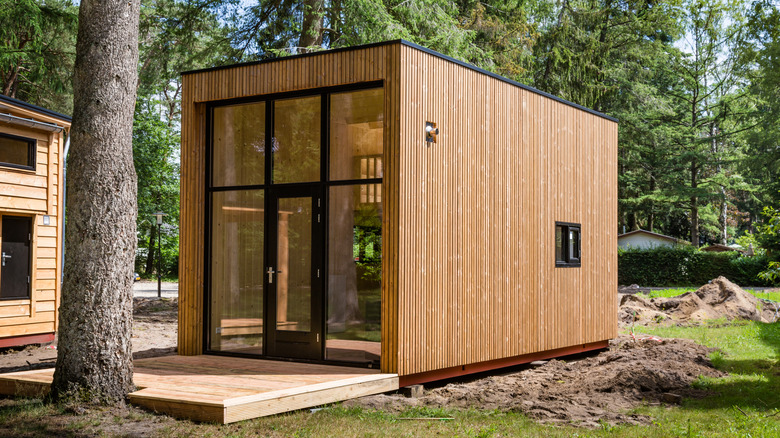
In uncertain economic times, tiny homes offer a more affordable way of living, but the benefits don't stop there. These compact spaces encourage simplicity and creativity, help you learn to live with less, and support off-grid living or travel-focused dreams. While their footprint might be limited, there are many tiny home hacks to maximize small spaces, and customization options are almost endless. Best of all, the savings don't stop at the home's purchase price. You can turn your home into one that is self-sufficient and doesn't depend on local utilities by addressing four main systems: power, water, waste, and heating.
Unlike a traditional home hooked up to local utilities, creating a self-sufficient tiny home requires more careful thought, as every ounce of water and watt of power must be considered. Regional weather patterns can also affect the systems you choose, which is why you should keep weather in mind when buying a tiny house. For example, areas with consistently sunny conditions will be better at capturing solar energy than tiny homes in cloudier regions, and homes in frigid regions will need more attention to their heating systems than those in mild areas.
Power and water systems for a self-sufficient tiny home
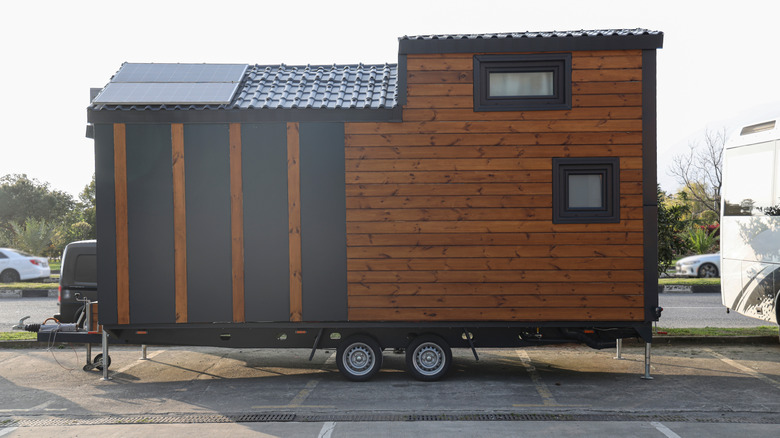
The most important self-sufficiency features in a tiny home may vary by user preference, but typically encompass water and electricity. Fortunately, you can harness electricity from the sun in the form of solar panels to power lights and appliances. Battery backups can be installed to store excess energy, allowing you to generate electricity whenever you need it.
Capturing water is a bit trickier, though. There are generally two ways to go about this when complete self-sufficiency is the goal: if your tiny home is stationary, consider adding a well or cistern; if the tiny house won't be stationary, a rainwater collection system can be used, depending on local regulations. With either of these systems, filtration will be needed to ensure the water is safe to use and consume. A third option (somewhat less sufficient) is to install a water tank in the home that can be manually filled. You can then have water hauled to the site or find a clean water source to refill the tank when needed.
Addressing waste and warmth when living in a tiny home
With water and electricity in place, two more essential systems remain: waste and warmth. One of the best ways to handle human waste is to install a composting toilet. Compost toilets are the perfect choice for tiny home bathrooms because they turn waste into nutrient-rich compost that can be used as fertilizer. No septic system is required, and as long as they're well-maintained, they don't smell bad.
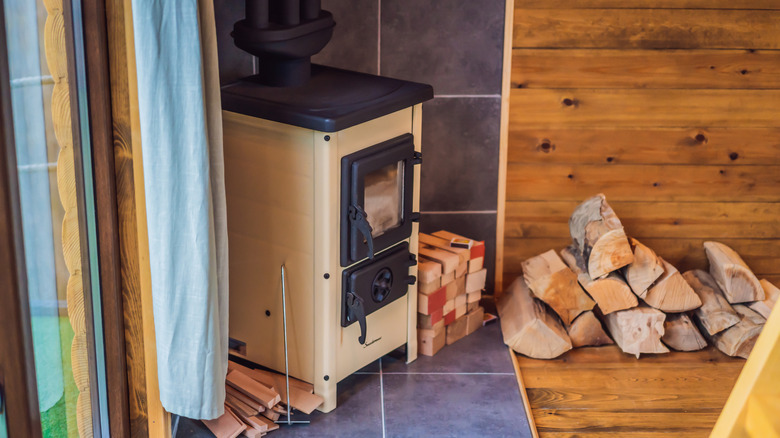
Finally, you'll need to address your heating and cooling systems, and depending on your needs, the options are pretty vast. If you live in a cooler region and are only concerned about heating, wood stoves provide a self-sufficient way to stay warm. If cooling is also a concern, a mini-split powered by harvested solar power can heat and cool your home. You can further boost your home's efficiency by installing energy-saving appliances, ensuring the walls are properly insulated, and opting for LED lighting. However, the systems of power, water, warmth, and waste are the four cornerstones you need to address when aiming for complete self-sufficiency.