

8 Common Items That Can Keep Your Outdoor Planters Insulated During Winter
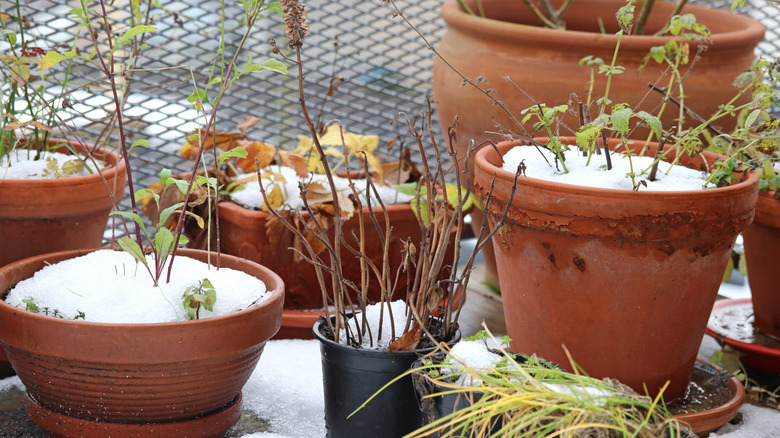
Whether you're a seasoned gardener or a novice just trying to keep a few plants alive, with the arrival of winter comes concern for your outdoor plants. Every plant parent wants to ensure their garden survives the cold, and there are plenty of hacks out there to help. Specialty items like frost blankets are a good investment, and clustering plants together is a simple trick to protect outdoor plants by creating a microclimate that encourages temperature regulation. But it's not just the plants that need protection from frigid temperatures — planter pots can also succumb to a harsh winter.
Popular planter materials like terracotta and ceramic are prone to cracking or breaking due to the water in the soil expanding as it freezes. Planters that endure frequent freeze-thaw cycles during the winter are even more at risk. While planter materials vary in their temperature sensitivity, insulating planters also helps protect the soil in them, and ultimately, the plant itself. The soil in planters is much more vulnerable to the cold compared to in-ground soil, which puts the roots at higher risk, too. In fact, pots can even be buried in the ground as a winterizing trick. Whether you need a quick solution in a pinch or you are planning on upcycling a few items around the house this winter, here are eight common items that will help insulate your outdoor planters:
Garbage bags
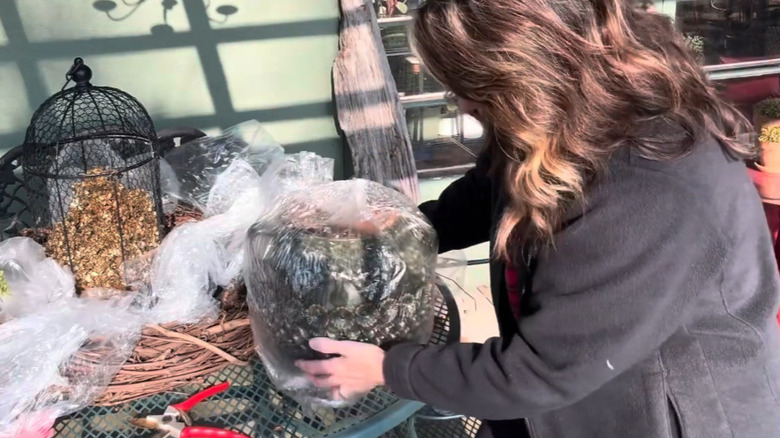
They may not be the most attractive option, but plastic garbage bags provide excellent insulation for your planter pots. You can simply place your planter in a garbage bag or plastic grocery bag and secure it to the top of the pot, making sure your planter has adequate room for draining. You can also cut the bottom of the bag open and place it around the planter. While plastic isn't ideal since it isn't breathable and can overheat, you can cover the plant and planter together in plastic in a pinch.
Burlap
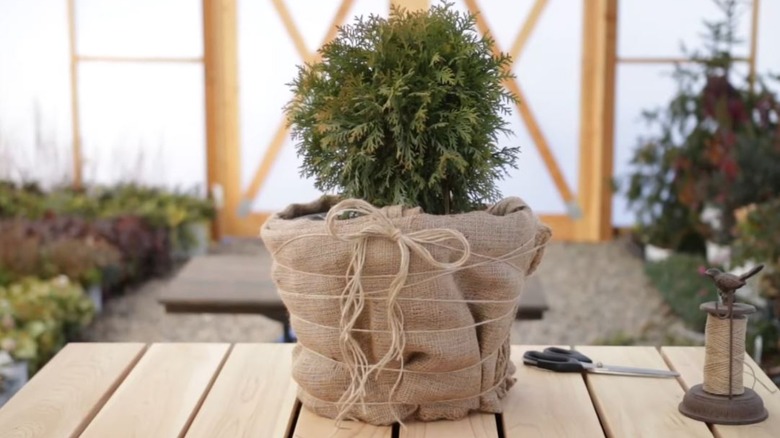
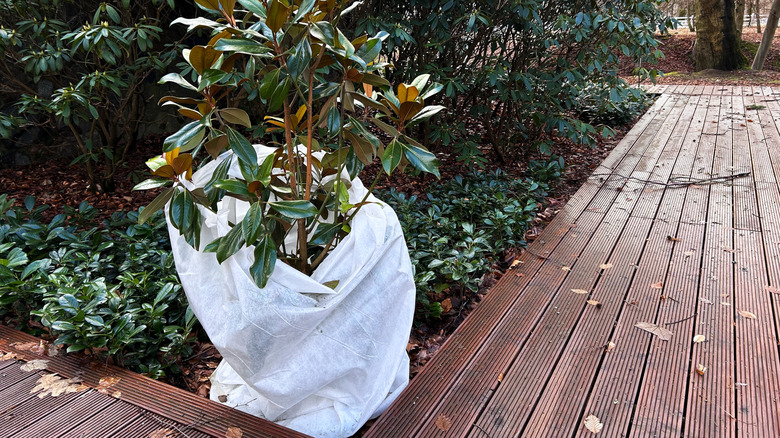
While many options on this list are intended only for the planter itself, burlap can help insulate both plant and planter. The natural, breathable material is safe for covering plants and will provide plenty of ventilation and insulation. Plus, burlap makes for a more attractive planter covering. Starting at the bottom of the planter, wrap burlap around the pot and up the plant, then secure it with twine. You don't need to wrap it up too tightly, but you can cinch the plant in just a bit so it doesn't succumb to the weight of heavy snow.
Leaf mulch
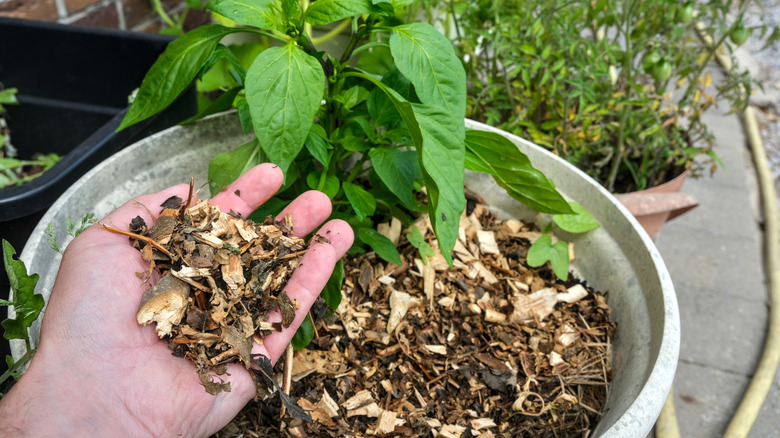
Protect your planters by protecting the soil. Mulch is an effective soil insulator, and you can use leaf mulch made from the fallen leaves in your yard for an easy and free planter solution. Just grind up leaves using the lawn mower with the collection bag attached. Then, use the mulch as a topsoil layer in your planters. Insulating the soil with leaf mulch will help prevent the moisture in the soil from freezing and expanding, protecting the planter in the process. Plus, leaf mulch can serve as fertilizer in your potted plants.
Blankets
Put your old, worn-out blankets to good use in your garden. Blankets provide additional protection for plants from those unexpected frosts — and natural fibers are always better for the plant than plastic. They can also keep your planter pots cozy and warm all winter long. While this list isn't about aesthetics, how adorable would a container garden wrapped in coordinating blankets be! Cut large blankets up and tie each piece around a pot like a scarf to insulate your planters while giving them a cute look for the season.
Bricks or pavers
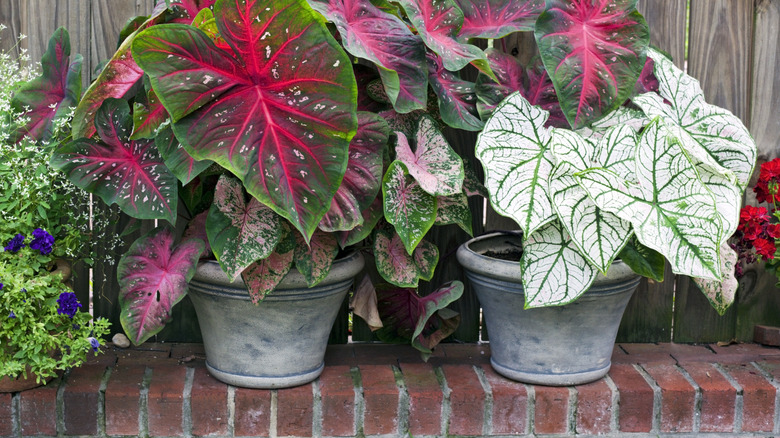
Bricks are effective heat insulators, and you can use them to radiate warmth for your planters. Let the bricks soak up the sun during the day, then place them around your planters at night. You can also rest your planters on top of bricks. This will also allow the planter to benefit from the bricks' heat retention while also keeping them off the frozen ground. Bricks under planters are also beneficial for the plants' root systems by regulating temperatures from the bottom up.
A wall or fence
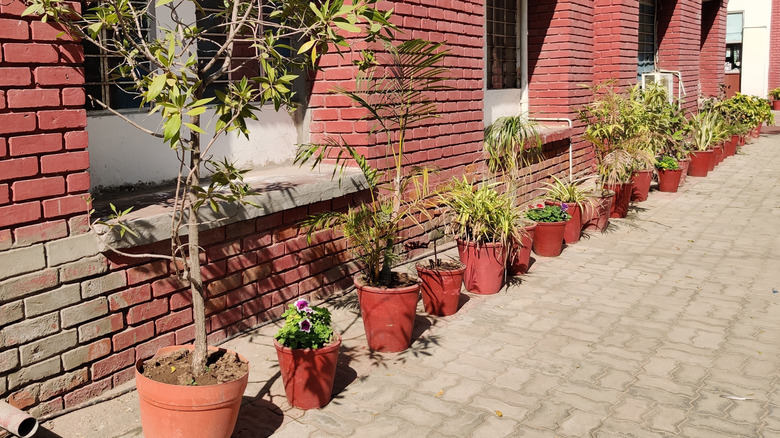
Chances are you have access to a wall or fence around your home, and you can use it to your planter's advantage this winter. Simply place your planters against a wall of your home or a solid fence that gets a lot of sun exposure. The structures will radiate some heat while also protecting your planters from wind. The type of fence or wall material also matters — a brick wall will work best, and the darker the material, the better.
Bubble wrap
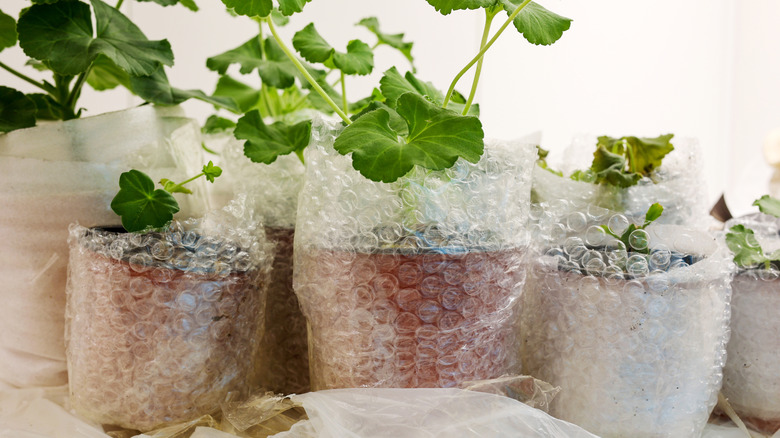
Bubble wrap is a common, albeit unexpected item that will protect your planters from cold weather. Just wrap the planter pot with bubble wrap, ideally with a couple of layers to insulate the pot and protect the roots within. The plastic will attract heat from the sun, and the air bubbles will help trap it, keeping the planter nice and warm. Like garbage bags, bubble wrap isn't a great option for covering the plant itself, though, as it doesn't provide sufficient airflow.
Milk jugs
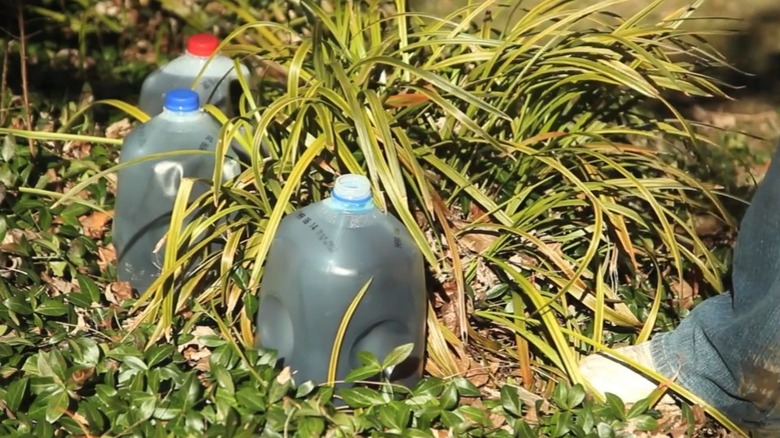
Milk jugs can help protect planters during colder months — inside and out. Placing an empty milk jug in your planter (with the cap on) under the soil will allow it to absorb some of the pressure as the water in the soil freezes and expands, putting less pressure on the pot and preventing cracking. Fill milk jugs with water and let them sit in the sun, then surround your planters with the warm jugs at night. Food coloring can be added to the water to make it darker to retain more heat.