

The Bathroom Item That Removes Buildup From Hot Hair-Styling Tools
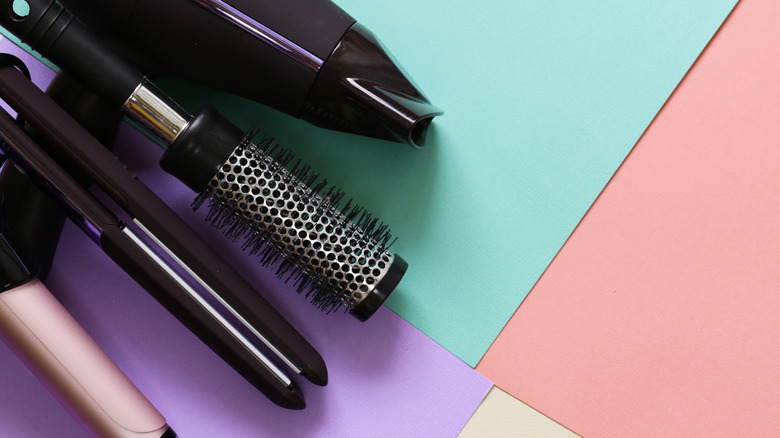
If you've noticed a sticky residue accumulating on your hot hair-styling tools, chances are you're dealing with a lot of product buildup. Materials like hair oil, styling products, and even dead skin can collect on your hair straighteners, curling irons, curling wands, and brushes, making them slower to heat up. While it may seem like an overwhelming task to clean this residue off of your heated hair tools, it's actually a very simple process that is totally safe and uses a basic item you probably already have: a non-gel toothpaste. Toothpaste is a versatile item you can use throughout your home. There's a toothpaste hack for glass cooktop scratches, and it can even help keep your coffee mugs stain-free.
If you use your hair tools frequently, you may need to start a regular cleaning routine with your toothpaste to keep your tools working to their fullest potential. Ideally, if you're someone who uses a lot of product, you should be cleaning your tools at least once every two weeks. Not only will this help them to last longer, but you'll avoid having to scrub off stubborn buildup once it has accumulated for a few months.
How to clean hair-styling tools using toothpaste
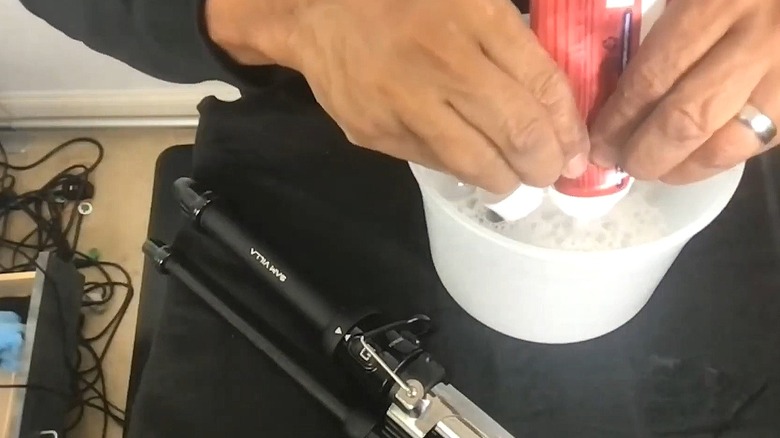
Since your hot hair-styling tools, like a straightener or curling iron, use electricity, it's important to make sure these items are fully unplugged and turned off while you begin the cleaning process. To give the tools a gentle clean first, you can dip a soft cloth into a mix of warm water and dish soap, wiping down each item. Next, add a generous amount of non-gel toothpaste to the warm, soapy mixture, and stir it in. Toothpaste, or a simple homemade baking soda paste, works as a gentle abrasive to remove product buildup on your styling tools. (You can even mix toothpaste and baking soda to create a rougher paste that's still gentle on your styling tools.)
You can either use a toothbrush to lightly scrub any stubborn product buildup with the toothpaste or apply the paste to the affected area. Leave it on for at least 15 minutes, or, if the buildup is heavy, you can leave it on overnight before wiping it clean with a soft cloth. Make sure your tools are completely dry and clear of product before turning them on for use once more.