

For Longer-Lasting Color On Your Poinsettias, Use This Type Of Fertilizer
We may receive a commission on purchases made from links.
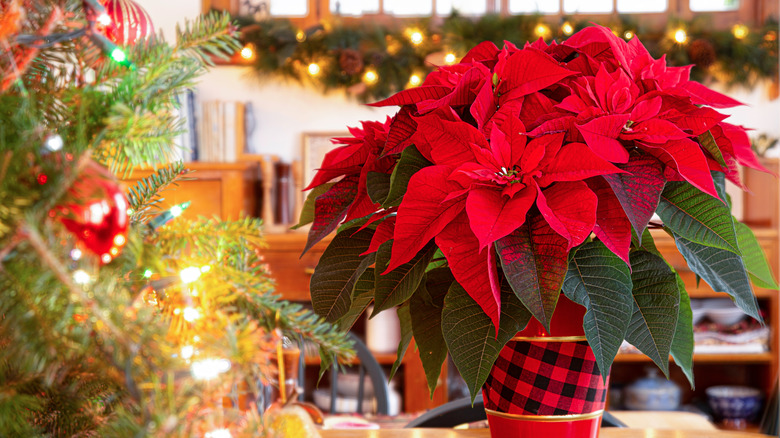
A Christmas favorite often sold in pots, the poinsettia (Euphorbia pulcherrima) comes alive in brilliant colors which add a bit of holiday cheer anywhere you place one. If you want to sustain that beautiful coloring for longer, fertilization plays a big part. The best fertilizer for longer-lasting poinsettias is all-purpose or balanced fertilizer, meaning it features equal amounts of needed nutrients. While plants get nutrients from the soil, the dirt only contains so much, so fertilizer application fills the gap.
You don't need to fertilize your poinsettia if it's in active bloom, meaning it can wait until after the holidays. After blooming stops, you can keep your poinsettias thriving with one simple addition to the soil. Before you choose a fertilizer, however, it helps to know what gives the poinsettia its color. Contrary to what you may think, what appears to be the poinsettia's "blooms" aren't flowers at all, though they may have a petal appearance. They're bracts, or modified leaves, and they're the source of the plant's iconic color, changing based on its light conditions. The actual flowers, or cyathia, are small and yellow and can be found situated inside the bracts. Keeping all those colors vibrant requires consistent nourishment, so using the right fertilizer supports healthy growth. By keeping an eye on the health of your plant, you can keep your poinsettias alive all year-long, not just during the holidays.
The appropriate fertilizer for poinsettias
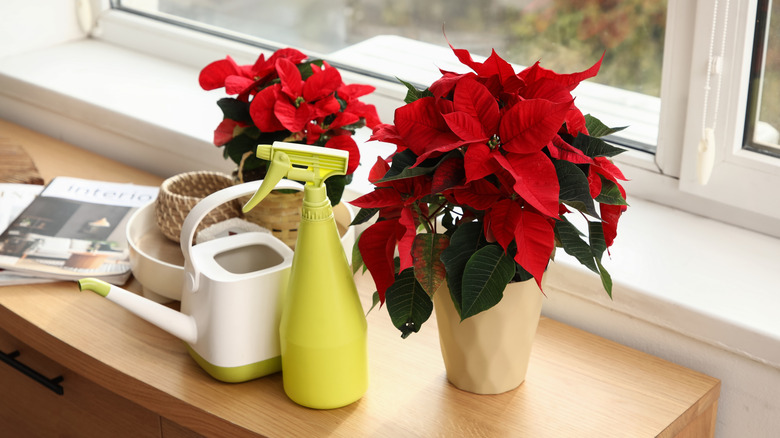
There are a variety of all-purpose fertilizer brands, and each may differ in application. When buying a fertilizer for poinsettias, you can choose between liquid or granular versions, but liquid types are easier to use. What matters is the fertilizer numbers on the package and what they mean, such as 5-5-5, 10-10-10, or 20-20-20, which correspond to the nitrogen, phosphorus, and potassium amounts present. Liquid fertilizers are easy to apply and you can easily dilute them if needed. Sold in either water-soluble or concentrated form, they deliver fast nutrients. You can also buy synthetic (i.e. lab-made) or organic versions. Synthetic versions typically feature quicker nutrient delivery than organic fertilizers and are more beginner-friendly. One easy option is Miracle Gro Pour & Feed Plant Food, which can be used with all potted plants.
The best time to fertilize your poinsettia is after you see new growth, including new stems, leaves, or bracts. Whatever fertilizer you choose, carefully follow the directions to avoid burning the poinsettia's roots. Experts advise fertilizing every three to four weeks after this to keep your plant nourished and healthy, mixing it with water for half the strength. Pay attention to changes in your poinsettia's appearance, including yellowing and wilted leaves, stalled growth, and dropping bracts as these indicate overfertilization.