

Planning To Repurpose Old Batteries? Here's Why You Shouldn't
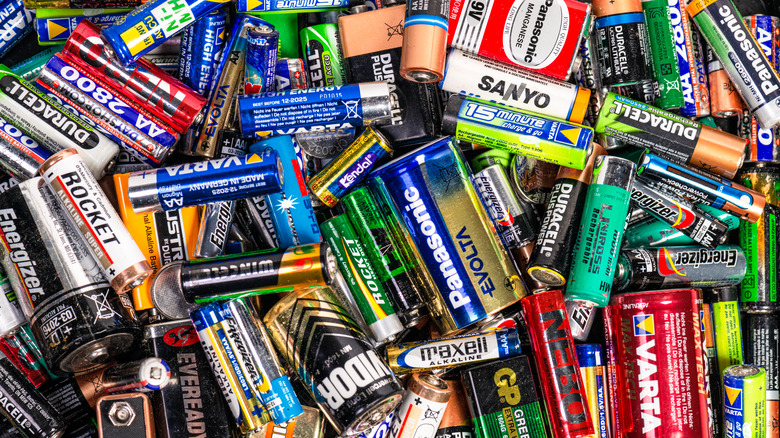
We hear a lot about the dangers of lithium-ion batteries, but many of the batteries that power our lives (our cars, phones, calculators, medical devices) might use a variety of other battery chemistries that can be dangerous in their own ways. What do you do with old batteries when they run out of juice? If you're of the reuse and repurpose school of thought, it's tempting to find alternative purposes for all those batteries, and you can find many craft websites suggesting creative uses for your old batteries — everything from mini-fans to tiny flashlights. But many of those suggestions rely on the fact that just because your old battery doesn't have enough power to run the device it was originally in, that doesn't mean it is completely empty of power. And anything that has enough power to do something good also has the power to do something very bad — like setting your house on fire or poisoning the water you drink.
Batteries commonly contain two terminals or nodes, a positive and a negative one, and when any material that can conduct electricity connects those two notes, a circuit is created. That conductive material can heat up to the point where it causes a fire. Leave a "dead" battery — even those nickel-sized ones — in a drawer with loose change, nail clippers, or papers held together by a staple, and you run the risk of starting a fire. Storing old batteries also raises the possibility of them becoming corroded and leaking toxic or hazardous materials, like lead, sulfuric acid, cobalt, cadmium, mercury, nickel, and silver. Don't store your old batteries, hoping to some day put them to some creative use. If you really want to reuse or repurpose old batteries, let a hazardous materials recycling facility do it for you.
How to recycle old batteries
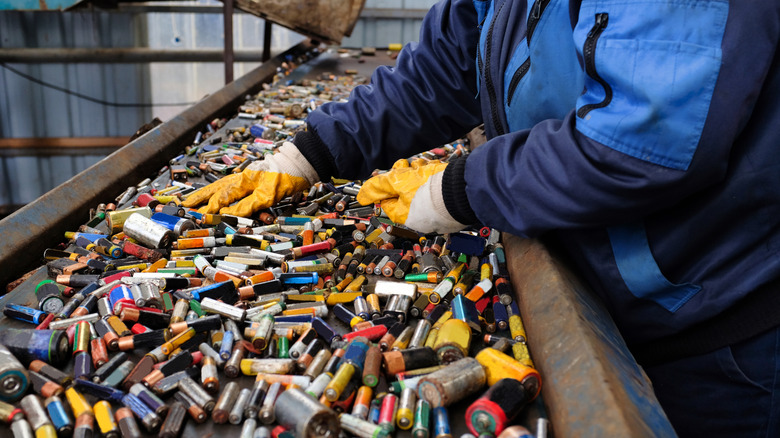
To temporarily store your batteries until you can appropriately dispose of them, place them individually in plastic bags or cover the nodes with electrical tape so that they cannot conduct electricity. Once you're ready to declutter your home of used batteries, make sure you know which kinds of batteries are safe to throw into your trash and which aren't. Place the wrong batteries in the trash and the nasty chemicals inside them can leach out of the landfill and into the groundwater — groundwater that can make its way into streams, lakes, oceans, and the marine animals that live in them, and potentially into humans who eat those animals. Batteries are among the common items you shouldn't be putting in your recycling bin. For batteries that don't go in the trash, they should go to a facility that accepts hazardous waste. Earth911.com can help you find hazardous waste recycling centers in your area.
Your ordinary single-use batteries, like 9-volt, AA, and AAA batteries, are usually made of alkaline or zinc carbon. Because they don't contain toxic acids, they are generally safe to throw away in the trash, unless your local municipality restricts it. But look closely: many of those ordinary batteries are made of nickel cadmium, especially if they are rechargeable, and they need to go to a hazardous waste facility. So, too, do the button-sized batteries in hearing aids or watches, batteries containing nickel, lithium ions, or lead acid. The good news: many of the metals in batteries are very valuable and are highly recycled, meaning you're likely putting your old batteries to far better use by properly disposing of them than if you used them to make a mini-fan or flashlight.