

The Valuable Christmas Collectable To Get At The Thrift Store (If You're Lucky Enough To Find It)
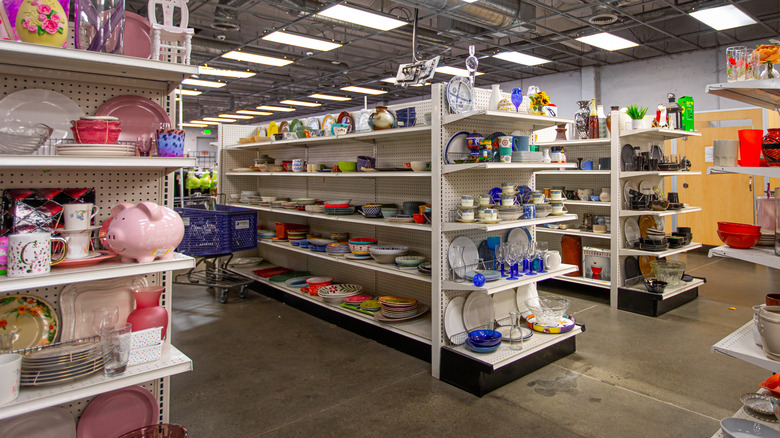
The wooden nutcracker: It evokes images of dancing toy soldiers and mouse kings, sugar plum fairies, and above all, Christmas nutcracker decor. Perhaps more than any other object, it is the enduring symbolism of Christmas in wooden toy form, thanks to its long history, hailing back to 15th-century Germany. And while many modern iterations of the doll are made in China, Thailand, and even the U.S., it's impossible to overlook the importance of the original German nutcrackers for collectors. If you're lucky enough to find one of the most collectible ones in a thrift store, you'll pay as much for it as a high-end gaming laptop – again, if you're lucky.
The invention of the now-ubiquitous Christmastime decor trend originally arose out of necessity. In the city of Sonneberg in the German state of Thuringia, local craftsmen were forced to become carpenters when work at the local mines ran out. Among the items they made were little toys – nutcrackers and other dolls – which were eventually sold to tourists. (The little town in the Ore Mountains is even known as "World Toy City," per the Council of Europe.)
Early German nutcrackers began as folk art, and like most art movements, reflected the times from which they arose. Makers of the dolls began carving the pieces in their now-familiar shape – soldiers, policemen, and kings – as a dig against the ever-changing governments that moved in and out of Germany at a pace only rivaled by modern short-term Airbnb guests. Among the most famous in this cadre of characters was a Napoleon nutcracker, a sad commemoration of the French ruler's time in Germany in the 1800s.
Names to look for when you're searching for collectable nutcrackers
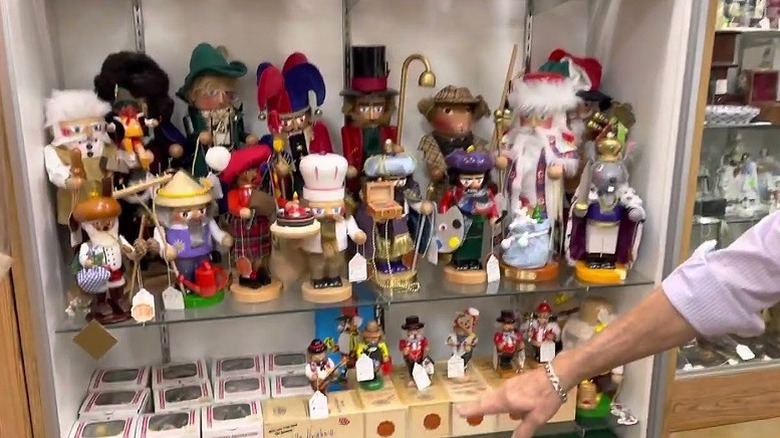
Thanks to influences like nutcracker plays and ballets each Christmas and American GIs bringing nutcrackers home from West Germany following World War II, the demand for the wooden dolls has been consistent each Christmas. While most of the wooden nutcrackers that are available on the market today are cheap and mass-produced, there are some that cost upwards of $1000 or more. In 2015, an English sailor nutcracker, sold for £1,500. Another one, dating back to the early 1700s, was sold at an auction house for more than £6,000 in 2022.
Some of the most well-known collectible nutcrackers were made by the German companies, Steinbach or Erzgebirge. The Steinbach company, which still exists today, set itself apart from other nutcracker manufacturers by offering limited-edition pieces. Many of those are the pieces you'll find at thrift stores, though plenty of them are to be found at auction houses, and those dolls run into the hundreds, even thousands of dollars, if they come from the World War II era or before. The first of those collectible Steinbach pieces was a nutcracker that resembled King Ludwig II. Only 3,000 of those nutcrackers were made.
The Steinbach company set itself apart further by creating nutcrackers that deviated from the soldier mold. Creatures from fairy tales and mythology, U.S. presidents, and popular culture icons, like Mickey Mouse and characters from "The Wizard of Oz," have been made into nutcrackers. And while many of those pieces are vintage, most of them are "new" vintage Christmas decor pieces, arising out of the cultural influences of the 1980s.
Nutcrackers from collectible eras or regions
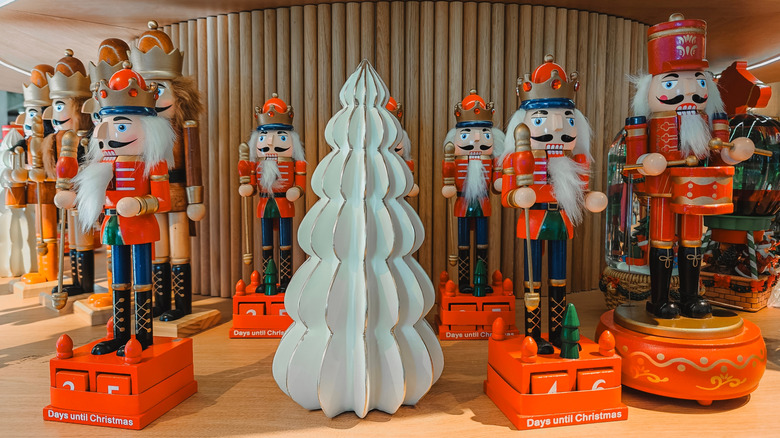
The Ore Mountain or Erzgebirge region is in Eastern Germany. Many of the most collectible nutcrackers come from the former German Democratic Republic, or East Germany. These are hand-carved, and despite being hindered by the politics of the time, many of the nutcrackers from East Germany made it into the hands of American GIs in West Germany. If you happen to find one of those, you'll likely pay hundreds of dollars for it, unless the thrift shop owner doesn't know what it has.
Dolls from manufacturers whose families were originally from East Germany and who headed to the West, like Otto Ulbricht's family, find favor among collectors. After East and West Germany reunified in 1990, Ulbricht's son, Christian, went back to the Eastern part of Germany to reestablish the family business in its place of origin. Many of the pieces from that shop have caught the eye of collectors, and even the company's new pieces cost several hundred dollars. The large sizes run into the thousands, even ones that aren't vintage.
Finally, how can you tell if that nutcracker you spied at the thrift store is a valuable vintage find? If it has an actual working nutcracking mechanism, it might actually be a vintage model. You should also look on the base (or even the box, if it has one) to see if it has the original maker's name and signifies it's made in Germany.