

Bay Leaf Plant Varieties That Grow Well In Containers And Outdoor Gardens
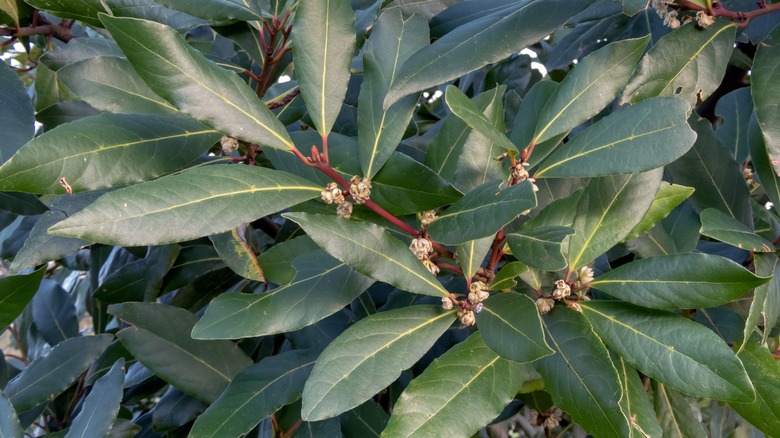
Bay leaves have a more subtle flavor than more popular herbs like basil or rosemary. But they can provide the perfect supporting role in many dishes, particularly soups and stews that require simmering. They can also be used around your home in different ways. Bay leaves can be used to ward off stink bugs and other pests, for example. If you want to add this versatile herb to your culinary or household toolbox, it's easy to grow for a fresh, abundant supply. Bay leaf plants are just as versatile as their leaves. Most varieties will grow well in kitchen gardens or containers, given the right conditions. The bay leaves most commonly called for in recipes are from the sweet bay plant, Laurus nobilis. Sweet bay is native to the Mediterranean area and thrives in full or partial sun. It tolerates a range of soil conditions, from clay to loam and sand.
It's grown as both a tree and a shrub, and in ideal conditions can reach heights of up to 60 feet. Most gardeners prune them to keep them much smaller, particularly if they're grown in containers. You can choose from several different cultivars of Laurus nobilis, though all will do well in the garden in USDA Zones 8b through 10b. If you live in a colder area, growing them in containers will allow you to bring them indoors during the winter.
'Saratoga' is a hybrid that's particularly easy to care for and, therefore, great for gardens and containers. It's smaller than other varieties, topping out at 25 feet tall. 'Angustifolia' has narrower leaves than other types and can be grown in a dense hedge if you'd like a privacy screen. 'Aurea' is also a popular cultivar. Its bright yellow leaves are best used when young, before they harden.
The best bay leaf plants to grow in your garden
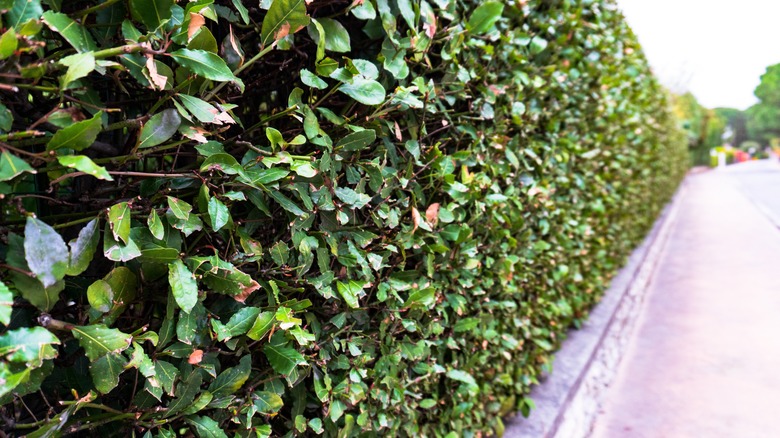
When you grow bay leaf plants in your garden, you can grow them as either a tree or a shrub. The most critical consideration in deciding whether to grow bay leaf plants in your garden is your climate. Laurus nobilis grows outdoors in zones 7 through 10. If you want your sweet bay trees to produce seeds, you'll need a male tree to fertilize the female tree. You can also grow any of the other cultivars of sweet bay in your garden if you live in an area with a mild climate. However, 'Angustifolio' is particularly well-suited for growing outdoors in zones 8 through 11. It's a versatile plant that can grow as an ornamental hedge, a stand-alone tree, or be trained into complex topiary shapes.
'Angustifolia' works well with both formal and informal gardens. For an informal garden, you can let it grow as a shrub on multiple stems. This will produce one bushy plant, or you can plant a row of them for a hardy, attractive hedge. In a more formal garden, you can trim it to grow as a single tree on one main stem or prune it into a topiary shape. No matter how you grow it, you'll need to plant it in full or partial sun. Once its roots are established, it's fairly drought-tolerant, although you should never let it dry out completely.
Types of bay leaf plants to grow in containers
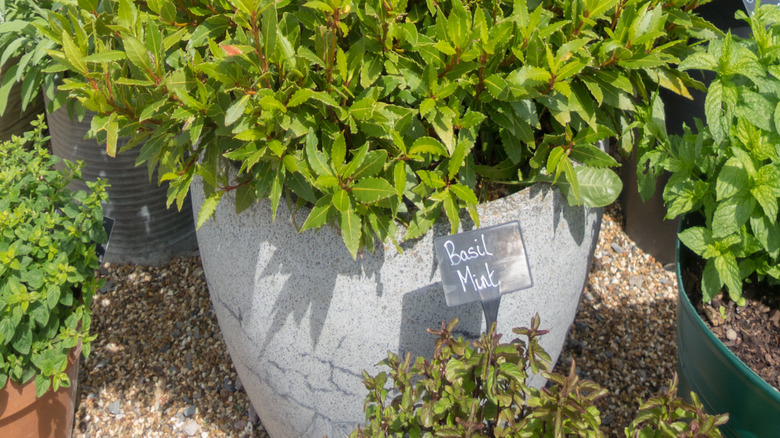
'Saratoga' was designed as a smaller alternative to full-sized sweet bay trees, so it's ideal for growing in containers. Growing bay leaf plants in containers gives you more flexibility in terms of climate, since you can move them inside during colder months. 'Saratoga' is low maintenance and tolerates poor soil; however, you'll have better results if you grow it in rich soil. Either type of soil should drain well. It needs full sun to partial shade. If you want a single tree in a container, start with a plant with several branches near the bottom. Let it grow until it's as wide as you want it, then trim off the lower branches, leaving just the main stem.
'Aurea' is another cultivar that does well in containers, due to its smaller size. It grows up to 15 feet high and 6 feet wide. It thrives in zones 8 to 10, and needs the same growing conditions as other bay leaf plants. This cultivar is called golden bay because its young leaves are bright yellow before turning a deep green. If you're planning to harvest the leaves for culinary use, do so only when they're yellow. When you grow sweet bay in containers, you'll need to move it into larger containers and trim its roots as it grows. The key to keeping the plant the size you want is to prune it. Bay leaf plants tolerate heavy pruning well. Even if you plan on leaving it in the same container, you should trim its roots at least every two years. If you find that you enjoy growing these, it's helpful to know that there is an easy way to propagate bay leaf plants for an endless harvest. This involves choosing semi-hard wood cuttings.