

The Best DIY Fixes For A Flat Lawn Mower Tire
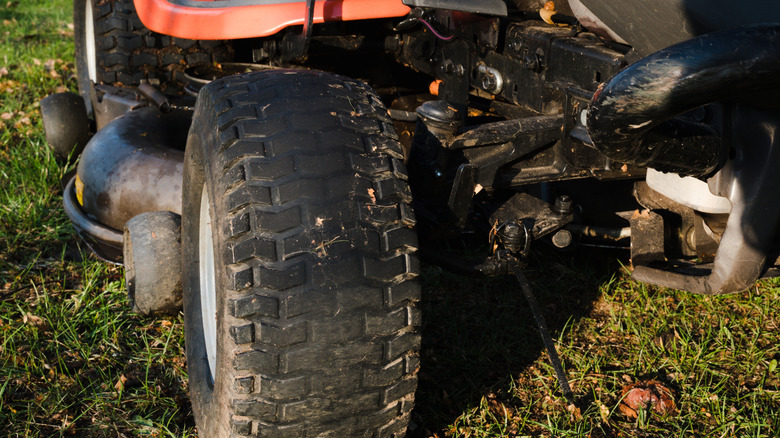
Your lawn is the first impression your home makes on people. Before they see the intricate flowerbeds you painstakingly care for, before they see the new shutters you installed or your stylish and trending exterior paint choices, they often see your grass, that picturesque stretch of green that requires time and dedication to keep in tip-top shape. That's why starting to cut your grass on your scheduled day only to find a flat lawn mower tire can feel like a major setback, a hassle separating you and the maintenance needed for your lush lawn. Fortunately, while it can be frustrating, fixing a flat lawn mower tire doesn't have to be time-consuming or expensive. Instead, there are many ways to fix a flat on your own.
Changing out your lawn mower tire can be a cut-and-dry method of fixing a flat tire for many homeowners, but it isn't always the most accessible. While not an expert-level task, it does require some skill and familiarity, not to mention a laundry list of tools you may not have on hand. As a result, you may be interested in other DIY fixes that get your lawn mower back into action until it's time to call a professional. These methods range from immediate fixes that'll need to be remedied in the near future, such as adding air without identifying the exact problem, to short-term solutions that target the reason for the flat without a total replacement, like sealant.
DIY tire plug kit
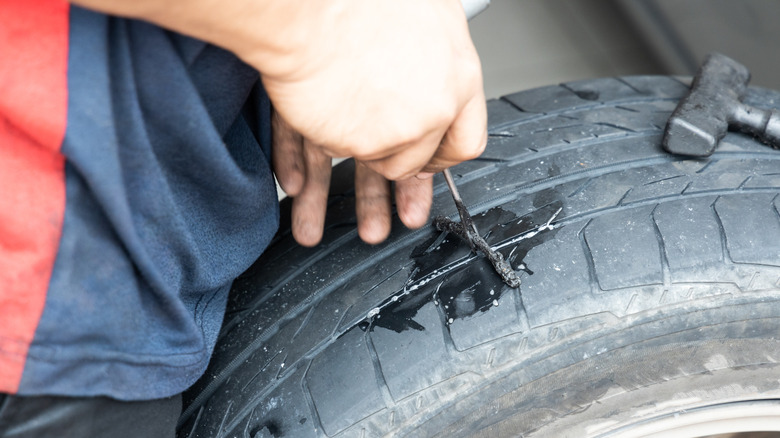
Even if you keep your yard in pristine shape, your lawn mower can encounter some rough terrain. This includes natural obstacles like thorns as well as metal or glass, all of which can puncture your tire and lead to a flat over time. If you think that this could be the cause of your flat tire, it's important to identify the damaged area first. Don't worry if this process sounds intimidating – you can easily identify puncture marks in tires by using a soap and water solution. When you apply the mixture to your tire, escaping air creates bubbles, helping you pinpoint the location.
In the case of a punctured tire, a DIY tire plug kit can be a common approach. If you've ever had a minor hole in one of your car's tires, you may recognize this handy tool. These kits include a rubber plug that you insert into the puncture, effectively sealing the hole and preventing any more air from escaping. Sometimes, these kits may also include a patch for additional security.
Tire plug kits won't be able to help in every case, however. If the puncture is in the side wall or if your tire is showing signs of needing replacement already, you may need to see a professional for a more advanced repair. Like many other DIY fixes, this also isn't meant to be a long-term solution, and it may require a more permanent fix in the future.
Tire sealant
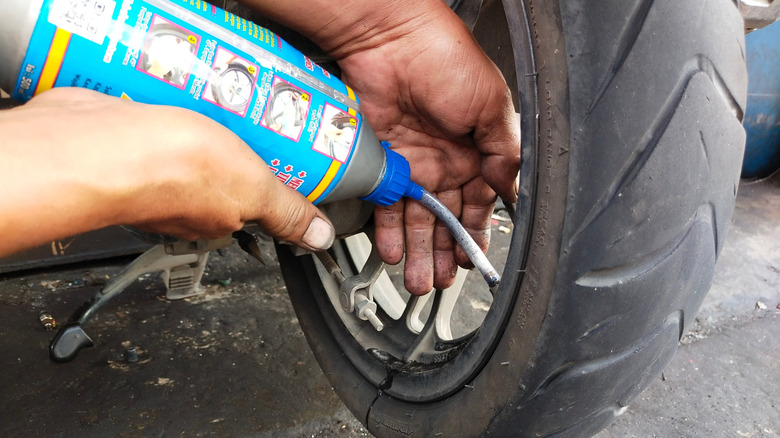
If you're looking for a quick fix for small punctures or air leaks as a result of tire damage and age, then tire sealants can also be a go-to choice for many homeowners. However, unlike with a DIY tire plug kit, you won't need to identify the exact location of the hole, only that there is one. That's because sealants work by being injected into the tire, where they coat the inside of the tire and can plug holes on their own. While this process can differ depending on the exact tire sealant you choose, it can be helpful for quick fixes where you may not be able to locate exactly where air is leaking from in your tire.
Although their ease of use does come as a benefit, there are a few things to keep in mind before reaching for a bottle of tire sealant. Namely, not all tires are designed to be compatible with tire sealant. The plugs left behind by tire sealants also aren't a long-term solution, serving better as a temporary patch until a proper repair can be made.
When using tire sealant, it's important to follow the manufacturer's instructions to ensure you have the right steps down. However, overall, the process often begins with administering the sealant through your tire's valve stem. Depending on the brand, you may also need to rotate the tire after this.
Air compressor
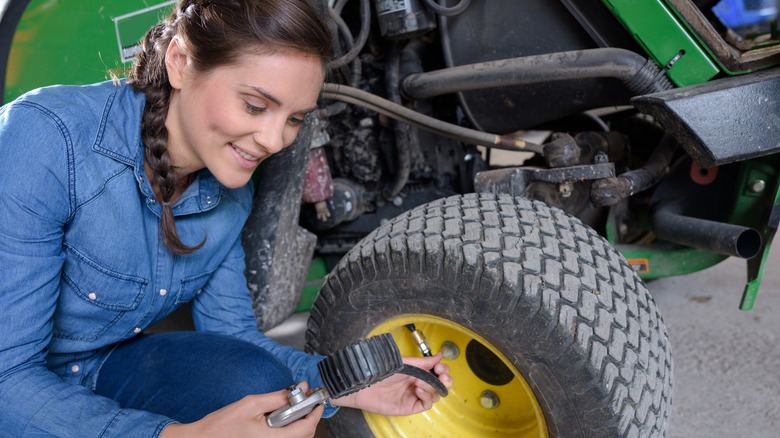
Using a DIY tire plug kit can be beneficial if your lawn mower's flat tire is caused by puncture damage; tire sealants can also be useful in this situation, as well as in cases where your tire may have a bead leak. But what about when you're not sure the exact culprit behind your flat tire? In this case, it can be handy to have an air compressor on standby.
Using an air compressor won't fix your flat tire. Any holes won't be patched, and any leaks won't be sealed. However, the benefit of an air compressor is that it can attach to your tire's valve stem and add air to inflate a deflated tire. Although the air will eventually leak out again until you find the cause of the flat tire, this can give you a usable tire in the meantime. Just be sure to give your lawn mower and tire a quick inspection to make sure that the flat tire isn't the result of a mechanical issue that could pop up during operation.
To correctly use an air compressor to pump up a flat lawn mower tire, you'll need to know how much air you should put in your lawn mower's tires to begin with. This information is often listed in the user's manual, which may be available online or included as a paper copy when you purchased your lawn mower. As always, when making any sort of repairs on your lawn mower, ensure that your machine is off and stationary.