

8 Noises Coming From Your Garage Door (& What To Do About It)

Pop! Bang! Tick, tick, tick! The last thing you want to hear when you open your garage door is an unpleasant racket. Generally, a chorus of strange and unusual sounds coming from the door itself or its opener is not normal. While a bit of mechanical noise is common, you should try to identify unfamiliar and repetitive sounds, as they may indicate larger issues that need to be addressed to ensure the long-term operation of this necessary garage component.
You might start to notice new noises, especially if you forget to maintain your garage door. The first thing to do is identify what sound (or sounds) you're hearing when you open and close your garage door. Is it a squeak, rattle, or bang? Once you have a good idea of what sound it is, you can pinpoint the problem. Sometimes it's an easy fix that simply calls for some lubrication. Other solutions might be more complicated and may require the help of a professional. Whatever the issue, it's wise to listen to what your garage door is trying to tell you.
A squeaking sound may indicate inadequate lubrication
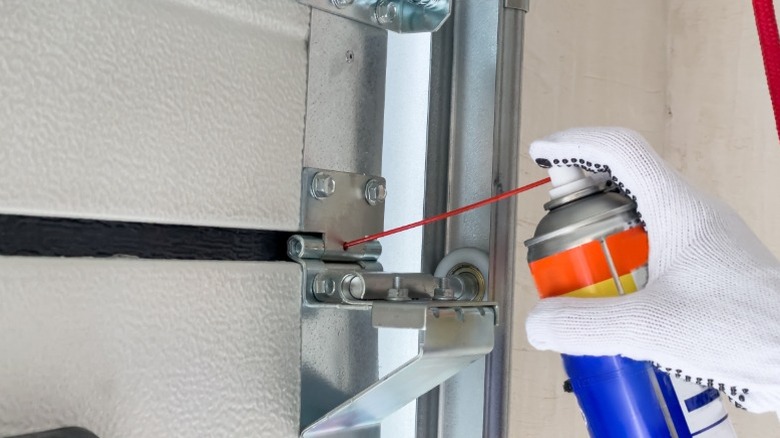
Insufficient lubrication is a common problem with systems that have many moving parts. Squeaking noises sometimes lead back to loose or rusted hinges. You should generally inspect these annually, but only replace them if they're damaged. Many times, you can simply replace a missing screw or repair a bent hinge. Other times, the solution is to a add a bit of lubrication to where metal touches metal. If that fails, the hidden trick to a quiet garage door is often to replace the rollers, which can develop rust or wear down. Be sure to keep them greased.
Popping noises could alert you to worn-out springs
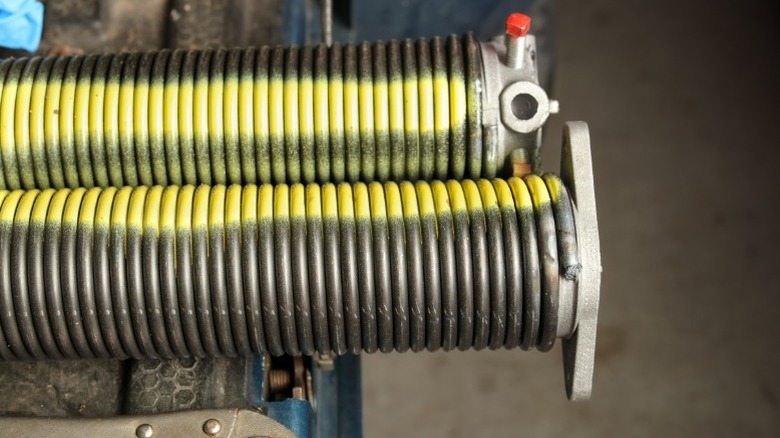
If you hear a popping sound coming from your garage door, don't ignore it. This could mean there's a major issue with one or more of the door's springs. The popping you hear may be a result of the springs working extra hard to open the door. If you check the springs after hearing this noise, you'll likely see that they appear stretched or broken. Broken springs can be a hazard to you or your property, so it's imperative that you replace them immediately. Due to safety concerns, replacing springs requires professional help.
A rattling sound might point you to loose hardware
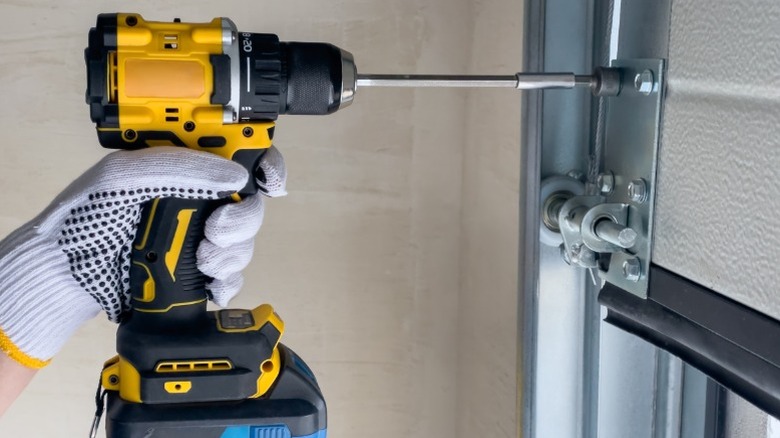
Even if you hear a loose piece of hardware on your garage door, you might not see it right away. Put your detective hat on to find the exact source. Potential causes could be loose bolts or brackets, but it's important to figure out where to tighten or replace these parts. After pinpointing the loose hardware, carefully tighten any nuts, screws, and bolts. Don't tighten them too much, and keep an eye out for old, rusty components that need a full replacement.
Screeching may point to a number of problems
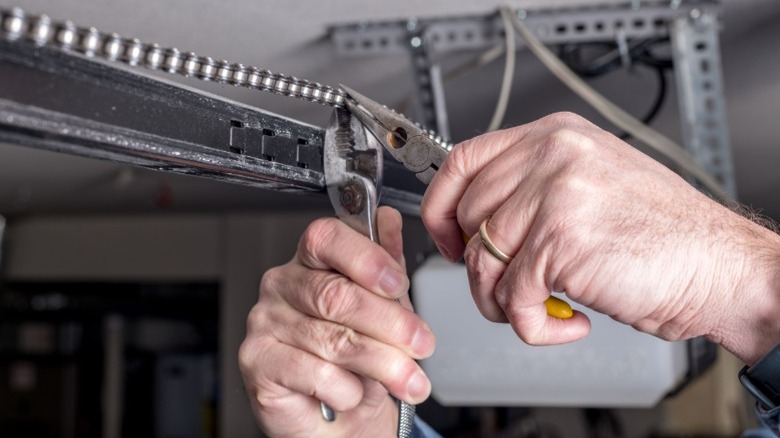
If you hear a screeching sound, you should check a few areas of your garage door. Commonly, the sound could be metal rubbing against metal, which can be fixed with a little lubrication. It could also indicate a loose chain or belt. You might need to replace that part or tighten it securely. Screeching may also point to worn gears in the garage door opener motor. Start with the easiest fix, which is to spray silicone-based spray on hinges and rollers. If the screeching continues, check for broken parts in the garage door opener motor, and call an expert for a repair if necessary.
A clinking noise often identifies rubbing springs
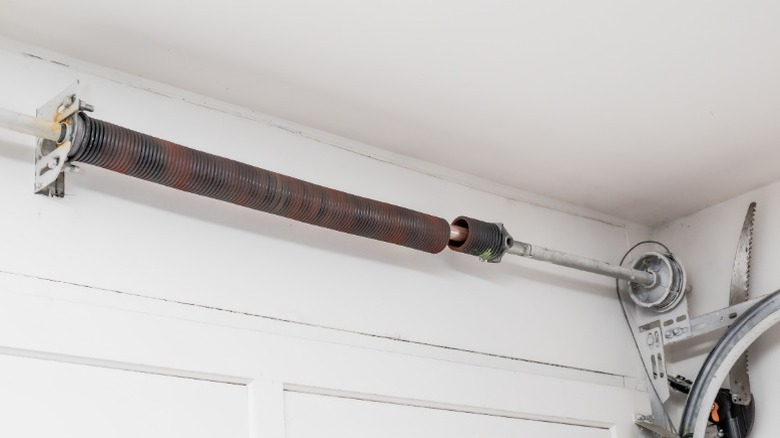
If you hear a unique sound like metal clinking together when opening your garage door, check the springs. Rust buildup can result in the door's springs and coils bumping up against each other. However, this sound could also mean the coils are rubbing or that you have a defective roller. Cleaning away the rust buildup, or completely replacing the rusty pieces, can be an easy fix. Remove light rust using a wire brush and rust remover spray. If it's not a rust issue, a professional can replace old or worn parts safely.
Ticking highlights old pulleys or bearings
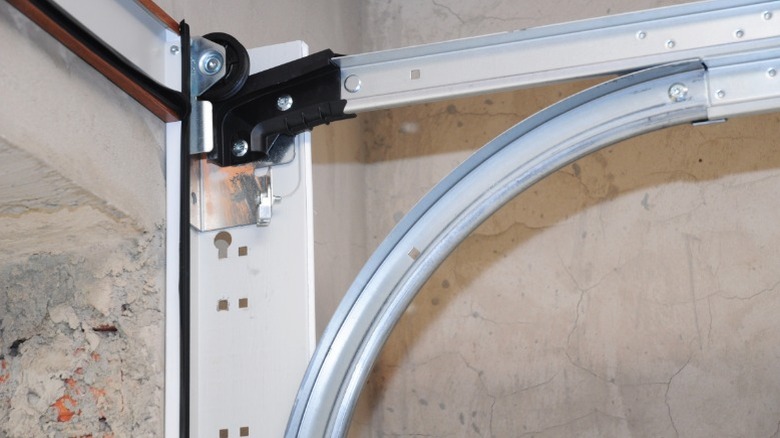
Over time, the components of your garage door can become worn from continual use. A ticking noise likely means there's a problem with worn pulleys and bearings. Replacing these worn parts, which requires following precise directions to disengage the door, can eliminate this noise during opening and closing. However, ticking could be a sign that there's a problem related to loose chain links or old rollers that need to be replaced. While you can replace rollers and chains on your own, consider calling a professional to ensure the door maintains the right tension.
Persistent banging could be due to defective parts
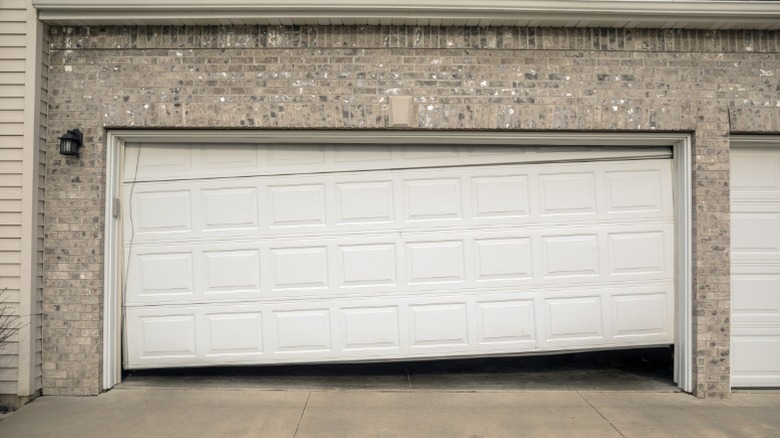
Opening your garage door should not cause a cacophony of bangs. Repeated banging sounds might indicate a few issues. The door panels could be defective or require readjustment, causing them to hit each other on the way up or down. The tracks may also be off-balance. A misaligned door may visibly sag when opened halfway. Professional help is recommended to fix this issue, as the door may need to be put back on track. It's also possible that the springs need to be replaced, which requires a professional for safety reasons.
A rumbling sound means improper tension
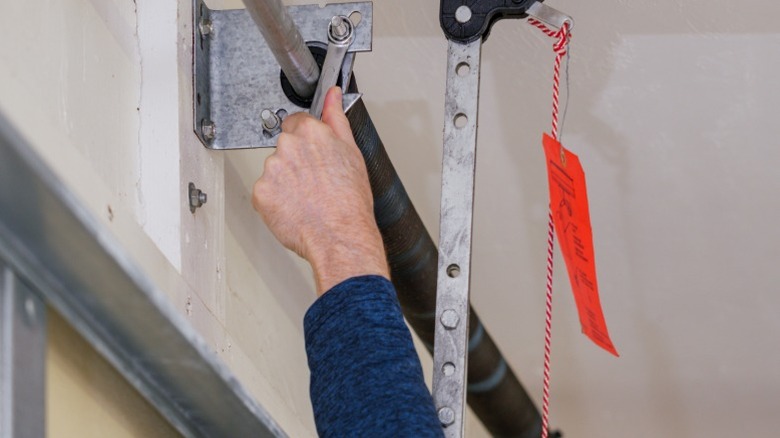
The wrong amount of tension in the springs and coils of your garage door can lead to a rumbling sound. This noise is often very loud and noticeable compared to a properly working garage door. Tightening the loose areas is essential for a quieter door, but avoid over-tightening, as too much tension can also create problems or lead to serious injury. Fixing tension issues are important, as they could be a reason why your garage door opens slowly. For very loose components or broken springs, let a professional fine-tune your door.