

13 Mistakes Everyone Makes When Buying Marble Countertops

Everyone can appreciate the beauty and elegance of marble countertops. They're extremely luxurious and can create a statement in any kitchen or bathroom. Beyond marble's one-of-a-kind beauty, marble countertops can also be very long lasting and even increase home value. So, when choosing countertops, marble is kind of a no-brainer.
But before you go running out to buy all that marble, there are a few things you should consider. Marble countertops require regular maintenance and can be difficult to install yourself. You should also be aware that these countertops also come in different finishes, edges, thicknesses, and even types. Each of these considerations can make a big difference in the look and feel of your counters. There are a lot of mistakes people can make when buying marble countertops, so keep reading to learn the most common, as well how to avoid them when choosing the countertops of your dreams.
Not considering the sealing requirements that come with having marble countertops
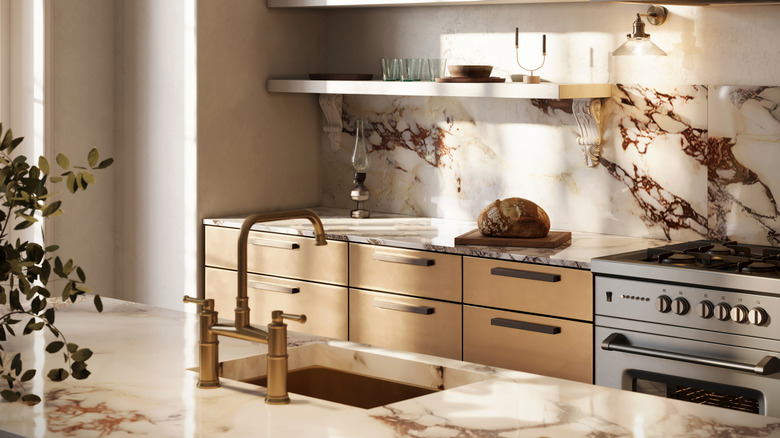
Marble is a very porous stone, and it's also softer than other natural stones. So, in order to ensure it stays in great shape and to avoid scratches, marble should be resealed regularly. This also protects it from being damaged by spills of acidic liquids, which can dissolve marble's main mineral, calcium carbonate. It's important to note this when you're buying marble, because regular maintenance is required and you should be prepared.
Be sure to discuss sealing for your particular marble countertop with the fabricator. After install, you can perform a marble seal test to determine when your countertop needs to be resealed. Simply pour a small amount of water on the countertop and let it sit for about 10 minutes. If you see a dark spot or there is a ring around the water, it's time to reseal. Generally you should reseal marble countertops every six months.
Not thinking about the specific maintenance of marble countertops before buying could land you into trouble

Along with sealing requirements, when you're considering buying marble countertops, you need to think about all maintenance requirements. Although beautiful, marble's porous nature makes it more susceptible to staining and etching, so it need specific care. It's important to know how to properly care for and maintain marble before choosing it for your home, as it's not the same as other common countertop materials.
When searching for countertop options, do appropriate research considering marble maintenance. You'll find it's suggested to use cutting boards, trivets, coasters, and to clean up spills fast. It's also good to know that lighter stains and etches can be treated. For example, a hydrogen peroxide-based cleaner can tackle some of those acidic stains, and light etches may smooth out with a marble-specific polishing product. Keep in mind that the best way to clean marble surfaces is probably already in your home: Use a mild, pH neutral dish soap on any marble counters. You should also avoid some common mistakes if you have marble countertops, like using harsh cleaning products, leaving acidic substances on the counters, and not protecting the countertops from extreme temperatures.
Assuming there's only one type of marble and ignoring the different types
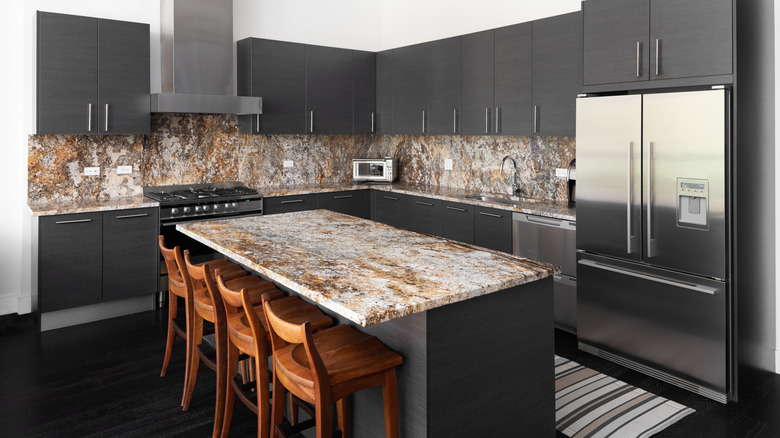
Not all marble is the same. Besides the numerous types of marble, like Carrara marble, Calcutta marble, Crema Marfil, and so on, there are also different colors and even grades of marble. When choosing marble countertops, it is essential to know which marble you're looking at and understand the quality and characteristics in order to properly care for and maintain your countertop. For example, some types are more porous than others.
Gain a basic understanding of the different grades of marble — A to D — to know what quality stone you're looking at. Grade A is the highest quality with very little flaws, and Grade D may have flaws that fabricators have fixed with epoxy or cement. You should also do a little research so you have an idea of what different types of marble countertops are out there, so you know what you like before walking into a showroom.
If you're buying marble countertops, don't assume you can DIY installation
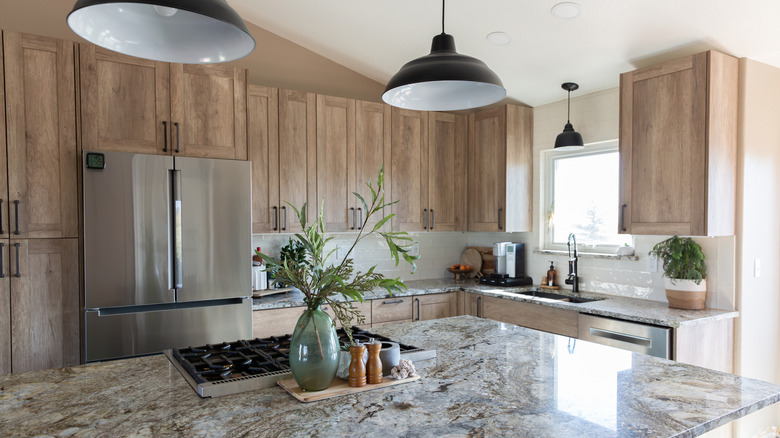
When looking at and considering marble countertops, it's definitely a mistake to think they will be easy to install. Due to the price tag that comes with quality marble, it makes sense that many want to save a few dollars by DIYing the install. But it's not easy! Unless you're a very inexperienced DIYer, you could end up wasting money and even damaging your expensive countertops. Even though they're heavy (which is another reason they're difficult to install), they're quite delicate, so one mishap could cause major issues like cracking.
To avoid this mistake, hire the professionals. Oftentimes, if the suppliers you're working with don't work directly with fabricators or installers, they will definitely have recommendations. So, you should pretty easily be able to find quality professional installers when purchasing marble. A professional install will ensure that the countertop is level and seams are clean. It will also help avoid other DIY installation mistakes like incorrect measurements, mismatched slabs, and more.
Choosing a slab of marble online without seeing it in-store could lead to disappointment

Online shopping is popular for a reason — it's easy and convenient. But that doesn't mean you should choose and buy your marble countertops without seeing them in store. Since marble countertops are one-of-a-kind, it's essential to see your slab in person to inspect color, veining, and even quality. An image online may not be an extremely accurate representation of your slab, and for such an investment it's important to see your slab in the showroom.
With that being said, this mistake is extremely easy to combat. There are many showrooms you can visit to find your perfect marble. When looking for countertops, you can check out different patterns and veining, and it's also a good idea to keep an eye out for any flaws, cracks, or chips. If you're buying marble remnants secondhand, you'll also want to make sure you verify the material's authenticity and find out how the slab was stored.
Forgetting to think about edges is a common oversight while looking at marble countertops
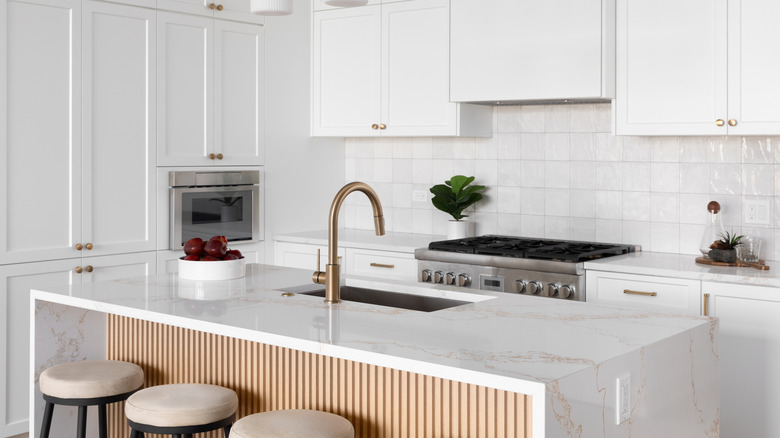
There really is a lot to consider when you're choosing marble countertops, and edges are something you definitely don't want to forget. Why? Because they can really make a difference in the look and feel of your space. A traditional marble countertop edge is a very different vibe than a waterfall edge, for example.
There are a variety of different edges to choose from, and knowing what you like is a big way to avoid making this mistake. An eased edge, or straight edge, is modern and classic, whereas a chiseled edge offers an unfinished, raw look, perfect for more industrial spaces. On the other hand, an ogee edge is more ornate and popular with French-inspired styles. There are also some out-of-the-ordinary countertop edge profiles you may not have heard of, like a stepped edge, which looks pretty much exactly like the name implies. Look into marble edges before committing to a marble slab and choose one that fits your personal style.
Ignoring that marble has a variety of finishes with different pros and cons
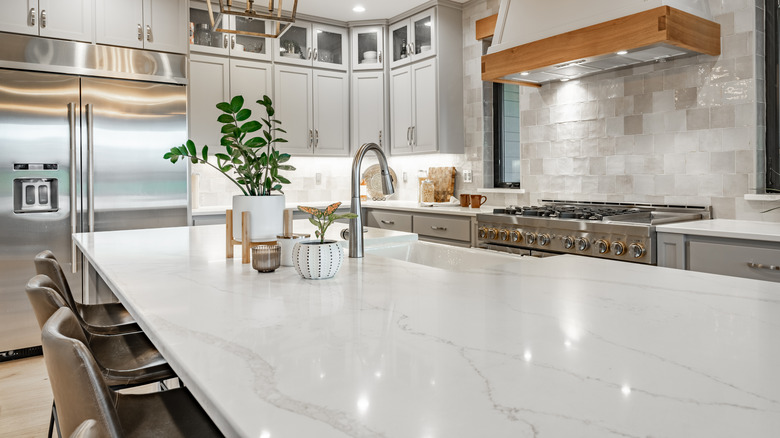
When you're choosing marble for your countertop, it's important to know that not all marble has the same finish. You don't want to select a honed finish (which is more matte) if you're looking for a glossy, shiny look. Alternatively, a sandblasted finish will offer a much different look than a bush hammered finish. In addition to differences in how the marble will visually look, each finish comes with its own pros and cons regarding durability and maintenance.
It's a good idea to have a general knowledge about the different types of marble finishes. There are some pros and cons of honed versus polished marble countertops; honed marble can hide scratches, but is more likely to stain and requires more frequent resealing, while polished marble is high-gloss, but may show cuts or scratches. Be sure to research marble finishes to determine which is the best fit for your needs.
Don't forget to look into the warranty of marble countertops before buying
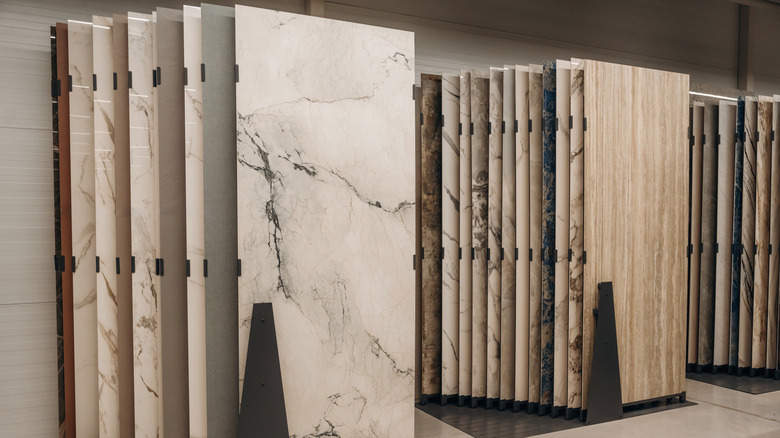
Warranty for marble countertops is huge. As previously mentioned, marble is not a budget-friendly option. The last thing you want to do is buy a marble countertop and then get stuck with a bad warranty. Therefore, it's vital to understand warranties and how they affect your countertop.
Warranties can vary greatly, but in general, there are a few types of warranties to be aware of. Manufacturer's warranties cover flaws in the marble slab, installation warranties cover the installation of your counters, and extended warranties cover your countertop for a certain amount of years beyond installation. Oftentimes, everyday wear and tear is not covered in warranties. But again, it's very important to discuss and understand the warranty for your specific marble slab before purchasing so you know what you're working with.
Don't forget to consider countertop thickness when choosing a marble slab countertop
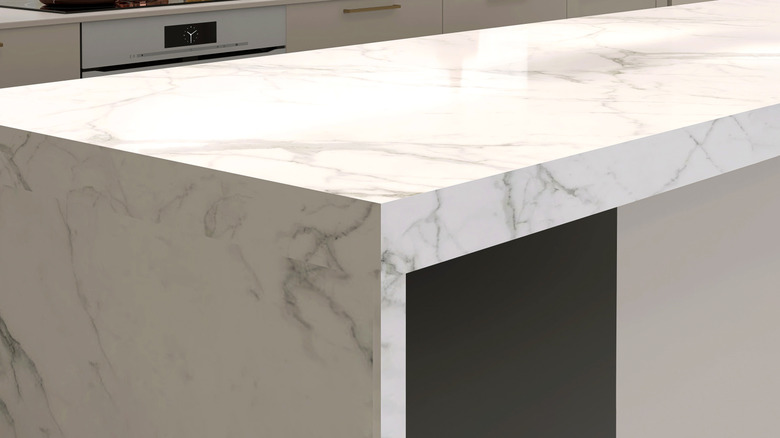
Marble countertop thickness can vary from slab to slab. The last thing you want to do when buying a marble countertop is choose a slab that is too thin for your needs. The thicker the marble, the more sturdy and strong it is. Don't just choose a thinner slab because it's cheaper, as you may end up spending more money down the line on repairs.
Be sure to discuss marble thickness with the supplier or salesperson before buying a slab. Typically, marble countertops range from 3/4 inch to 1 1/4 inch, but thicker slabs are becoming more common. Choosing a slab that is 2 inches or greater offers a strong, resilient option for high-traffic and high-use areas. Another thing to note is that thickness of the marble slab may affect how it is installed — for example, thicker marble is actually easier and quicker to install because it's less delicate.
Failing to plan where seams will be on your marble countertop could lead to a sloppy look
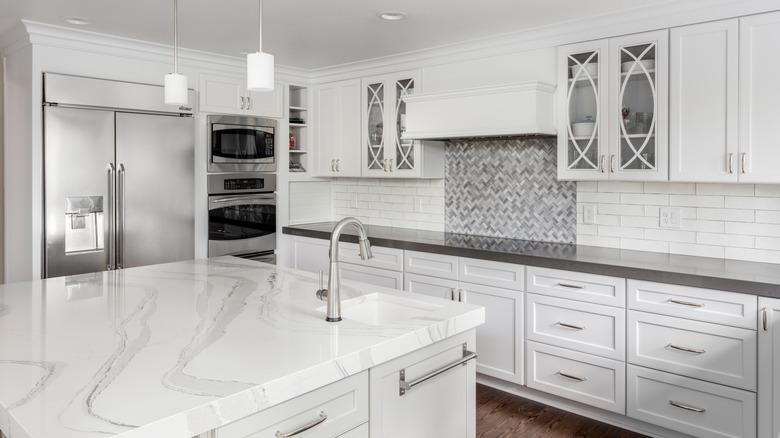
So you're in the showroom and you find the perfect marble slab. You bring it home, but realize, due its size, the seams will be very obvious and run right in the middle of your countertop. No thank you. That's why it's so important to consider where seams will go when choosing your slabs.
In order to combat this mistake, it's best to work with the experts. They will consider a variety of factors, like the layout of your kitchen or bathroom, veining and patterns on the slab, and more. Choosing the right slabs for your space is essential to minimize seams and place them in inconspicuous areas to ensure your marble countertop is beautiful and flawless. Be sure to discuss with experts before buying your marble slab, as you will need to account for seams before cutting and fitting the slab to your space.
Forgetting to look at discounted remnant pieces that could save you money

Marble is a very expensive material, so it can be really beneficial to look for remnant pieces. Remnant pieces are often smaller pieces of stone that are leftover from larger slabs. The unused parts are great for smaller spaces, especially bathrooms or even butler pantries. You may think that remnant pieces of marble are pieces than no one wants, but that's just not true.
If your space is smaller, it's a great idea to seek out remnant pieces, rather than looking solely at large slabs. It's important to note that you may not find many remnant pieces that match. Because they are leftover from other projects, colors and patterns will vary. Remnant pieces are great for smaller kitchen islands, built-in desks, and other nooks and crannies. Do note though that, while typically cheaper, remnant pieces are still real marble, so that price tag is still going to translate over.
Not researching a fabricator before moving forward in the process could be detrimental

The marble fabricator can make or break your marble countertop in look, fit, and overall durability. The fabricator is the crucial step in-between selecting your slab in a showroom and it being installed in your home. A marble fabricator cuts and finishes your slab so it fits in your space, and that's a very important part of the process.
The nice thing is that many stores or suppliers will likely have fabricators they recommend or have experience with, but even so, it's best to research extensively to ensure you find one that'll do a quality job. It's a good idea to ask potential fabricators about warranties, credentials, machinery quality, and more. Check their reputation and reviews, and visit their showroom before choosing one.
Not thoroughly examining your marble countertop before purchasing could cause you to miss significant damage

Before actually purchasing your marble countertop, it's essential to inspect the slab. You should look for cracks, fissures, chips, and more to ensure your slab is in good shape before spending money and diving into the process. Fissures are not as serious as cracks, and often occur naturally on a marble slab. Sometimes cracks can happen while your slab is being transported, stored, or during the actual install.
To avoid purchasing a damaged or flawed slab, it's essential to examine it in-person. Look for those cracks or fissures, and perform the fingernail test. Run your fingernail across the countertop and any fissures, if it catches, it's a crack. If your marble slab has any cracks before install, you should definitely contact the supplier to discuss a solution. There's no point in moving forward with a damaged material.