

The Tropical Fruit Tree Perfect For Your Patio That Can Thrive In A Container
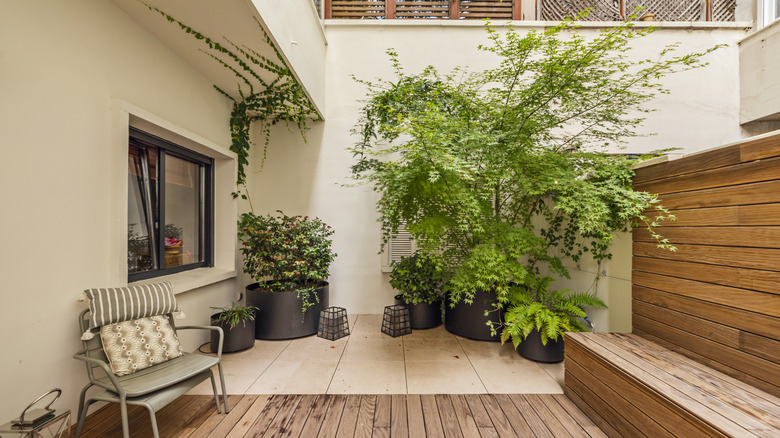
Growing fruit trees can seem out of reach if you have a small yard or are limited to a patio garden. But it doesn't have to be. Guava trees are one of the many varieties of trees that grow happily in garden containers on small balconies or patios. These super sweet, nutrient-dense fruits are ready to harvest in the fall and winter, just when you need an extra dose of tropical delight. In the ground, guava trees can grow up to 20 feet tall, but planting them in a pot will contain their growth. A guava tree can be kept outside year-round in USDA hardiness zones 8 through 11 if it has access to full sun. If you live in a cooler area, you'll need to bring your guava tree indoors during the winter or set up a small greenhouse to keep it from freezing.
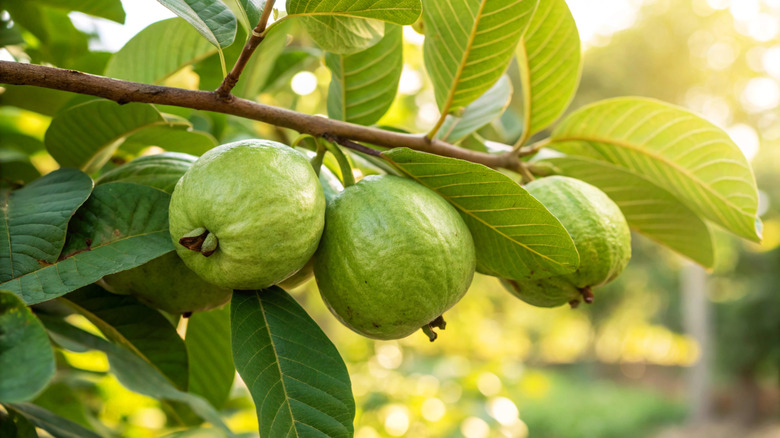
Guavas are native to Central and South America. Light green on the outside, the fruit changes to yellow when it's ready to eat. The inside color varies depending on the type but is typically shades of white or red, and this fruit's size ranges from 1 to 5 inches in diameter. You can eat the fruit raw, dried, or cook it into deserts, jellies, and glazes. It's also a popular addition to agua fresca drinks. Once your tree starts producing, which can take a year or two, you'll have endless opportunities to enjoy it.
How to grow a guava tree in a container
The right container will set your guava tree up for long-term success. Choose one that's at least 1 foot in diameter and allows the soil to drain. Guava trees won't tolerate soggy roots, and need rich, well-drained soil. You can create your own easy DIY soil mix that helps them thrive without waterlogging with compost, soil, and perlite for a mix of healthy nutrients and drainage.
Make sure your tree is in full sun unless you live in an extremely hot and sunny climate, in which case you may need to provide partial shade. If temperatures fall below 60 degrees Fahrenheit, your tree will slow down its growth until it warms up. When this happens, you can move it inside to encourage continued growth and fruit production. Newly planted trees can die if they're exposed to temperatures below 28 degrees Fahrenheit, but older trees can handle brief episodes of freezing weather. Water your tree throughout the growing season whenever the top inch of soil is dry. You'll also need to prune it once a year, since only new growth bears fruit. Pruning your tree the right way encourages growth and removes damaged or diseased limbs.