

How To Get Your Christmas Cactus To Rebloom After The Holiday
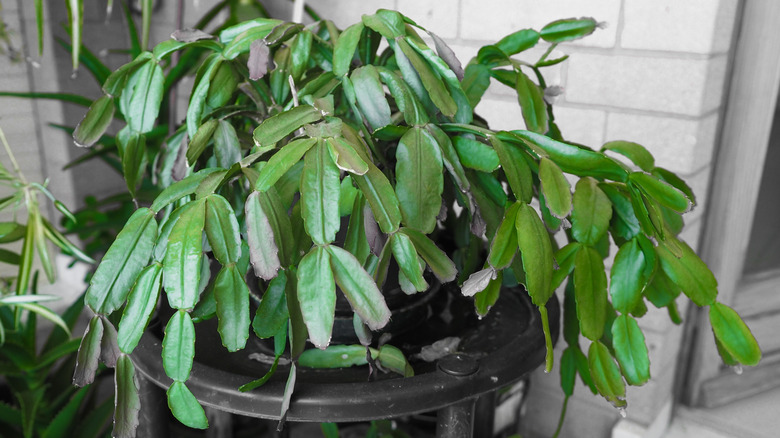
Many of us bring a Christmas cactus into our homes during the winter holidays. But when the festivities are over and the flowers fade, we're left wondering if we can bring back those beautiful blooms before next winter. There are many factors you'll need to consider to ensure your Christmas cactus reblooms when you want it to. In addition to providing the basic, fundamental care for a Christmas cactus houseplant, a stretch of long nights and cool temperatures are particularly important to encourage flowering. Additional factors like less frequent watering, withholding fertilizer, and avoiding temperature extremes can also affect the floral show you'll get from your cactus.
The trickiest part of reblooming is finding the right balance of temperature and lighting. Like poinsettias, holiday cacti bloom when nights are longer than days. This is called a photoperiod response, and it's not that unusual among plants — many of our garden crops also bear blossoms in response to daylight length. Taking advantage of this trait to cultivate everyone's favorite winter-blooming cacti, greenhouse growers have to tightly manage their lighting and climate, as well as water and fertilizer, to create attractive flowering houseplants in time for the holidays. Getting the same floral display at home in late winter, spring and beyond will require some effort, but using a strategic routine can encourage the cactus to produce a second flush.
Encourage Christmas cactus blooms with long, cool, dark nights
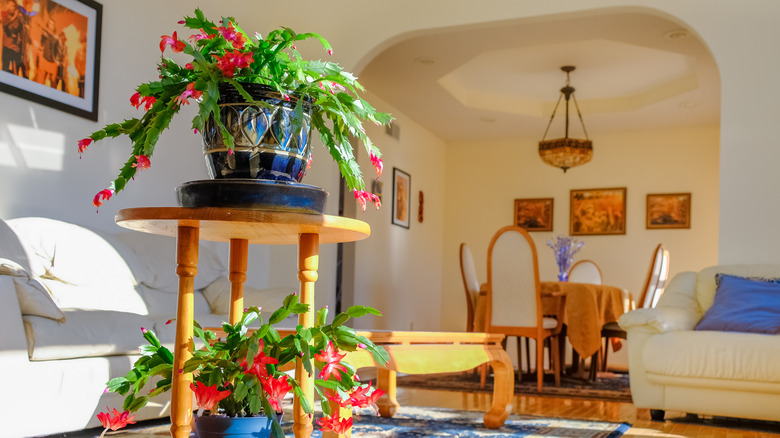
Since Christmas cacti put on buds when the days are longer than the nights, give the plant long dark periods lasting 13 to 15 hours. These cool nighttimes should also be between 60 and 65 degrees Fahrenheit. When trying to get the bloom timing right on your Christmas cactus for the holidays, you should start supporting your houseplant's floral cycle in fall. However, if you want another set of buds in spring, you'll need to maintain this long night cycle for your plant through the rest of winter. After about 8 to 12 weeks of this treatment, your holiday cactus should produce more flowers.
In winter, the earth's natural daylight cycles may make this process easier, but you'll have to make some effort to keep the plant in the dark after the winter equinox, when the days start growing longer again. Every night at 5 p.m., put the Christmas cactus in a cool closet or pitch black room, then take it out at 8 a.m. the next day. Alternatively, you can cover the plant with a box or blackout curtain for the same period of time each day. It will still need sunlight in the daytime, however, so don't forget about it and leave it without light all day long. If you find it tricky to achieve these dark conditions, there's an alternative solution. Sometimes cool temperatures without long nights are enough to trigger reblooming. If you'd like to try this option, aim for 55 to 60 degrees Fahrenheit, but don't let the temperature dip below 50. Once buds form, it's best to keep the plant in one location.
Watch for drafts and water less for prolonged flowering
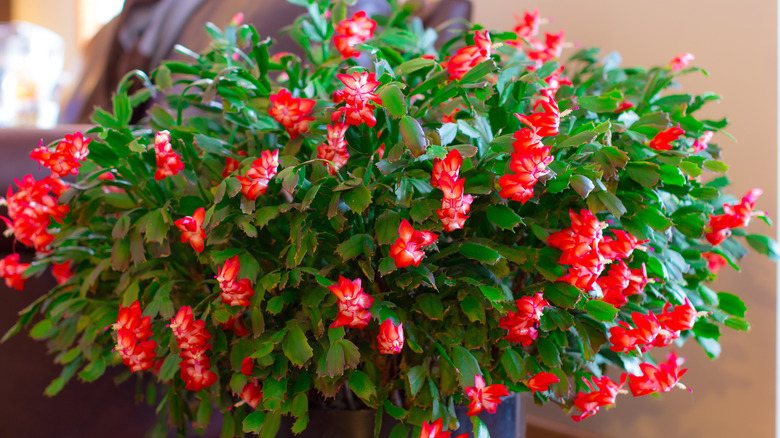
Normally, Christmas cacti should be allowed to dry only slightly between waterings, giving them a drink when the top inch of soil is dry. While the plant is in bloom, you should keep to this normal hydration routine. However, after the first flush of blooms fade, you'll need to water less frequently to encourage reblooming, allowing the plants' soil to dry more deeply. After blossoming is over in late winter or early spring, reduce water again until you notice fresh stem growth.
You might assume that flowering is the perfect time to fertilize your plant, but it's not. Withhold any fertilizer until the plant has finished blooming. Also take care to avoid hot locations and cold drafts, both of which can cause bud drop. If you're hoping to maximize the number of flowers on your houseplant, there's one more thing you can do. Once the cactus is finished blooming in late spring, prune or pinch back its stems to encourage branching. More branches will give you even more blooms.