

Installing Wide Plank Floors? This Is The Worst Place For Them

Wood floors are classic, and wide planks are trendy. So don't be surprised if you see wide-board wood floors everywhere. Boards with a width greater than 4 inches count as a wide plank. They can be manufactured up to 14 inches wide, but 5 to 8 inches are typical. These boards are sourced from the tree's trunk, as opposed to any limbs, and are also longer with a more defined grain pattern. If creating an open and high-end look to your room is the goal, wide plank flooring may be ideal for your home. However, they are not suitable for humid areas like the bathroom.
Some view the additional width in these planks as a positive thing. It lends to an uninterrupted design, which elevates the room style. However, this same feature that is an advantage for aesthetics is a disadvantage for function. Compared to narrower boards, wide planks are more susceptible to warping and cupping. Because of their size, any damage from humidity is also more noticeable. Bathrooms are obvious humidity zones, but basements and laundry rooms can also cause installation regret. Avoid installing hardwood floors in these areas of your home, especially if they're wide planks.
The bathroom is too humid for wide plank floors
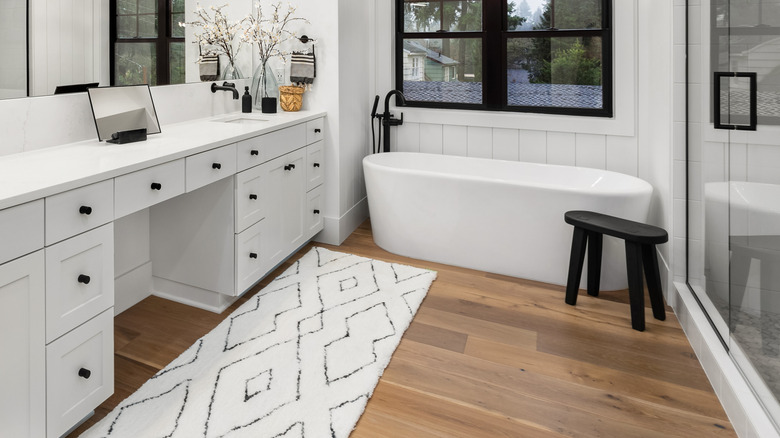
What wide plank floors don't like is the constant change in humidity. In a home that has a consistent moist or dry climate, the flooring should hold up fine. However, in a place like the bathroom where hot showers increase humidity periodically, the boards are susceptible to cupping and warping. The moisture change causes the wood to expand and contract. This can lead to gaps between the planks and curled edges in extreme cases. Wide planks also usually consist of sections from both the center and outer edge of the tree trunk. Each section responds differently to moisture changes. This also contributes to the greater risk of warping.
These issues are also more likely to occur with low-quality wood. Wood that is air or kiln dried is higher quality and will stand up to the climate changes best. However, this process adds to the cost, and wide planks are already more expensive than narrow floor boards. If you're going to invest in this look, it shouldn't be in a place where it can damage easily. We're not saying ditch the wide-plank wood flooring trend altogether — just opt for a different one in humid-prone rooms.