

Avoid These 8 DIY Ice Melt Recipes At All Costs This Winter Season
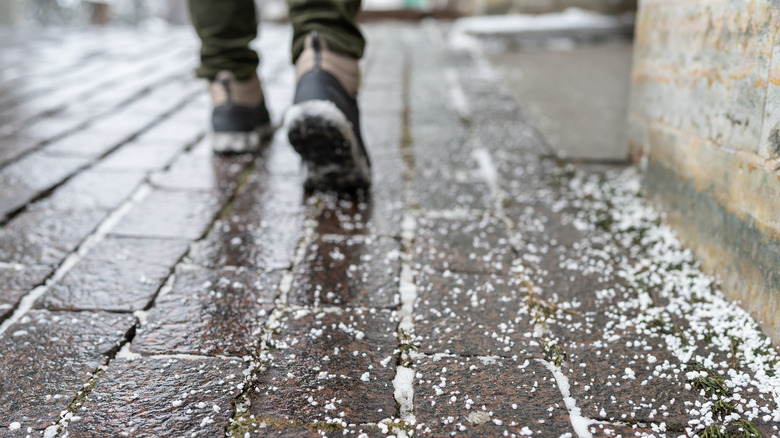
As tempting as it may be to trust a viral DIY de-icing hack you saw online, these "tricks" aren't always what they seem. In fact, more often than not, they are not only unsuccessful, but some can be dangerous. When it comes to de-icing your driveway, sidewalks, patio, etc., you may want to be careful about what DIY hacks you try. While sand, coffee grounds, and cat litter may seem like easy fixes, they won't actually melt the ice you're trying to remove. Using hot water, though it may sound sensible at first, will only create more slippery ice if you're in an area with below-freezing temperatures.
For proper de-icing, obviously, a specific de-icing product is always the first thing we recommend. These can be used preventatively or after a storm once the ice has already formed. Products that can properly melt ice and snow typically contain ingredients like sodium chloride (dry rock salt), magnesium chloride, and calcium chloride. These active ingredients work to lower the water's freezing point and prevent ice formation. Note that sodium chloride should only be used when temperatures drop to about 15 to 20 degrees Fahrenheit, as the granular material is too slow for colder temperatures. In those cases, it's recommended to use a liquid de-icer.
Coffee grounds
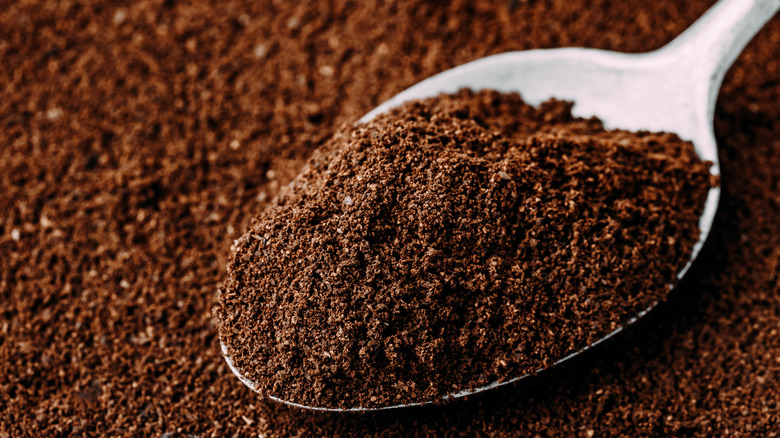
Contrary to any hack you may have seen online, coffee grounds are not a viable alternative to ice melt. While it can provide traction due to its abrasive properties, the grounds themselves are not going to be much help in terms of actually melting down the ice on your sidewalks or driveway. To use your coffee grounds for better traction, first brush any snow off your iced area. Add your coffee grounds on top, which will help keep you from slipping as you walk.
Cat litter
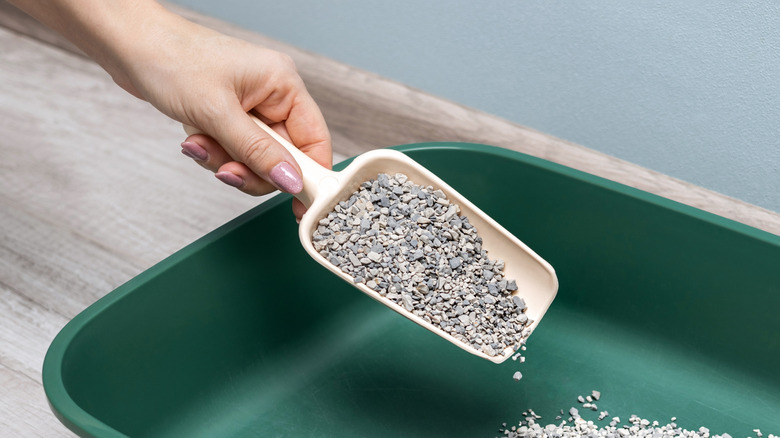
Similar to the "coffee ground hack," the cat litter ice-melting trick you've probably seen online is officially debunked. You may have seen online creators sprinkling extra litter onto their driveways and sidewalks, hoping to melt the ice and make it easier to cross. However, litter will not melt the ice. While it can help as a solution for traction to allow you to walk over the ice more safely, it's not a substitute for a de-icer.
Dish soap
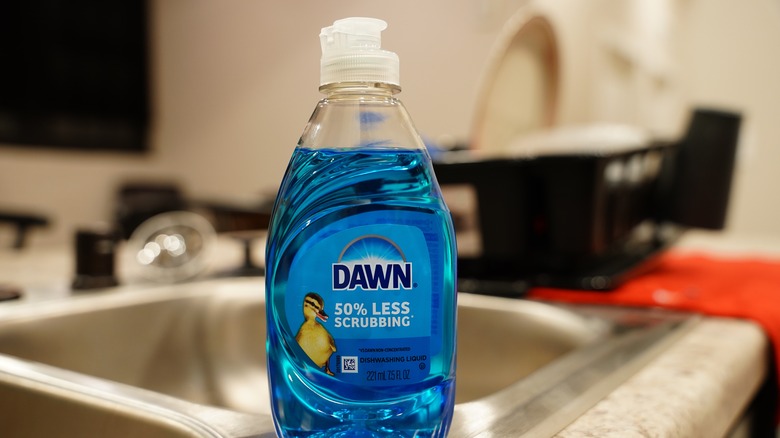
Dish soap alone cannot melt the ice around your home. While it may sound like a quick and easy solution, dish soap won't do much to fight against the slippery ice on your driveway. Using dish soap on your sidewalks and driveway can also be a risk to your garden, as the dish soap can reach your plants, dehydrating and killing them. (If you are out of de-icer and need a quick solution, you can make a simple mixture of hot water, a little bit of dish soap, and rubbing alcohol. However, you should always opt for a de-icer. Note that dish soap does not help keep ice from re-freezing.)
Sand
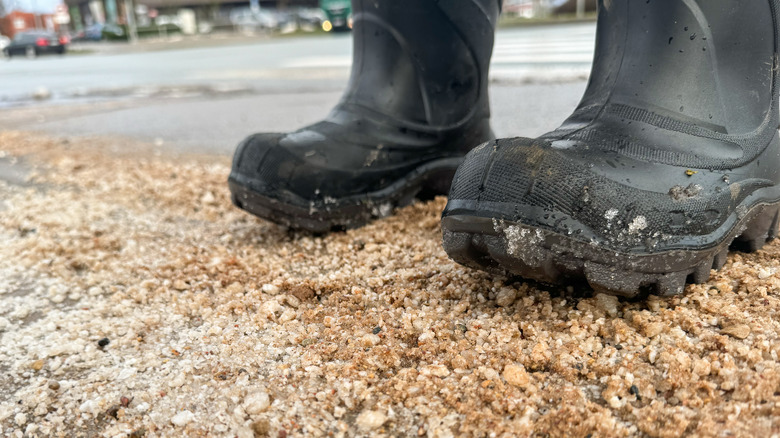
If you need a simple solution to walk on your sidewalks or driveway without slipping, sand can be a helpful tool and provide the grip needed to cross safely. However, this material will not melt the ice. Besides not having ice-melting properties, sand can be a hazard to your garden and even possibly clog your gutters. Plus, you will be carrying it inside on your shoes, quickly making it an indoor problem.
Water
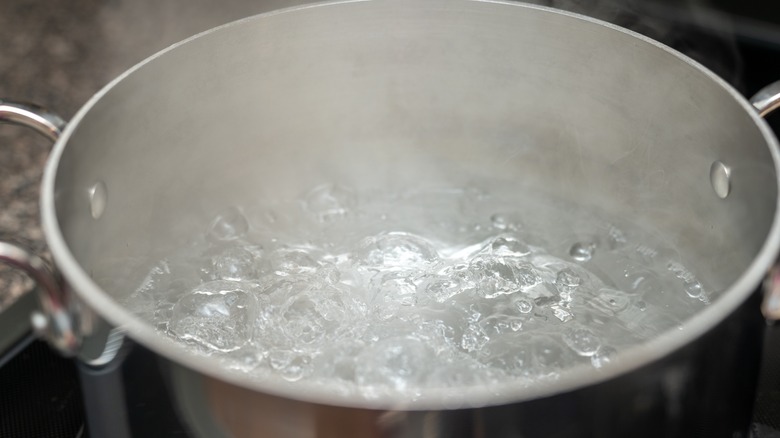
Contrary to popular belief, regular water, or hot water, by itself is not a viable solution for melting the ice around your home. While it may seem like the obvious trick, adding too much water to an ice spot can actually just increase the amount of ice, causing it to be more slippery. The only time that hot water can safely be used to melt ice is if the temperature outside is above freezing and won't decrease. Otherwise, it will simply create more slippery ice.
Cinders
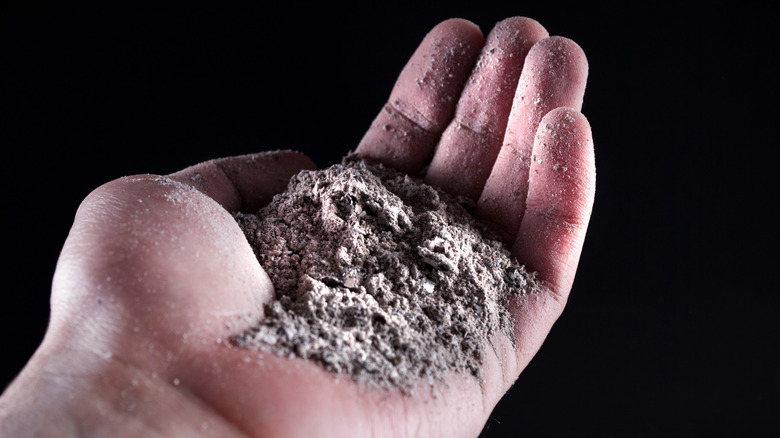
Despite claims you may have seen online about cinders being a useful alternative for de-icing your driveway and sidewalks, consider this trick debunked. Not only do cinders not melt the ice, but they can also be crushed into a pollutant dust, affecting the air and water. If you just want some traction for your sidewalks, cinders could be a simple solution. However, you shouldn't expect the material to get rid of the ice.
Vinegar
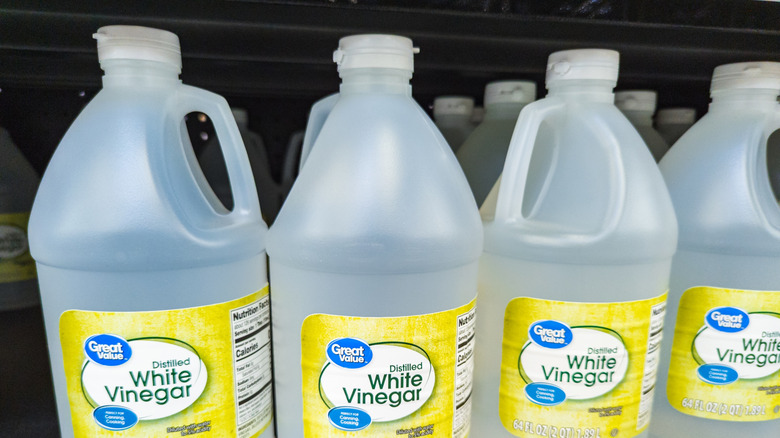
Despite the claims that vinegar can also lower the freezing point of water, like common de-icers, this pantry staple is certainly not as effective as alcohol or salt-based products. For better results, you can try mixing vinegar with hot water; however, this is not a permanent solution. If you live in an area where the temperature only drops to about 28 to 30 degrees Fahrenheit and above, then you can use vinegar as a short-term solution. For colder environments, vinegar will not be of use to you.