

Prevent Weeds From Growing Under Gravel From The Get-Go With One Smart Solution
We may receive a commission on purchases made from links.
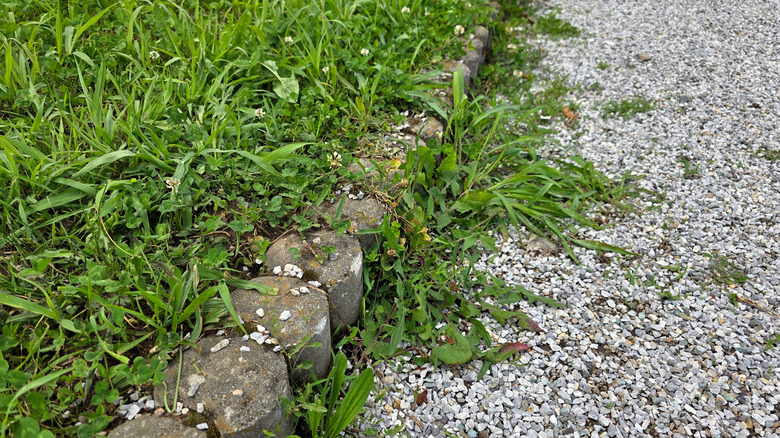
Are you confused about the different uses of pea gravel and crushed stone in your yard? That's hardly surprising, since the material can be found on patios, walkways, and garden beds. Sometimes, it's used as a barrier against weeds, but it's not always effective. Weeds can get in amongst those decorative stones in a few ways. They grow from seeds or roots already in the soil, pushing through the gravel to reach the sunlight. In other cases, seeds dispersed by the wind, animals, or your lawn mower land on the gravel and germinate. You can prevent weeds growing through gravel by compacting the soil underneath.
To understand how compaction helps before installing a pea gravel patio, for example, you need to know how weeds survive under gravel. Unlike more finicky greenery, weedy plants do not need rich soil and careful nurturing to thrive. Many weed species will grow in the least hospitable conditions — think sidewalk cracks, parking lots, gaps in walls, and through your gravel. Loose stone is vulnerable to weed growth for a few reasons. The layer of rock is often too thin to smother sprouting weeds and stop their growth. Other factors that enable weed growth include the lack of a weed barrier under the gravel, insufficient weed clearing before the stone was laid down, or improperly compacted soil (or no compaction at all). Weeds will grow in the soil and up through the gravel unless you take steps to hinder their growth.
Compact the soil to prevent weed growth through gravel
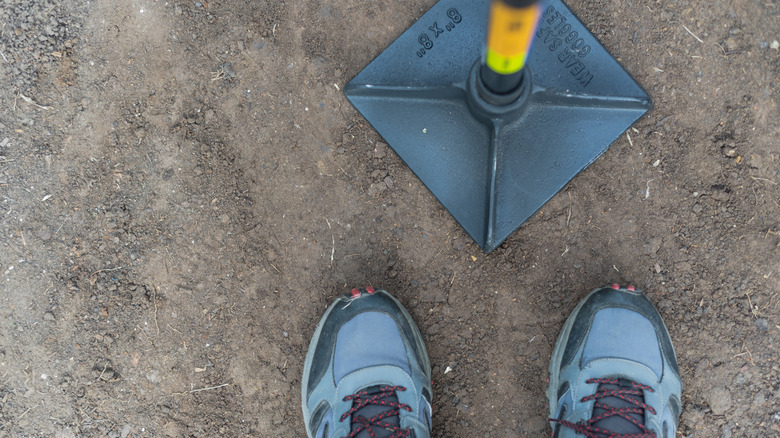
A significant cause of weed growth through pea gravel is soil that was not cleared and compacted prior to the gravel installation. Compacting the soil creates a solid layer of soil. This provides a firm foundation for your gravel — but that's not all it does. Weeds also struggle to push their roots through the hard, dense soil. A tamper or plate compactor can be used to compact soil. For most jobs in your yard, a hand tamper will be sufficient. This BlumeTrec Heavy-Duty Steel Tamper gets good reviews and costs just $40. A powered plate compactor makes the work on large-scale projects easier.
Clear the soil in the area you plan to lay pea gravel of all plants, including lawn grass and, of course, weeds. Level the soil with a rake and use your tamper to compact the soil. You can add a layer of landscape fabric if you wish, which can further reduce weed growth. Then add the first layer of pea gravel. Compact this layer before adding the next, which helps increase stability and, once again, stop those pesky plants from pushing their way through. When you've finished the project, knowing how to clean and maintain gravel will keep it looking as good as new. A leaf blower or rake can be used to remove debris and even out the gravel. This can prevent weeds from growing in the gravel, too. If you do notice a stray weed or two, pull them out right away.