

The Pruning Mistake To Avoid Making With Your Japanese Maple Tree
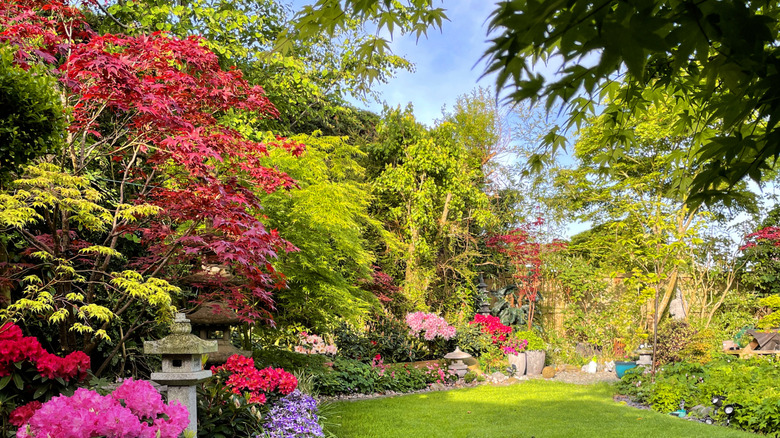
Maintaining the shape of shrubs and trees is a practice that has been associated with beauty and tranquility for centuries. Highly ornamental trees like the Japanese maple grow into stunning specimens — they're a focal point in any garden. Perhaps unsurprisingly, they're also a common addition to Japanese Zen gardens. There are many varieties of Japanese maple trees that will bring beauty to your yard with their vibrant fall foliage and tranquil silhouettes. However, to maintain their stunning visage for years to come, you need to learn healthy pruning practices. That means avoiding trimming mistakes, like snipping branches from your tree in its first year of life.
This gorgeous tree will boost your home's value — but only if you take care of it properly. While Japanese maples are generally considered easy to care for, pruning them can be a nuanced activity. Unfortunately, poor pruning practices can quickly lead to damage, disease, or unsightly growth. The biggest Japanese maple pruning mistake is getting the timing of those first cuts wrong. Don't prune your Japanese maple tree in its first year. Young trees may look a bit odd as they grow new branches and start to fill out their form. But if you prune away those whip-like stems, you may encourage the tree to grow more branches faster. This will make the problem worse, resulting in a poorly shaped tree at maturity.
How to tell if it is time to prune your Japanese maple tree
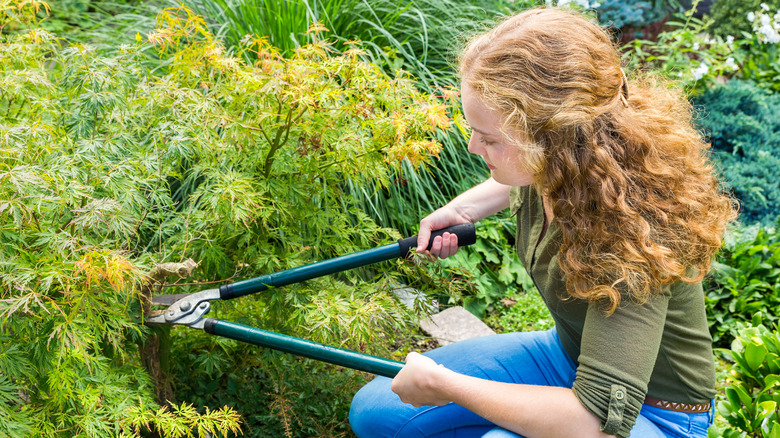
An essential tip for taking care of a Japanese maple tree is identifying the best time to prune it. When to make the cut (or cuts) depends on the type of pruning you need to do. Generally, you should give a Japanese maple a good prune in winter to remove dead branches, and then again in the spring for aesthetic reasons. However, in either case, you should avoid unnecessarily pruning young trees. The general rule of thumb is never to prune a Japanese maple in its first year of growth. The restrictions continue in years two through five. Prune as little as possible, with a focus on promoting healthy growth. You won't need to worry about hard pruning your tree until it's about 10 to 15 years old.
You can start pruning away unhealthy branches in year two. Do this in winter, while the tree is dormant. While you can technically remove dead branches any time of year, winter is best because you won't impact new growth. Trim away branches that are dead, diseased, broken, growing inward, or too crowded. Branches with narrow crotches need to be pruned, too. Be selective. Resist taking off more branches than needed. Aesthetic pruning of a Japanese maple is done for different reasons. Between years two and five, you can start looking for any branches, knots, or other unsightly growth affecting the overall look of the tree. Wait until after the tree has sprouted back to life in spring and focus on thinning and shaping its lower and middle canopy. Don't prune to control height, which can encourage faster, weaker growth than desired.