

Why It Is Paramount That You Prune Your Japanese Maple
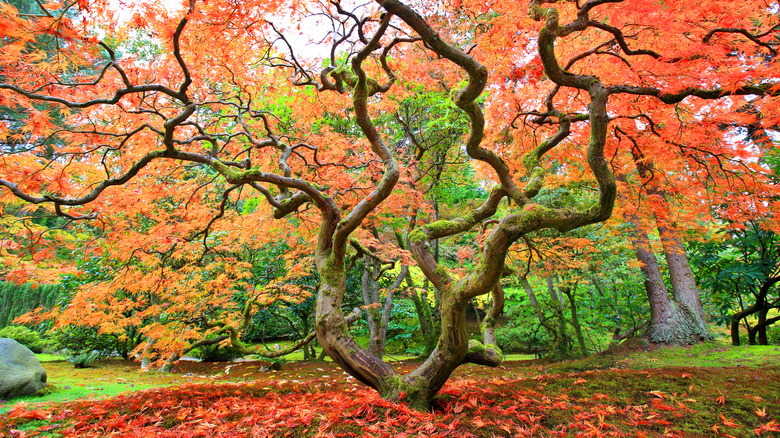
You only have to look at a Japanese maple to know why these trees are such popular additions to a garden. Between their cloud-like canopies and vibrant fall foliage, these trees are incredibly beautiful ornamentals at any time of year. You need to know how to grow and care for Japanese maple trees to get the most out of them. They are, for example, slow growers — usually only adding 6 inches to a full foot of height annually. Because they grow so slowly, you may believe it's not necessary to prune your Japanese maple. But pruning your tree is one of the most important things you can do to maintain good health and good looks.
Pruning your Japanese maple (Acer palmatum) — hardy in Zones 5 to 8 (and sometimes Zone 9, depending on the cultivar) — is proactive. Whether you have a tree that weeps or grows upright, a good trim can prevent potential plant problems. Trimming allows more light and air to get to the center of the tree, which reduces the chance of fungal diseases taking hold and spreading. If you leave the tree alone, allowing it to grow naturally, you'll end up with an overly dense canopy and branches growing in all directions.
Why thinning the canopy is important for a Japanese maple tree
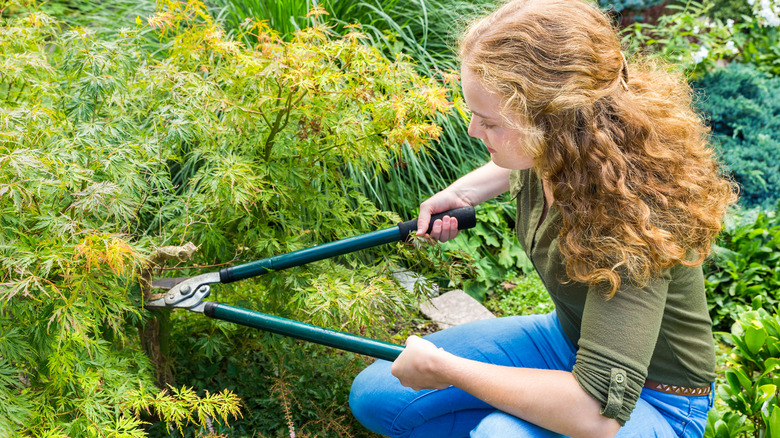
Thinning the canopy is an important part of pruning your Japanese maple that influences how long the tree lives and how well it handles health challenges. If left to their own devices, many Japanese maples will grow a thick, heavy crown. Without control, this creates some risks. Structurally, a dense canopy with branches packed too closely together is likely to break during strong winds or under the weight of heavy snow or ice. By pruning out weak or unnecessary branches, you decrease bulk and weight, which lowers the chance of a branch failure during bad weather. This is also a good reminder that choosing the best place to plant a Japanese maple is important for minimizing damage.
Pruning isn't just about aesthetics; it also helps prevent health issues so your Japanese maple can live its longest life. The crowded center of a Japanese maple has poor air circulation, creating a humid, shady environment that fungi love. Diseases like powdery mildew, which maples are susceptible to, thrive in still, moist air. Increasing air circulation is one of the best ways to prevent disease. Thinning the canopy encourages sunlight and air to move through the branches, decreasing humidity and helping the leaves and bark dry out faster. As more light reaches the internal foliage, photosynthesis is maximized, and the tree becomes healthier.
How and when to prune a Japanese maple
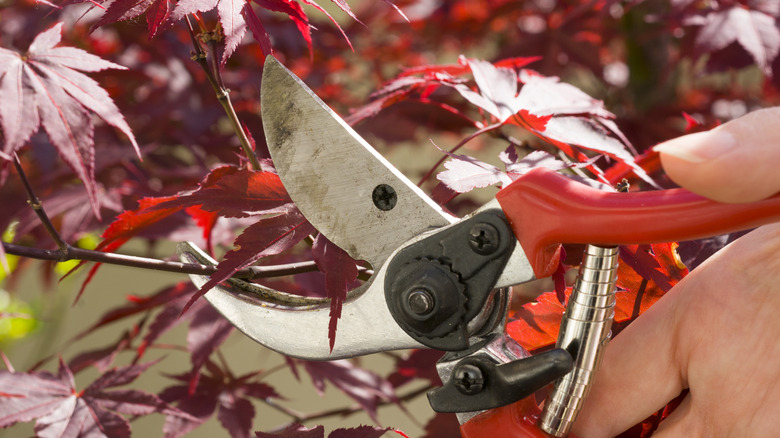
The best time for making major cuts to a Japanese maple is in late winter when it's dormant — usually between January and March, right before new buds start to grow. Pruning a leafless tree means you can clearly see all the branches. It's easier to spot and remove any stems that are crossing over one another or too close together. Japanese maples sometimes drip sap if cut at certain times of the year. Pruning them while they're dormant helps minimize sap loss, though the loss doesn't harm the tree. Do lighter trimming, like removing small, dead twigs or shaping a weeping Japanese maple, in the summer when the tree is fully leafed out. You can better assess the tree's shape and make slight adjustments. Avoid cutting off large amounts of branches at this time. Pruning a tree when it's actively growing can stress it or stimulate tender new growth that's easily damaged.
When you prune, always use sharp, clean tools: they make smooth cuts that heal quickly. When choosing where to make a cut, trace a branch right back to a collar — the swollen ring where branches meet — instead of creating little stubs. One of the big mistakes to avoid when trimming a Japanese maple (or any tree, for that matter) is ignoring the three-Ds rule. The Ds stand for dead, diseased, or damaged, and you can use it as a guide when identifying branches to prune. Once those stems are cut off, trim away the crossing and inward-growing branches. They can rub together, creating open wounds that attract pests and disease. Finally, opening up tightly packed areas of the canopy by removing branches will give you the layered appearance so desired in Japanese maples.