

Use Dying Garden Flowers To DIY Fall & Winter Displays For Your Home
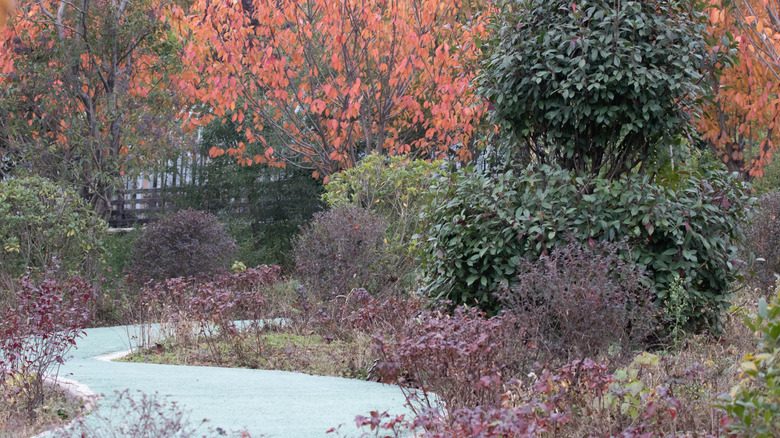
As a professional gardener, I often craft autumn and winter displays for clients using garden materials. While many cut winter evergreens stay fresh for weeks without water, most other plants shrivel soon after cutting. But there are many flowers and herbs that dry beautifully, and you can also use the dying or dead branches of many plants for making fall and winter displays in your home. You can arrange them in vases, craft a wreath, or fill a bowl with potpourri.
When drying fresh plants, you usually need to pick most flowers and herbs at their prime to get the best results. However, if you missed that window, there's still a vast array of other natural materials to choose from. Seed pods, stems, flowers, and beautifully shaped branches all look great in wreaths, vase arrangements, centerpieces, and outdoor container displays. You can repurpose dead or wilting flowers in many ways to create decorative displays. If you had them in a vase with water, you'll need to cut back any slimy stems.
Creativity is key to using natural materials to make DIY décor. Gather plants with shapes and textures that appeal to you. Even a simple arrangement can make a dramatic impact, and sometimes, less is more — like focusing on one or two types of plants instead of a variety. For example, a vintage copper or cut glass bowl filled with different sizes and shapes of pinecones makes a simple but charming centerpiece that is appropriate for fall and winter.
Foraging tips for collecting plant materials
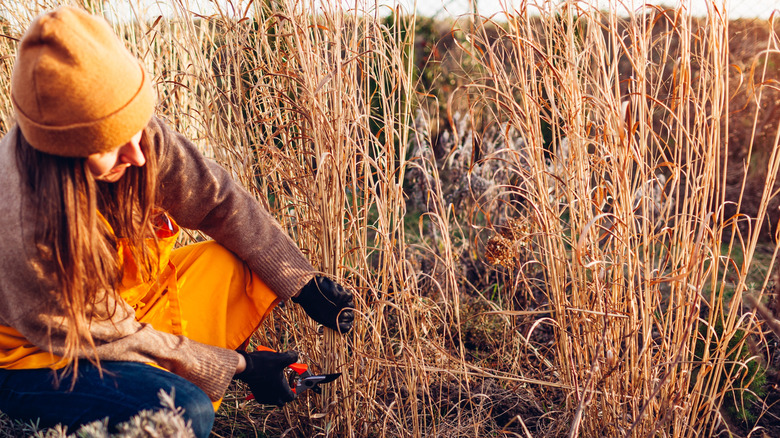
You can forage for these plant materials in your own yard or in nearby woods or parks. Don't prune branches on private or public property without permission. I'm friendly with the landscapers at a nearby college, and they let me snip a few things because they know I'm careful. Otherwise, stick to decayed or dying grasses, seed pods, fallen pinecones, and dried flower heads.
It's wise to avoid plants with sticky seeds because they may get stuck on clothing or furniture (or in your hair, which isn't fun) and be difficult to remove. Dried thistles may look beautiful, but they're a nightmare to remove from, say, your favorite wool cardigan. Sticky sap is also a problem. Beware when handling evergreen branches as some types of pine, fir, and spruce (and their cones) may leach sap. This can be difficult to remove from fabric and skin, so wear old clothes and gloves. Isopropyl alcohol is a cleaning essential that easily removes tree sap from my hands. Wash them well with mild soap and water afterward.
I carry lightweight reusable grocery bags to hold cut branches and boughs, placing them stem-side down to keep them neat. I keep evergreens in a separate bag to avoid making a mess with sap. I usually collect sedums, yarrow, dried hydrangea flowers, ornamental grasses, clusters of sumac berries, false indigo seed pods, and dried mosses. I also pick acorns and horse chestnuts, and whatever else catches my eye that looks sturdy enough to use.
Creating displays with dried plant materials
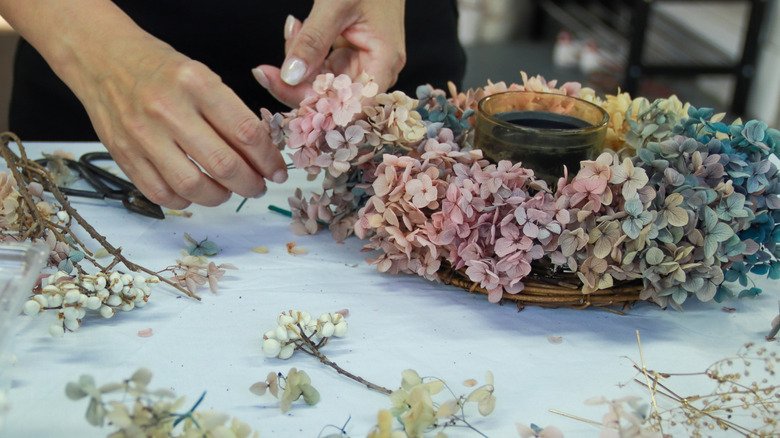
The easiest approach to making displays with dying or dead plant materials is to choose a container and add stems. Arrange everything as you would fresh flowers in a vase (minus the water). The container could be anything: from a traditional vase to shallow containers like bowls or baskets. Some sand in the base can help hold stems steady. For wreaths, a willow frame is easy to work with. It provides different-sized openings to gently tuck stems into without having to secure them. For outdoor containers, a 2-inch layer of sand over potting soil helps hold everything in place when the soil freezes.
Dried plant materials can be fragile to work with. The lack of moisture can make stems or leaves brittle. Use a gentle touch when cutting them with snips, wrapping them with wire or string, or adding glue. This will help the plant parts stay intact. Opting for simple arrangements makes this process much easier, too. Let plants shine as themselves, with their beautiful natural shapes and textures, instead of trying to make them fit into some elaborate design.
At the end of the growing season, many non-evergreen plants don't have much color beyond browns, grays, and beiges. And that's okay! Sometimes earth tones are pleasing, especially in a similarly hued vase or basket. Martha Stewart's fall décor is full of autumnal neutrals and earth tones. For a touch of brighter winter or holiday color, add some evergreens or use a container made of painted ceramic or colored glass. You can add colorful accents to a shallow arrangement, like ribbons or metallic Christmas balls.