

12 Space-Dividing Door Alternatives For Adding Structure To An Open Floor Plan
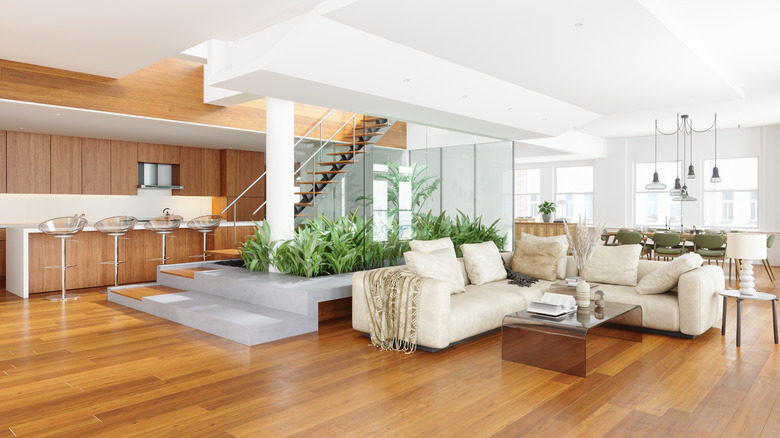
Is the open floor home — the ubiquitous layout popularized by HGTV — finally waning in popularity? Some experts say so, with designer Allison Handler telling Good Housekeeping, "Open-concepts have lost their luster a bit with clients." Designer Dan Mazzarini agrees, telling the publication that "homeowners need separate spaces to break up and silo different functions of the home." But if you live in an open floor plan home, don't start erecting the walls and doors just yet. Other experts, such as Jonathan Scott of HGTV's "The Property Brothers," say the open concept home isn't going anywhere; you simply might need to get creative if you want to add some structure and definition to it.
While doors and walls are certainly the obvious way to separate spaces, there are plenty of other space-dividing alternatives that can define areas for eating, living, and cooking quarters within your home while keeping it open and airy. Bookcases and curtains are a few of our favorite ways to define areas in an open concept home, but there are plenty of other, less conventional ways to divvy up spaces, such as creating definition with overhead lights or incorporating other architectural features, such as arches and columns. Check out these alternatives for adding some more structure without closing the door on your open floor plan.
Bookcases provide division and storage
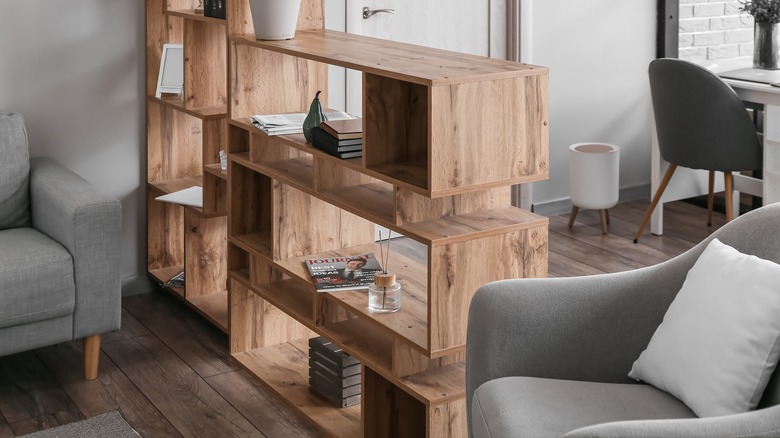
Large, freestanding bookcases are an excellent choice for creating physical barriers between different parts of an open floor plan home. Use a bookshelf to section off the living area from the eating area, for example, or to create a tiny workspace or studying nook within a larger open floor sitting room. Bonus: You'll get lots of extra shelving (which is often lost in open floor plan homes with fewer walls) for all your favorite reading material and other knickknacks.
Furniture can create boundaries
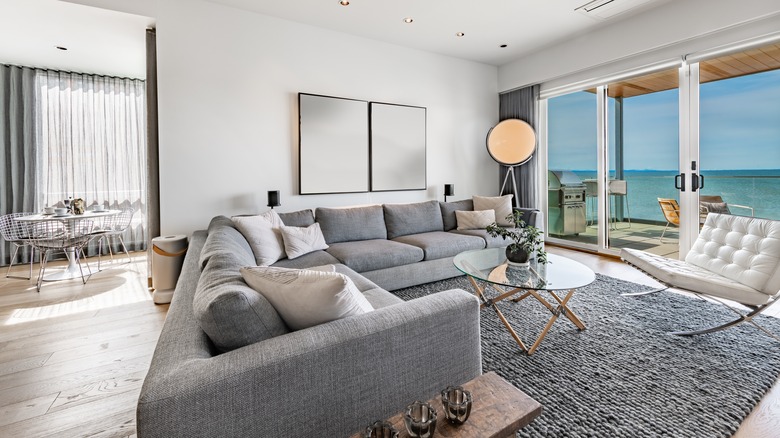
Clever furniture arrangements can help define spaces while keeping the room open. Large, oversized sectional furniture — an '80s favorite that's making a comeback — is a great choice for this, with big sofas acting almost like partitions in living room spaces. Try arranging modular sofas and chairs to close off the living room, or large desks and cabinets to section off work and office spaces within the open floor plan.
Area rugs offer visual separation
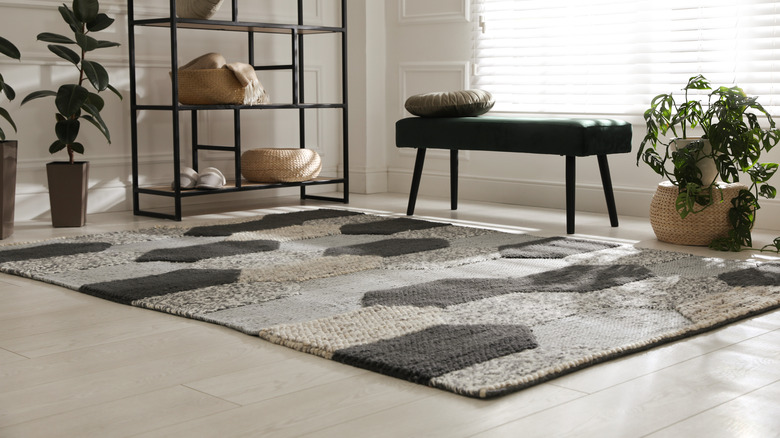
In lieu of doorways, large rugs can create little pathways and portals between one part of the open floor plan in your house and the next. Use long hallway rugs to direct visitors to different parts of the house, and then section the areas off with large areas rugs to further define spaces. Then, bring all the different rugs in each area of the open floor plan together by coordinating colors and incorporating different patterns, textures, and materials.
Paint colors define each area
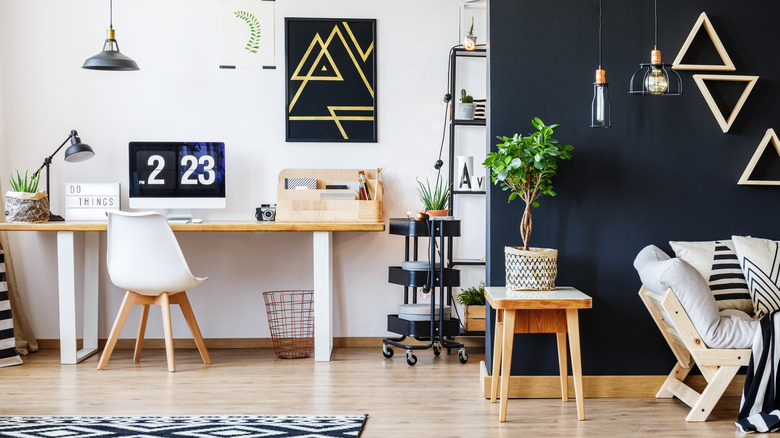
Playing with different accent wall colors is an easy way to define different parts of your open floor house without necessitating doors from one room to the next. A bright yellow breakfast nook, for example, can stand out as its own little area within a larger all-white open plan kitchen. Or use a bold wallpaper to section off a little work-from-home area within the kitchen or living space.
Plants can be positioned as partitions
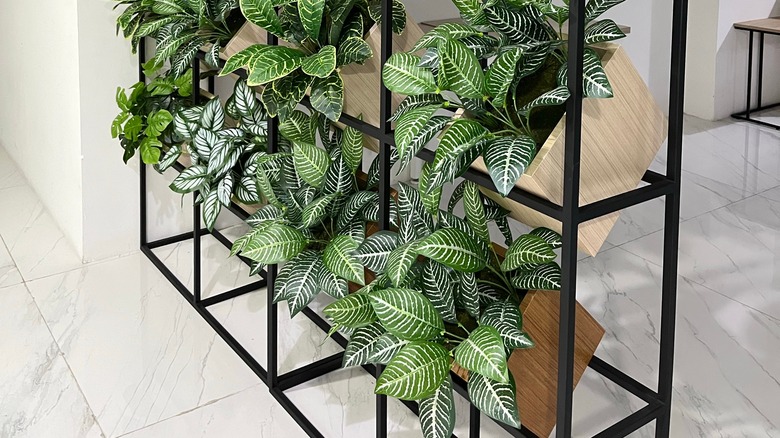
Instead of using doors, try going green. Plants make an extra-pretty barrier between rooms; plus, they come with a host of other benefits for indoor use, such as boosting your mood. Try using very large potted indoor trees, such as fiddle leaf figs or parlor palms, to create a green wall between areas like the living and dining space in your open floor plan. Or, hang some plants to create a natural green curtain between different areas of your home.
Curtains and drapes add privacy
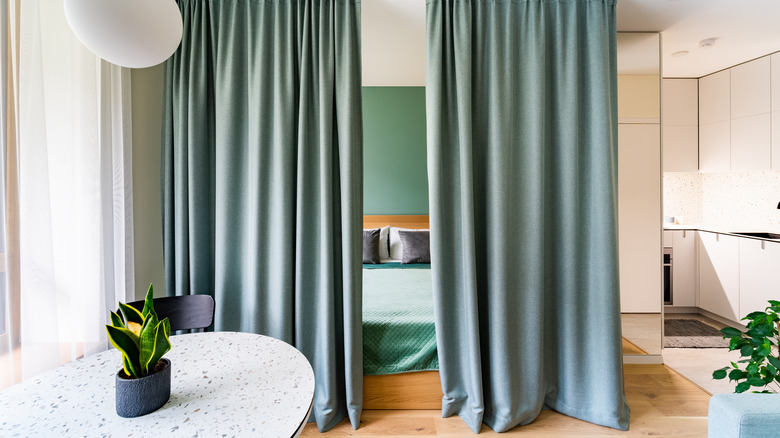
Speaking of curtains, if you find yourself in need of a more concrete barrier, curtains make the chicest door alternatives that can be elegantly held back with tassels or ties, or draped over entryways to close them if necessary. Opt for some sheer curtains to keep things extra airy, or play with different materials like rich velvets or light silks. Curtains not only divvy up the space, they also offer privacy.
Different floor materials signal new areas
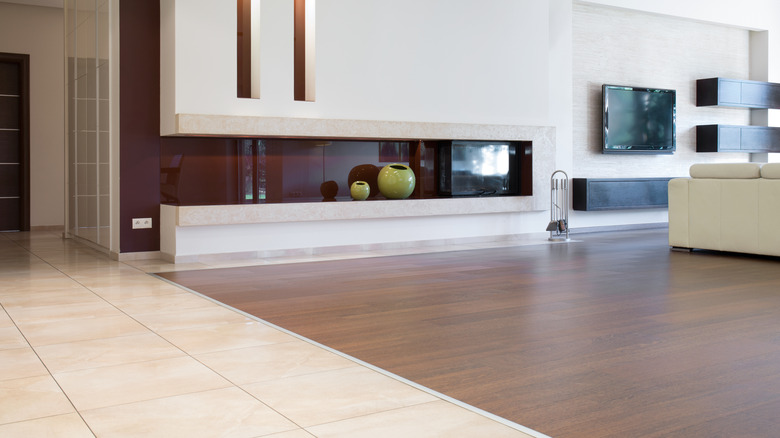
Even more defined and durable than using rugs to separate spaces, try using different floor materials to add more structure within an open floor plan. Tiled floors can be used to section off the kitchen area, for example, while wood floors indicate the end of the kitchen area and passage into the dining room space. Finally, carpeting can signal the start of the living room area.
Accent ceilings work like flooring
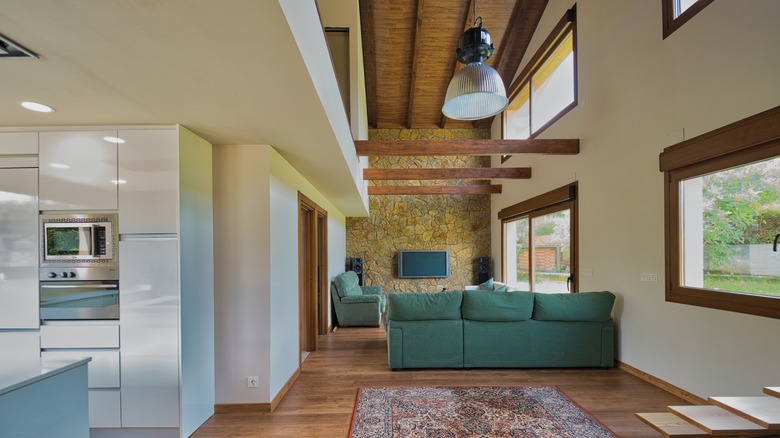
We've already covered the option of using different materials on floors to separate living space; the very cool inversion of that is using different materials on an accent ceiling as a creative solution to create room separation in an open floor plan. Use beautiful molding, incorporate striking wood beams, or even get creative with wallpaper on the ceiling (yes, it's a thing!) to differentiate spaces within a larger open area.
Screens or room dividers create nooks
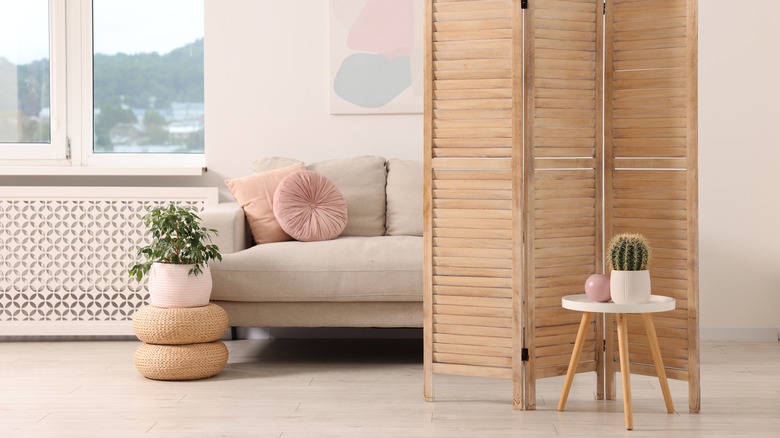
For an easily customizable door alternative that can separate spaces while looking lovely, try using a privacy screen. There are plenty of modern options, of course, but we especially love antique-style folding screens that add a bit of old world charm as well as function — such as Japanese byobu screens, Chinese Coromandel screens, or the ornately decorated privacy screens that were popular in affluent households in Renaissance Europe.
Hanging beads act like curtains
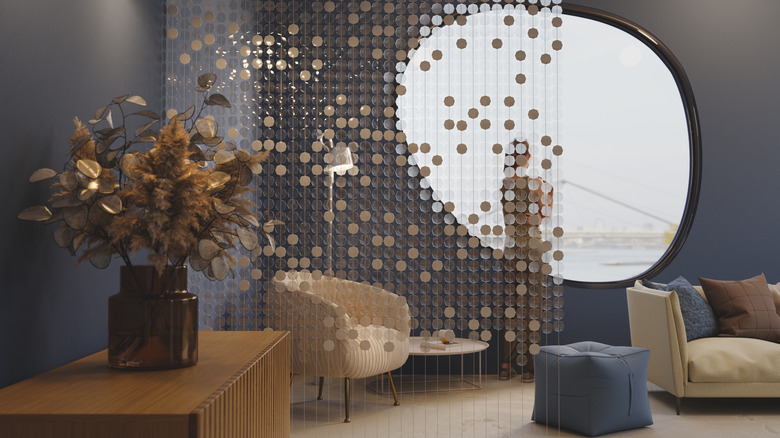
For another bit of vintage flair — and a groovy door alternative — try hanging a bead curtain to silo different areas of your home. While the look is often associated with hippie vibes, hanging bead partitions have made appearances in upscale establishments, too, such as the Four Seasons in New York. You can even get creative with the style and color of beads to coordinate with your existing home decor.
Lighting sets different moods
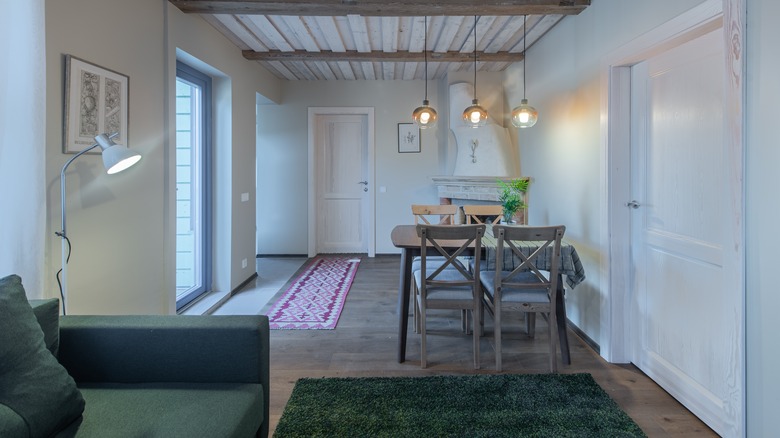
Different lighting styles can do wonders for adding structure to different areas of your open floor plan. You won't need to pass through a door to know you've entered a different area of the home; the lights will do the talking. For example, in lieu of doors and walls, close off the dining room from the rest of the open floor area by bathing it in a circle of overhead lighting with pendant lights or chandeliers. Or to shift the mood from room to room, use bright lights in the kitchen and dimmer tabletop lighting or candlelight in relaxation areas.
Archways and columns offer structural definition
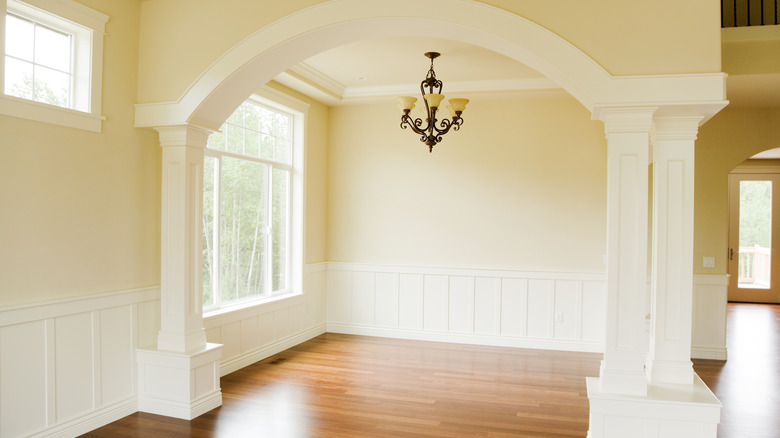
Archways and columns are more than just an architectural tool; they're a beautiful and classic way to separate spaces within a home while keeping it open and spacious. While they might already be incorporated for structural purposes, you can also have decorative columns or archway molds added with the help of a good contractor to give some shape to an open floor plan that feels structureless.