

The Watering Mistake That's Turning Your Lucky Bamboo Plant Yellow (Plus An Easy Fix)
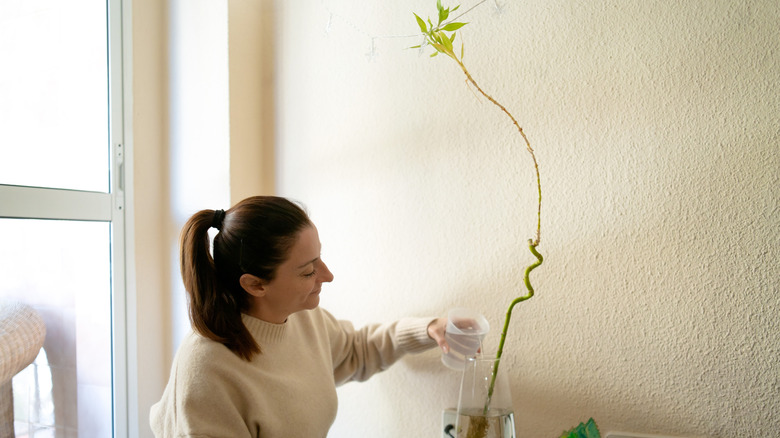
Is the plant you brought home for good fortune and peaceful energy turning yellow? That's one of the signs that your lucky bamboo is in trouble and struggling to survive. It's not about how much water you give it, but the quality of the water. Lucky bamboo (Dracaena sanderiana) plants are popular because they look great when grown hydroponically in a vase of water and some small rocks. They grow natively as a tropical shrub, and can be grown outdoors as perennials only in the warmest USDA Hardiness Zones of 10 through 12. Because they're used to clean, natural water sources, they have a sensitivity to the minerals found in tap water.
When you see the leaves starting to turn yellow, that means the plant is most likely affected by fluoride and chlorine. This discoloration signals that the lucky bamboo isn't absorbing the nutrients it needs while dealing with the buildup in its system. Many plant owners might assume that the plant isn't happy in its space, but if the yellowing persists even after adjusting light and moisture levels, the problem can be in the water itself. The easy fix is to change to water free of the chemical additives found in tap water.
Why lucky bamboo is so sensitive to tap water, even when planted in soil
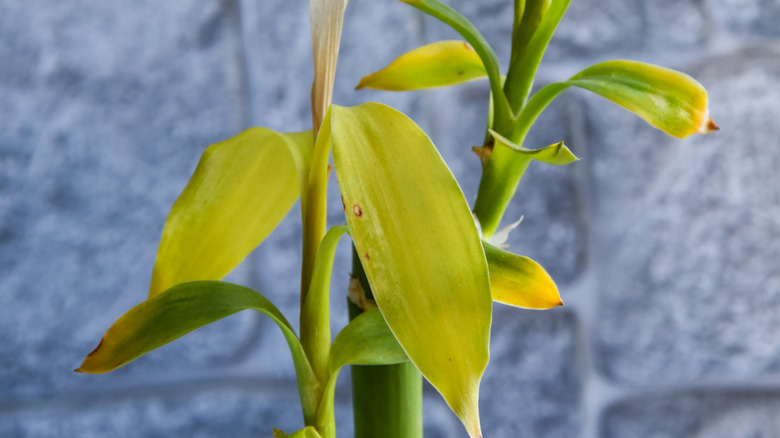
Lucky bamboo is more sensitive to tap water chemicals than many other common houseplants. When you're looking for tips for growing lucky bamboo, be aware that fluoride is a significant issue for these plants. While chlorine can disappear by leaving the water uncovered for 24 hours, fluoride doesn't evaporate out. This chemical builds up in the plant tissue over time and will hang out in the leaf tips and edges, causing a burn or discoloration that starts as yellow but can turn into brown spots.
Because water hardness, mineral content, and disinfectant type are different depending on where you live, some regions have water that is more damaging to some plants than others. Municipal water sources often have chlorine or chloramine in them, which keep the water safe for drinking, but they can be harmful for sensitive houseplants. When you're growing lucky bamboo in water, changing it often is important, but if the replacement water always has these additives, the yellowing problem won't go away.
Even if you grow your lucky bamboo in soil instead of water, the additives pose a threat. Each time you use tap water, hard mineral salts are left behind when the moisture evaporates. These salts build up over time, leaving a white crusty residue on the sides of the vase or in the soil. This residue can harm the roots, which will starve the leaves and turn them yellow.
How changing the water can help your lucky bamboo plant
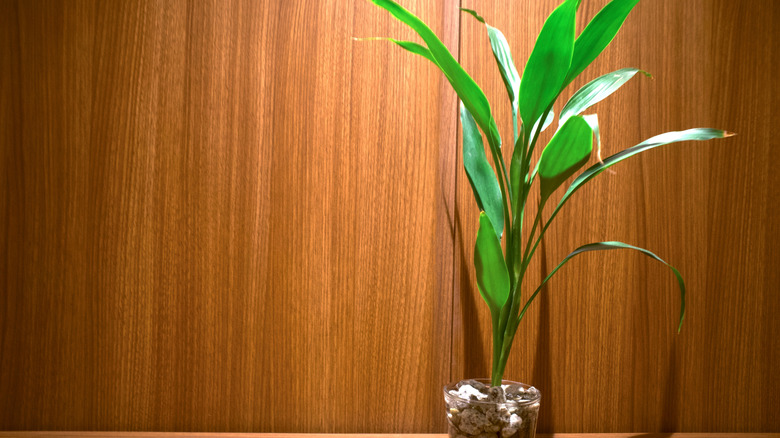
Stopping the leaves from yellowing on your lucky bamboo plant requires a permanent switch to a purer water source. The easiest way to get rid of the risks of chlorine, fluoride, and salt buildup is by using distilled water or fresh rainwater to keep your lucky bamboo plant thriving all winter. Rainwater is considered the ideal choice because it's naturally free of disinfection additives and it's highly oxygenated. Well water may not be the best option if it has heavy metals and fluoride.
If buying distilled water isn't practical, consider getting a water filter, although many home water filters remove chlorine, they do not eliminate fluoride. To remove fluoride, you may need special filters. If your city uses chlorine, you can pour the water into an open container and let it sit for 24 hours before using it for your plant. This process lets the chlorine evaporate so it won't hurt the lucky bamboo plant. If your city uses chloramine, make sure you use a water filter that eliminates this chemical because letting the water sit won't work – it doesn't evaporate as quickly.
Once you change the type of water you use, you should remove any leaves or stalks that have already turned yellow. Trimming away the damaged bits will encourage the lucky bamboo plant to focus its energy on growing healthy new leaves. Also, check the roots and remove any black or mushy sections.