

What To Consider Before Using Faux-Concrete Countertops In Your Kitchen
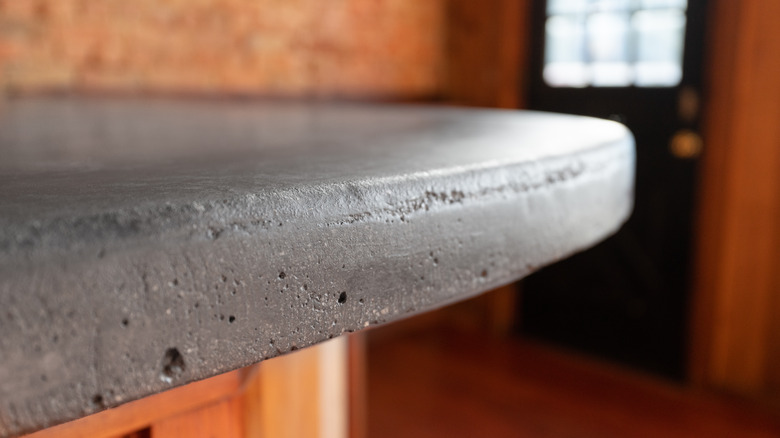
Countertops are easily one of the most important fixtures in the kitchen. They help establish the atmosphere in the room and determine how the space functions. Since they are available in a number of materials and styles, it can be difficult to select a countertop that will meet your kitchen's needs for years to come. Concrete is one of the lesser-known countertop materials to consider for a kitchen remodel. It touts durability and strength on top of a sleek, crisp appearance. But authentic concrete can be expensive, causing homeowners to look for alternatives. Faux concrete countertops are rising in popularity as a solution. The reason is that they replicate the look of authentic concrete without the high price tag. One thing some may fail to consider when choosing faux concrete, though, is the need to seal these countertops — and reseal them regularly.
A faux concrete countertop is created with a "feather" finish being applied to the countertop surface. This finish is typically a thin layer of cement overlay that replicates the look of concrete. For those looking to DIY faux concrete countertops, the cement mixture should be combined with water and applied smoothly. Wait for the first layer to fully dry, then sand it down. Multiple layers will be necessary, but make sure to let each layer dry completely before starting the next one. The result will be a faux concrete countertop that looks gorgeous and won't break the bank. This hack can be used on countertops that are made of wood and laminate. Check the label of your finish to make sure it is suitable for use on other countertop materials.
Faux concrete countertops need to be sealed
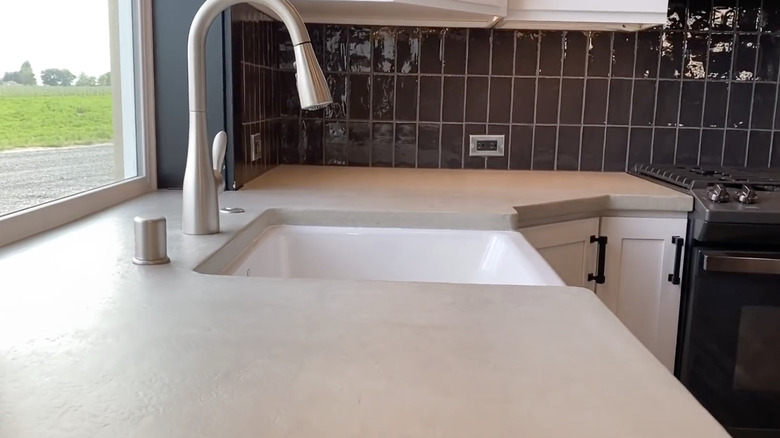
Once the faux concrete finish has been applied, it is imperative to seal the countertop. Similar to how stone countertops may need to be resealed over time, resealing faux concrete countertops will help maintain the concrete's visual appearance. This also ensures that the countertop is strong enough to handle the demands of the kitchen and will not be easily damaged by water or stains. Select a sealant that is waterproof and food safe, so meals can be prepared on the countertop without worry. First, gently wipe any dust or debris on the countertop surface, and then apply the first coat of sealer with a rag or a paint roller.
Make sure the seal is applied evenly on the entire surface, so every inch is safeguarded. Read the product instructions to see how long each coat will take to dry. It could take up to a few hours. After the first coat has fully dried, apply a second coat of sealer. It may be helpful to wait 24 hours, then apply an extra layer or two to ensure the new finish is fully protected. At this point, a gloss sealant can be applied for those who prefer a shiny, polished look on the countertop. To keep the concrete appearance looking pristine, remember to regularly re-seal the countertop, at least once a year.