

12 Ways That You Could Be Attracting Moles Into Your Yard (And How To Fix It)
We may receive a commission on purchases made from links.
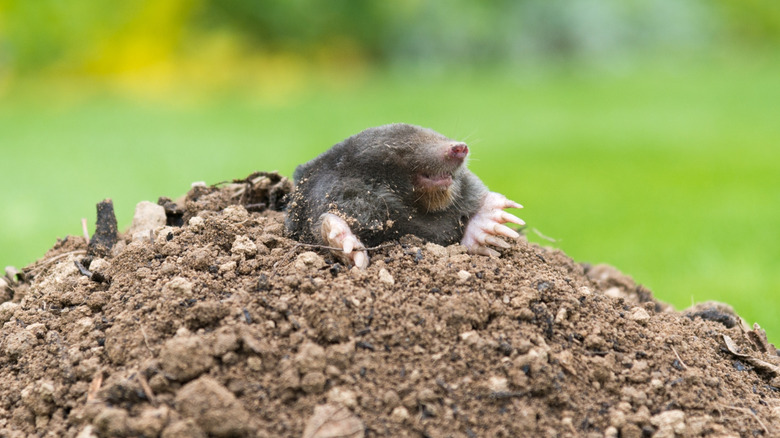
Is there anything more irritating than waking on a beautiful sunny day, only to have your morning reverie ruined by the sight of freshly dug molehills? They are the bane of good gardens around the country, leaving countless homeowners scrambling to stamp out the problem just as soon as humanly possible. If this sounds like you, then allow us to ask: why are moles attracted to your yard in the first place?
It's important to answer this question; even with the most effective mole control strategy (which we'll cover in more detail later), it's likely that these tricksy little tunnelers will return in the future. It could be that there's a bevy of bugs and insects beneath your lawn, in which case moles are sure to thank you for laying on such a sensational spread. Similarly, if you failed to swiftly rake away fallen leaves in the autumn, those could be harboring the sort of bounty for which moles get up in the morning.
Other mistakes include overwatering your lawn and allowing ants to establish themselves in your garden beds (speaking of your flower beds, if you happened to plant them too densely, that could be exacerbating your problem, too). Don't worry, though. Covering the things that most commonly attract them and the best ways to control mole holes in your lawn, this guide is here to help. It'll also offer some tips to help convince your moles that perhaps the grass really is greener on the other side of your fence.
Allowing insects to lurk beneath your lawn
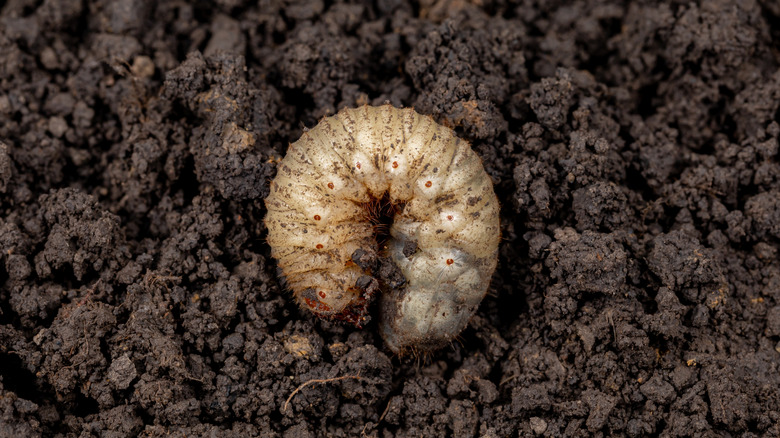
Did you know that moles primarily eat worms, grubs, and insects? How about the fact that they typically consume between 70 and 80% of their own body weight each day? Moles are always on the hunt for their next meal. And if they're not entirely sure where it's coming from, they're usually pretty quick to start looking. In other words, an abundance of insects is one of the most likely reasons for moles transgressing the boundaries of your garden.
Now, you might be thinking that 70% to 80% of their body weight translates to an awful lot of insects. You may also be smiling with satisfaction because you know your yard doesn't harbor enough insects to feed such a voracious appetite. But before you get too comfortable, you should know that even healthy-looking turf is capable of harboring a surprising number of insects and grubs, with relatively few signs of injury. Unfortunately, once moles cotton onto the fact that the getting's good, your grass is unlikely to remain pristine for long.
As for what to do, it depends on which types of insects are living in your garden soil. If you have grubs, then perhaps the most effective way to remove them is to treat your soil with beneficial nematodes. Microscopic and absolutely magnificent, these tiny organisms will hunt down and eliminate any grubs hiding out beneath your grass. Mid-June to mid-July is usually the best time to treat against grubs. If you have billbugs, then it's best to apply insecticides earlier in the season. And a word of warning: as food starts to become scarce, mole foraging activity is likely to increase as they scrabble ever more desperately for food, so be prepared for your problem to get slightly worse before it gets better.
Overwatering your grass
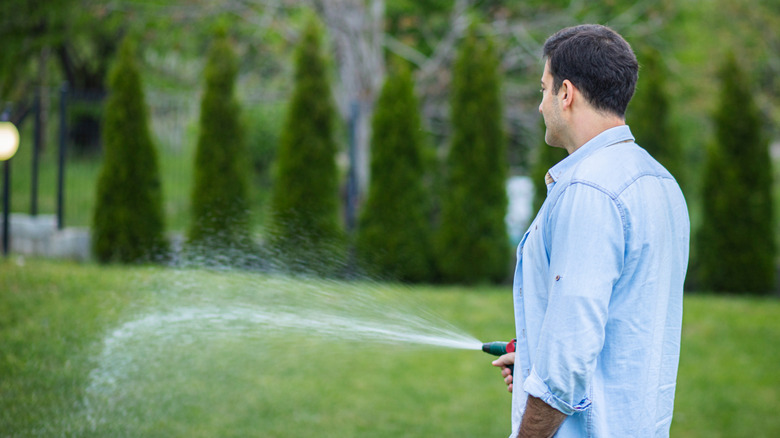
If you have lots of insects rooting around beneath the blades of your grass and you have a tendency to overdo it with your hose, then you could be making life very easy indeed for the mole currently prospecting around your fenceline. Moles prefer loose, wet soil, which makes a lot of sense given how much easier it is to tunnel in. Unfortunately, when the conditions are right, moles can tunnel up to a foot per minute, which means that just a single mole can potentially do an awful lot of damage in just a single evening.
The best way to avoid this mistake is to only water your grass when it needs hydration. For example, if your grass fails to bounce back when you walk on it, then it likely needs some water. Similarly, if the blades have taken on a gray tinge, then that's also a good sign you need to unwind your hose. As for how much to water your lawn, most gardens require approximately 1.5 inches of water per week. You can use a tin pie plate (a common baking essential) to measure rainfall, or if you'd prefer more accuracy, consider buying yourself a rain gauge. Only once you know how much rain your yard has received can you appropriately adjust your watering strategy.
Providing moles with plenty of shade

If you have a copse of trees or densely foliated shrubs, you may well be contributing to the kind of environment that moles love. It's worth saying that they are likely to tunnel just about anywhere that the soil allows them to do so; however, moles tend to favor cool and shady spots. The main reason for this is that, in such well-shaded areas, the soil isn't allowed to bake and dry as hard as that in areas exposed to full sunlight. Under the canopy of trees, or in well-planted garden beds in which the plants help to shelter the soil from the sun, moisture remains in the soil for longer, thus helping moles to tunnel their way underneath.
The way to get around is simple: reconsider your planting scheme. Depending on the plants and trees causing the issue, this needn't be as drastic as it sounds. You may be able to let there be light by pruning a few choice branches from your trees. But if you have an area of lawn that's densely planted, then you may need to consider removing some plants to reduce the amount of shade.
Failing to clear fallen leaves
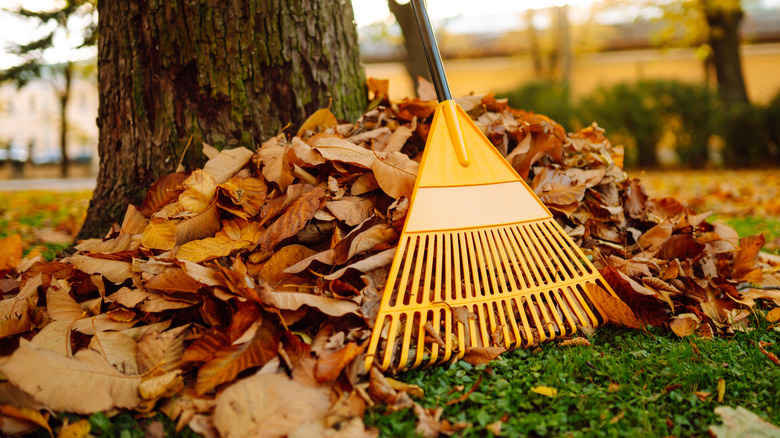
Before we dive into why this mistake could be inviting moles into your yard, it's important to first explain that there are certain reasons why you might want to consider keeping them. For one, they make an excellent natural mulch. Secondly, as they begin to decay, these leaves attract lots of insects, including termites, beetles, earwigs, and worms. These creatures feed on the decaying leaves, helping the organic matter to break down and pump nutrients back into the soil.
Unfortunately, letting fallen or raked leaves pile up in your lawn can also lead to several issues. One is that those same insects are also likely to attract moles. More than that, with a carpet of leaves left languishing over your lawn, the soil beneath is likely to retain more of its moisture, making it nice and easy for moles to dig their tunnels. With this in mind, whether your neighbor has started to notice mole damage or you've seen the telltale signs of moles in your own yard, it's worth reaching for the rake and bagging up those leaves.
Not keeping your bird feeder area clean

The first thing to explain here is that moles don't eat birdseed, so you can rest reasonably assured that your feeders themselves are safe. The issue with not keeping your bird feeder area clean — specifically, the ground directly underneath it — is that the detritus that inevitably collects there is likely to attract moles. And it's likely for two reasons.
The first is that, as unpalatable as it appears to us humans, certain insects are rather partial to bird droppings. Ants, in particular, have been shown in studies to favor it as a source of protein. The second is that ants also enjoy a spot of birdseed whenever it's available, and if you're not quick to clean up after the birds in your yard, they'll quickly identify any spillages as a handy food source. If moles happen to learn that ants have established themselves in your yard, then they'll be quick to follow. Fortunately, this is an easy mistake to avoid. Just keep the area around your bird feeder clean! Consider using a tray to catch droppings and seeds, and make sure to clean it regularly.
Failing to maintain your mole control strategy in the winter
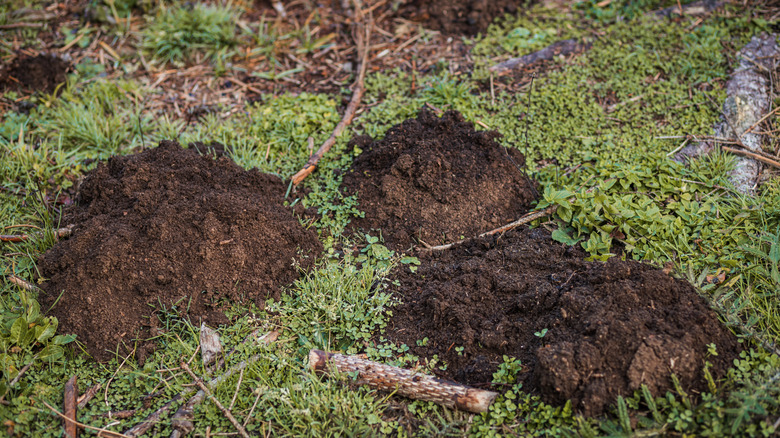
While moles are usually more active during the summer, they don't hibernate, which means they're still active during the winter and that they therefore still need to eat. With that in mind, while you may wish to sink into your favorite armchair and light the fire, you should, under no circumstances, hang up your mole control tools. The problem is that if you fail to keep on top of your mole problem at this time of year, all of the hard work you did through the months of spring, summer, and fall could wind up counting for naught.
This is especially true given the time of year that moles breed. Breeding usually takes place late in the winter, with litters being born between March and early April. Of course, you shouldn't try to trap or poison a mole, especially if you suspect that one has bred in your yard. However, you should do your utmost throughout the winter months to make your yard as unappealing to moles as possible. If you don't, and a mole is already nearby, then come spring your garden could find itself housing a feeding and young family.
Not barricading beneath your fence lines
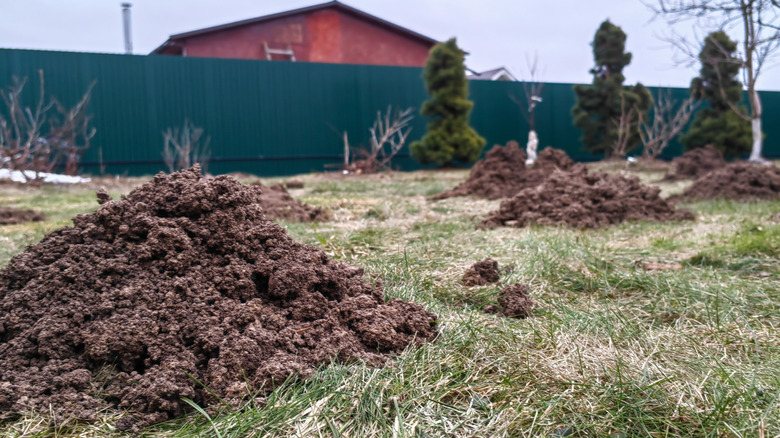
Even if you have a healthy lawn that offers little in the way of natural mole food, there's still no guarantee that they won't come tunneling into your garden if allowed to do so. Don't forget, moles need to eat a lot each and every day. And like the gold miners of the 1700s, moles are prospectors; if given an easy means of tunneling their way into your yard, they won't see the harm in doing so if there's a potential seam of insects to be found.
With this in mind, it's worth considering how to stop them. The best way is to dig a barrier underneath your fencelines, which will block them out altogether. Use a sheet metal barrier, bending it into an L-shape with both faces around 12 inches wide. Dig a trench to match — 12 inches deep and 12 inches wide — into the ground beneath your boundary lines, and then sink the metal into it. If you're able, be sure that there are no moles already present before you do it. If you imprison a mole in your yard, they're likely to cause even greater damage as they desperately try to find an ever-more-scarce supply of food.
Allowing ants to roam free around your yard
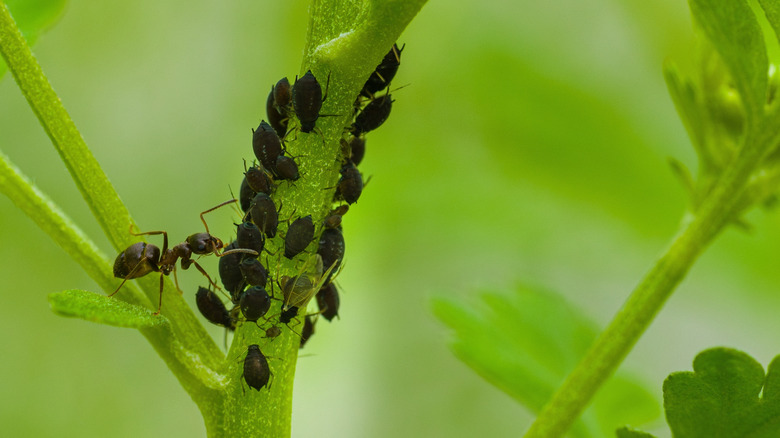
The presence of ants in your yard is not, in isolation, a problem. However, if moles are lurking nearby, those ants are sure to seem like a pretty handy source of sustenance. In order to minimize the population of ants around your garden, look for things that could be attracting them. Bird droppings could be a source of attraction if you don't keep the area beneath your birdbath clean. There are also several common garden plants that attract ants, like peonies. Perhaps the most likely thing to encourage ants to stick around, however, is the presence of aphids.
Aphids secrete a liquid called honeydew, which is an immensely rich food source for ants. It's so sought after that ants will actually farm aphids in order to keep a steady supply of honeydew flowing, and as long as it is, they'll stick around. Unfortunately, so will any moles that happen to be in the vicinity. To control ants, you can use slow-acting insecticide baits. Ants will accept this as a food source, using the tainted bait to feed the rest of the colony, including both larvae and the queen. At the same time, try to treat your plants with insecticides to reduce aphid populations, and if it's the plants themselves that are drawing in the ants, consider replacing them with something less attractive.
Not using appropriate deterrents
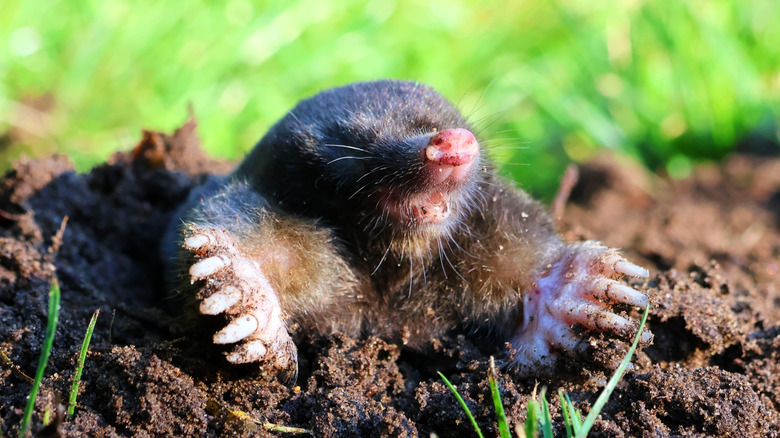
If you run a search in Google for "ways to deter moles," the results will throw up a number of purportedly easy hacks that promise to solve your problem with a number of home remedies. Some commonly touted mole deterrents aim to offend the nostrils of these tenacious little tunnelers, like spreading used cat litter in mole-infested areas, soaking a rag with olive oil, or lacing the area with the scent of other essential oils. Others include more dangerous methods, like pouring shards of broken glass into mole tunnels or pouring kerosene in the area. Some even suggest planting "mole-repellent" plants, like caper spurge (Euphorbia lathyris), which is said to be mole-repellent.
Unfortunately, while natural mole deterrents can be tempting, especially given their ease of application, many of them are underwhelmingly ineffective. The reality is that there are no shortcuts to mole control, and some, especially scent-based strategies, are at the mercy of the weather, since any rainfall would leave you needing to reapply your chosen treatment. Instead, you should consider more effective, proven strategies, like trapping, tunnel fumigation, and barricading beneath your fences.
Providing a suitable burrowing ground
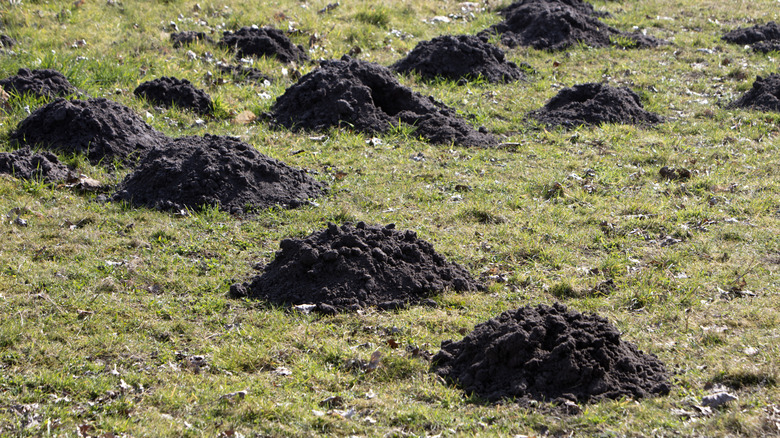
Perhaps the most irritating thing about having moles in your yard is the damage they can do in their search for food. Now, while that is certainly annoying, if your garden is providing the right conditions, then even more concerning is the fact that they could well be making themselves at home — literally. And if they happen to then breed in that home, you could find yourself with a family of diggers on your garden doorstep.
For a site to be suitable for mole burrowing, it needs to offer protection. Areas with lots of trees, stumps, and other structures like sheds and fencerows are all ideal. If these happen to be situated on high ground, then moles are more likely to nest near them, since higher elevation means a lower likelihood of flooding.
Of course, getting rid of your shed or cutting down your favorite trees could well seem like a step too far in your efforts to remove your mole. However, you should know that during breeding season, males will tunnel a long way in order to find a female — including beneath your fence. What's more, after moles mate, maturing youngsters tend to form their own territories within a short distance of their nesting site, sometimes as little as 30 yards away. To make your yard less desirable for burrowing and breeding, try to minimize the amount of natural food, and ensure you get those barricades sunk beneath your fence as a matter of priority.
Planting your garden beds too densely

Areas of high ground, with shade-giving, protective structures like sheds and fences, or with dense tree cover, are likely to encourage moles to stick around. But so, too, are densely planted garden beds. We can understand the temptation. Especially in smaller gardens, packing your plants into your limited growing space is a potentially great way to get the most out of your garden. However, since moles tend to favor spots that provide plenty of protection, your flourishing flowerbeds could well be one of the reasons behind their presence.
It's not just cover that dense planting provides. A number of insects are likely to thank you for providing a cozy home for them, too. And since moles feed predominantly on insects, you are, in effect, providing them with room and board. To get around this mistake, consider thinning out your planting scheme. Replace certain species with plants that work as natural pest control to keep the supply of mole food to a minimum, and consider installing metal wire barriers along the bottom of your beds to prevent moles from surfacing there in the first place.
Relying on a single mole-control solution
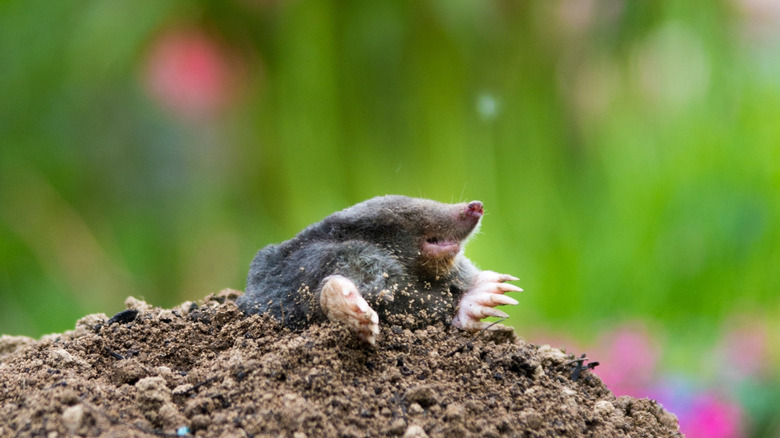
While it can be tempting to try the many touted "hacks" to deter moles from your yard, like soaking affected areas in kerosene or spreading dirty cat litter, the reality is that such home remedies rarely work. Fortunately, there are several ways that have proven to be more effective. Perhaps less reassuringly, you may need to adopt several of them at once in order to be successful.
Unfortunately, using a single method is often just as ineffective as the aforementioned home remedies. For example, laying live traps without barricading beneath your fences may catch the occasional mole, but it does nothing to prevent future incursions. Similarly, if you barricade a mole inside your yard and call it a job well done, that actually does nothing to take care of your existing mole problem, particularly if you neglect to address the food sources that drew them to your garden in the first place.
In order to get rid of moles in your backyard and garden, you need to attack the problem from several angles. Treat your lawn against insects and grubs, and barricade beneath your fences. At the same time, lay some live traps to try and catch any resident moles. You may only need to catch one or two to solve your problem; moles are generally solitary creatures, and while the number of tunnels in your yard could make you think the infestation is serious, it could actually be the work of a single mole.