

8 DIY Solutions For Removing Rust From A Cast Iron
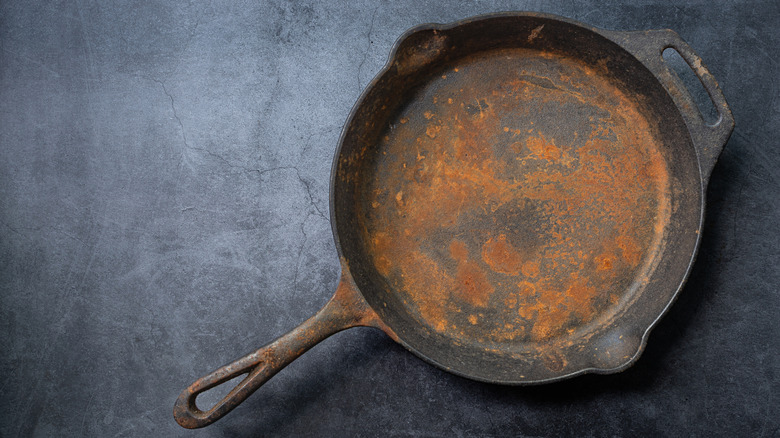
Many people believe that a cast iron skillet with rust on it is done for, but that's actually not the case. There are quite a few ways you can protect your favorite cooking pan from rusting, but what do you do when you see that dreaded orange tinge begin to appear? Not to worry; there are multiple solutions for removing rust from your cast iron skillet, and they only require a couple of items from your pantry and a little elbow grease. The two key elements to these DIY hacks are usually abrasives and acids. Salt is one of the most popular ingredients used in these solutions to remove rust, and it's often paired with some sort of acid like lemon or vinegar.
Iron skillets have been around for a very long time, and many people swear by them for cooking their favorite meals. But there are those who find them hard to cook with and even harder to keep clean and seasoned. However, with a little know-how, a properly cared-for iron skillet can become one of the most popular cooking tools in your kitchen and can last for many years. These rust-removing methods are perfect for restoring an iron skillet you may have found while thrifting.
Course salt and oil
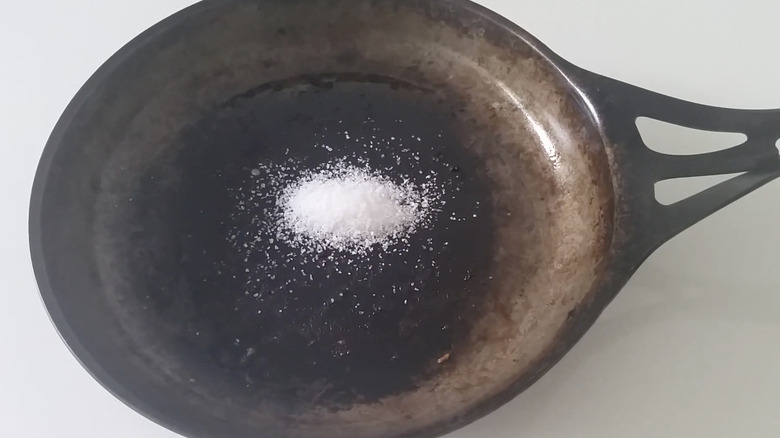
For this method, mix about a tablespoon of oil with some coarse salt to create a paste. Use some paper towels or an old cloth and rub the paste into the rusty area. After you have scrubbed it thoroughly, rinse and then season your iron skillet. The salt works as an abrasive, while the oil acts as a lubricant.
Vinegar and water soak
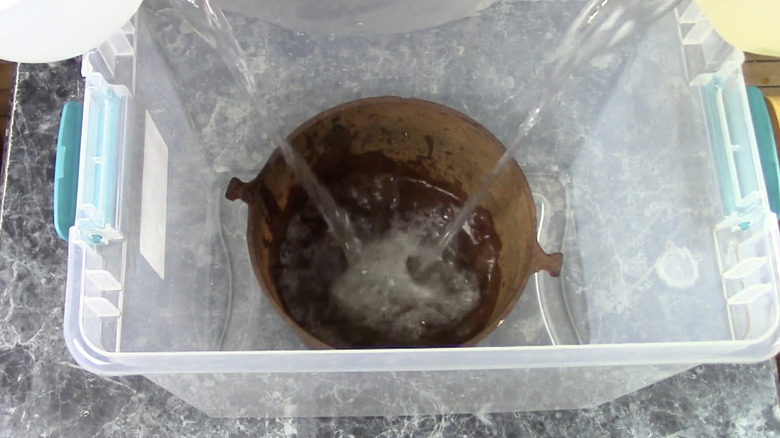
To do a water and vinegar soak, you will need a tub big enough to hold your skillet and enough of the solution to keep it fully covered. Add a solution of ½ water and ½ vinegar to your tub, and completely submerge your skillet. Allow the skillet to sit for 30 minutes to an hour. Remove your pan from the solution when you see no more rust. You will then want to wash with mild dish soap, rinse, and then season your pan as usual.
Baking soda paste
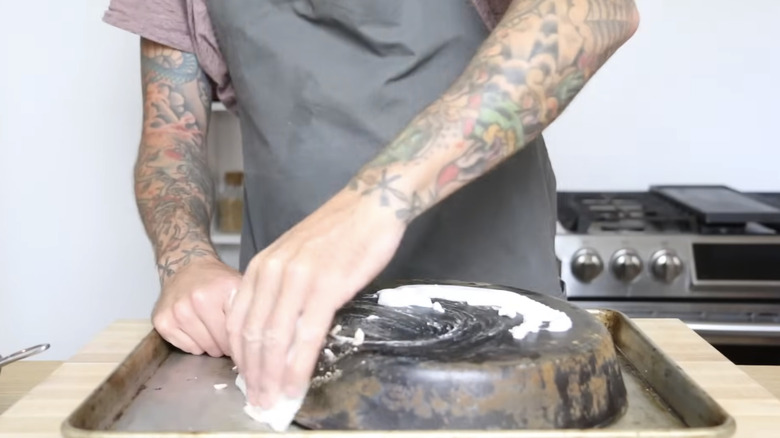
The baking soda paste method is similar to using salt as an abrasive. Start by pouring baking soda into a bowl, then add enough water to make a paste, similar in thickness to toothpaste. Apply the paste to the rusty area of your skillet and allow it to sit for a few minutes. Then, take a nonabrasive sponge and scrub in a circular motion to remove rust. After you have finished, rinse and season as usual.
Potato and salt
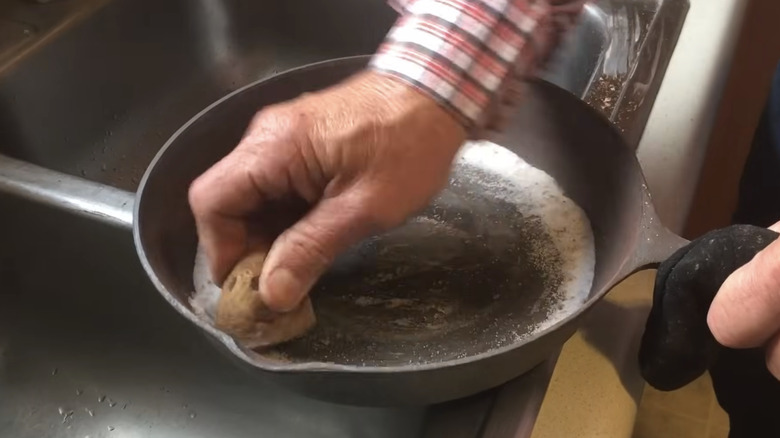
Yes, you can use a potato and salt to remove rust from your iron skillet. The reason this method works so well is that potatoes contain oxalic acid that breaks down the insoluble iron oxide of rust into iron particles that can be rinsed away with water. Simply cut a potato in half, add some coarse salt to your skillet, and scrub the area with the cut side of the potato. Repeat until you no longer see rust, rinse, and season your pan.
Ketchup spread
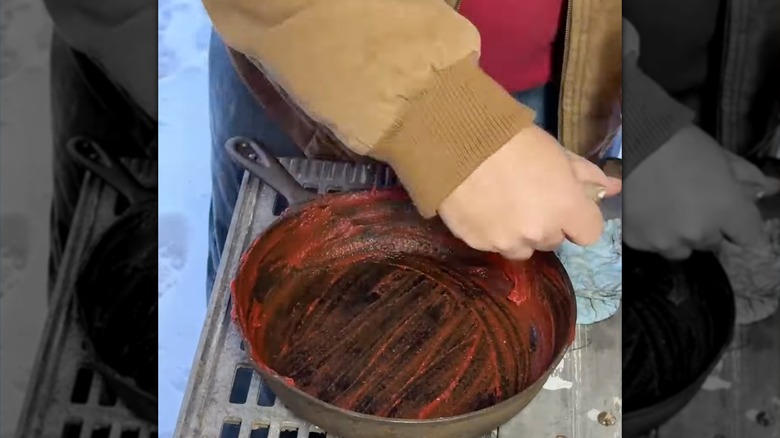
Yes, you read that right — ketchup. This method works as a double dose of acid. The combined power of the vinegar and acid in the tomatoes is effective at breaking down and removing rust. You simply need to spread ketchup on the rusty area, allow it to sit overnight, scrub it off, and — most importantly — rinse with a mild soap and water afterward. Lastly, season as usual, and your skillet should look like new. You can use tomato paste for this method of rust removal as well.
Lemon juice and salt
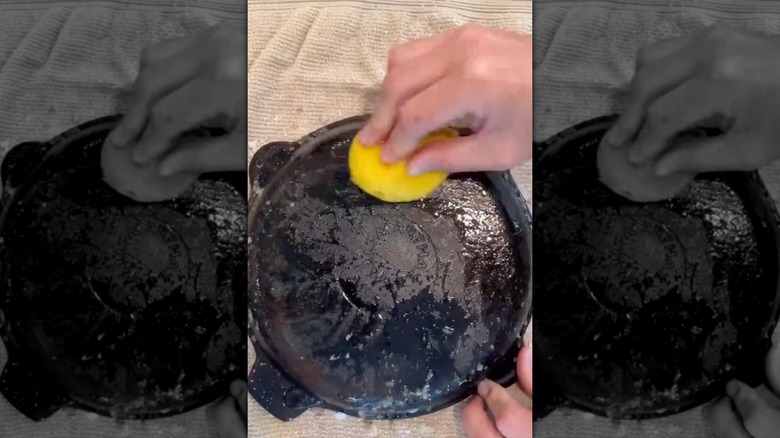
Like many combos on our list, lemon and salt combine the power of acid with the scrubbing power of coarse salt. Simply add some coarse salt to the rusty area of your skillet and use a lemon cut in half to scrub the salt into the rusty spot. After you have removed the rust, it's important to rinse with a mild soap and water to neutralize the lemon's acid. If citric acid is left on your skillet for too long, it can damage the iron.
Aluminum foil and salt
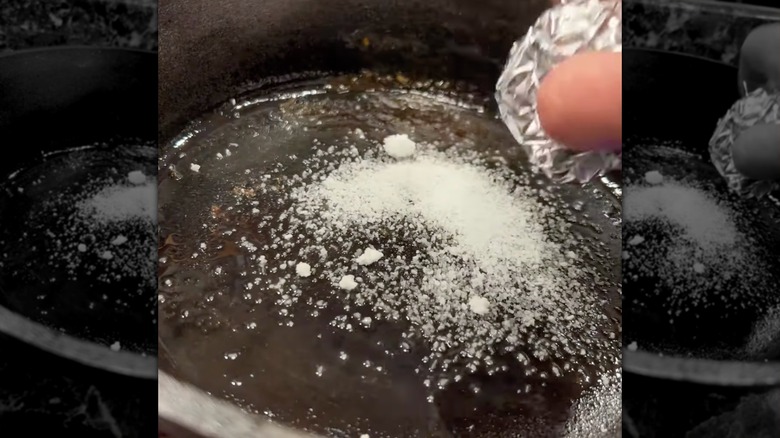
This method is for all those science nerds out there. Aluminum foil has more than its abrasive property going for it; it actually creates an electrochemical reaction when scrubbed on the rust. Simply put, the aluminum foil turns the rust back into iron. Wad a piece of aluminum into a loose ball, wet with a little water, sprinkle salt over the area for extra abrasion, and scrub in circular motions. Once finished with the scrub, simply rinse and season your skillet.
Citric acid powder soak
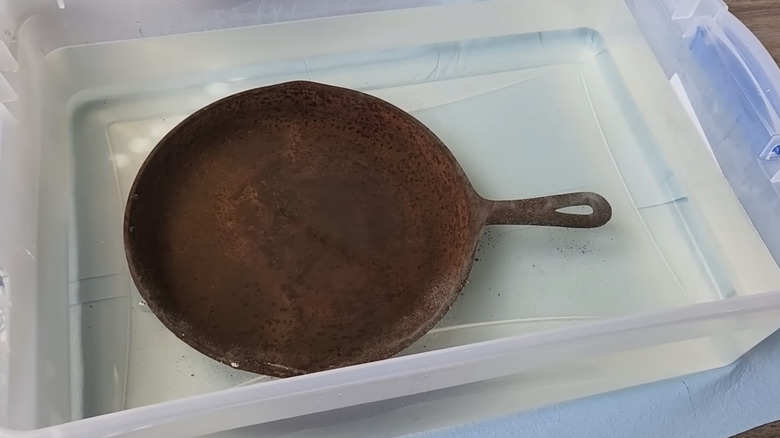
This method is similar to the vinegar soak, but it uses the citric acid power of the lemon and salt scrub method. It's important to use gloves due to citric acid possibly being a skin irritant. Dissolve ⅓ cup of citric acid in a tub of warm water, add your skillet, and allow it to sit in the solution until you don't see any rust (this can take a couple of hours). To neutralize the citric acid, immediately remove from the solution and rinse with mild soap and water. After you've removed the rust, season your pan, and you're ready to cook.