

The Eco-Friendly Air System Trend That Is Expected To Take Over In 2026
When winter comes around and the heating bills start rolling in, it only makes sense to start exploring ways to help reduce your energy costs at home. Of course, you can try out all kinds of tricks and hacks, but you may have more success by tracking the latest trends and innovations in energy efficiency. One type of air system that is trending due to its ability to lower your bills and help reduce environmental harm is an energy recovery ventilator (ERV). While ERVs have been around since the early 1980s, with information about them being published by both HVAC companies and the United States Department of Energy, there is a definite boom in interest. Plus, the buzz isn't limited to information; the market for energy recovery ventilators is expected to grow significantly by the early 2030s. Most of this may be attributed to new building codes that require mechanical ventilation in homes.
Whether you are a homeowner looking to upgrade your air system or a potential buyer trying to determine exactly what to look for, knowing more about the trendy ERVs is important. ERVs are whole-house ventilation systems that are designed to improve ventilation in your home. By pushing out stale air from indoors and letting in fresh air from the outdoors, they can improve indoor air quality. The process also involves heating the air it lets in using the warmth from exhaust, which can lower your heating bills, reduce waste, save energy, and lower carbon emissions compared to other ventilators, making ERVs a more eco-friendly option. ERVs can be installed in new buildings or older ones, making them worth considering for many homes.
What are the benefits of energy recovery ventilators?
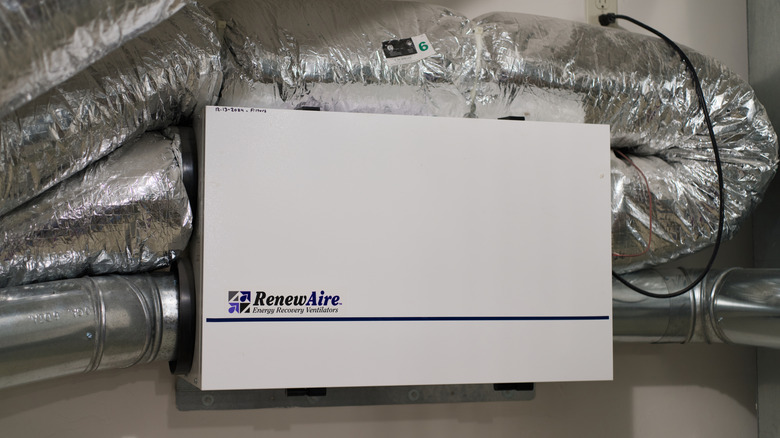
While it may seem strange for an air system to be trending, the many specific, measurable benefits that ERVs offer, in addition to their sustainability, will help clear things up. First, there is the impact on air quality. When indoor air is pushed out, it takes dust, allergens, and other pollutants out with it, replacing the stale air with fresh but filtered air from the outdoors. This is why mechanical ventilation systems can be a huge help for people with allergies, asthma, or other respiratory conditions. ERVs can also contribute to keeping your home at an acceptable humidity level by dehumidifying air in the summer and maintaining humidity in the winter.
Proper humidity is not only good for your home and health, but it is also just one way in which an ERV can save you money. Because of the way ERVs precondition the air and transfer heat, homeowners can save about 10 percent on energy bills by installing an ERV (per the Center for Energy and Environment). These air systems also reduce strain on your overall HVAC system, potentially reducing the need for repairs and replacements over time. All of these benefits also combine to potentially increase your home's property value while generally making your home more comfortable to live in for you and your family.
ERVs are a popular choice for newer buildings that are more airtight and really need fresh air to circulate, but they can also be installed in older buildings. However, you should know about the high cost of installation and other potential drawbacks before deciding to do so.
Should you get an ERV for your home?

While ERVs work in any climate, it is worth noting that the savings may not be as good in mild climates as it will be in climates that have really hot and/or cold seasons. In mild climates, it may be better to explore other top home hacks to improve your climate-friendliness that may also save you money. Another potential drawback is that in extremely cold climates, some ERVs may require defrosting. There are some special models that can work at as low as -10 degrees Fahrenheit without freezing, but it is not typical of a home model. Defrosting and other regular maintenance, like changing filters and dealing with noisy parts, can add up.
If the drawbacks don't deter you, then it may be time to look for a professional to install a new ERV. Unfortunately, finding someone skilled in working with ERVs can be difficult, and these air systems can be overall more expensive to install than others. This is especially true for older homes, where ductwork may need to be changed or replaced. Typically, for just the unit itself, ERVs cost between $600 and $1,200 for small houses and between $1,500 and $2,500 for mid-sized houses. Installation usually costs about $1,000 to $2,000. If the utility savings will be high and you would benefit from the health and comfort improvements ERVs can offer, then it may be a smart investment for your home. If being environmentally friendly is also a draw, there is an eco-friendly home trend coming in 2026 that greatly reduces your water usage as well.