

Spot Cracks On Your Kitchen Cabinet Door? Here's How To Easily Fix It

We may receive a commission on purchases made from links.
Although they are ugly, cracks in your kitchen cabinets can be more than an aesthetic issue. They can indicate underlying stress in the wood, and understanding why they occur is the first step to a reliable repair. Wood is hygroscopic, meaning it continuously absorbs and releases moisture in the air. When this occurs in your kitchen, your cabinets naturally expand and contract. Over time, this can cause the finish or even the panels themselves to crack or split. Frequent water exposure is another common cause of cracks because it can lead to swelling and warping, weakening the wood's structure.
In many kitchens, especially older ones or those with solid wood cabinets, these cracks develop at joints, panel edges, or door frames. If you've noticed cracks in your kitchen cabinets, don't panic. You likely won't need to replace them. For minor cracks, using wood filler is a quick and easy solution that's perfect for beginner DIYers. With the right filler and proper technique, you can repair your cracked cabinet without having to get a new one. You'll find that this is also one of the best ways to fix dents on wood furniture.
How to make cabinet cracks disappear with wood filler
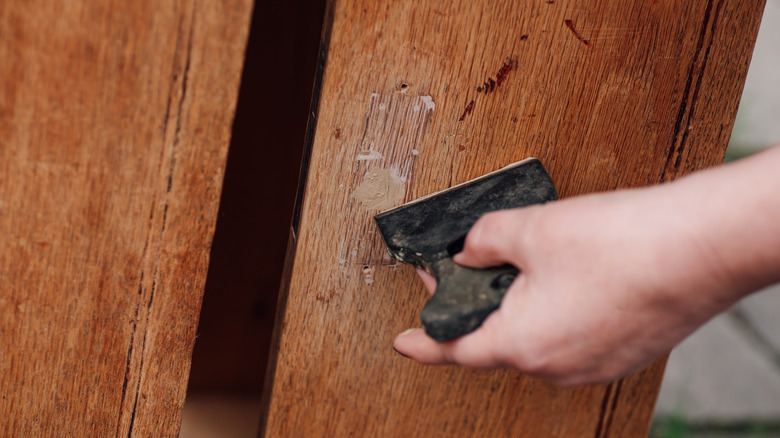
The first step is to pick the right wood filler for your project, and there are a few to choose from. Vinyl spackling compound is user-friendly and is quick to dry. It usually dries to a white finish, but can be sanded down and painted, making it a great choice for small cracks. Another option is a water-based filler, like the Gorilla all-purpose wood filler, which is easy to clean up and can also be stained or painted. Wood filler sticks, like the Guardsman wax wood furniture filler sticks, are just like crayons. They're very convenient and easy to use, and ideal for the smallest cracks.
Once you've chosen a wood filler, test it on an inconspicuous area of your cabinet first to make sure it's a good color match, primarily if you're using the sticks. Preparation is key to successfully fixing a crack in your kitchen cabinet. Before doing anything else, you should thoroughly clean the crack and the surrounding area with a soft cloth and a gentle cleaner. When you're ready, apply the wood filler using a putty knife and press it deeply and firmly into the crack. Remember to follow the instructions on the label of the product. If you're using a wood filler stick, simply run it over the crack like you would with a crayon until the crack is filled. After the wood filler is completely dry, you can smooth over the area with fine-grit sandpaper in the direction of the grain. Finish with a matching paint or stain, and your cabinets will look good as new. As an alternative, you can fix cracked cabinets without using wood glue by simply hiding the imperfections with contact paper.