

Types Of Winter Salt To Avoid Using And Safer Alternatives For Plants
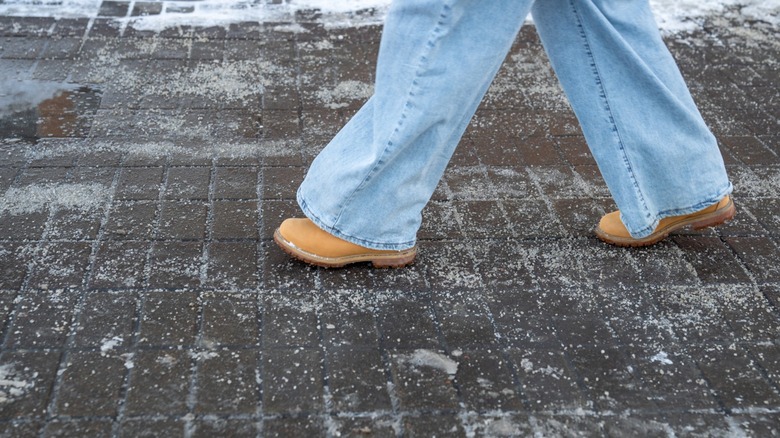
We may receive a commission on purchases made from links.
Salt is one of the most important winter essentials to have on hand before snowy weather hits. The role of winter salt is to de-ice surfaces like driveways, walkways, porches, steps, and patios. There are several types of winter salt commonly used to melt ice and snow. While sodium chloride, also simply known as rock salt, is the conventional, inexpensive option, there are several alternatives you can use instead. It's important to know which winter salt types to avoid and which ones can be used safely around vegetation. Some alternatives that are classified as friendlier to plants include calcium chloride, magnesium chloride, and calcium magnesium acetate (CMA). All of these have their benefits and disadvantages.
Although it is the most inexpensive winter salt choice, rock salt can harm your pets and even damage your concrete surfaces. But one of the most frustrating aspects of rock salt is the damage it can do to the vegetation growing near your hard surfaces. Sodium chloride that gets into the soil can severely limit the growth of plants in spring by dehydrating the roots. The salt that goes into the ground can also prevent your plants from extracting the necessary nutrients they need to thrive. Some plants have a higher tolerance to salt pollution, but it can be a big problem if your current landscaping doesn't feature salt-tolerant plants, or includes salt-intolerant species like roses and rhododendrons. Besides, when used repeatedly outdoors, this ice melt option also leaches harmful chloride into the groundwater, leading to long-term pollution. Sodium chloride can also irritate pets' sensitive paw pads and may expose domestic and wild animals to cyanide, which is sometimes included with rock salt as an anti-caking agent.
Choosing the right winter salt for your home
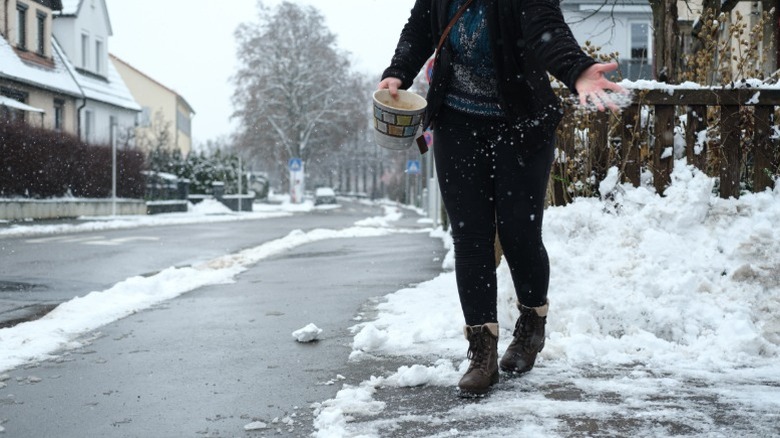
You can easily avoid using sodium chloride if you want to protect the grass and plants near your walkways and other hard surfaces. In fact, many homeowners are ditching salt for calcium chloride, which can melt snow and ice away with less damage to vegetation. Unfortunately, a huge downside of calcium chloride (besides its expensive price tag) is its highly corrosive effect on metal. Be aware that excessive use of this compound can also lead to chloride pollution, which is harmful for both plants and animals. You can find products like Snow Joe calcium chloride crystals that come in 25-pound and 50-pound bags.
A major downside of using too much deicing salt in the winter is the harm it can bring to your landscaping. That's why the use of alternatives like magnesium chloride has become popular. Magnesium chloride, compared to other chloride-based deicing agents, features less chloride that can pollute your yard and the environment. A downside of magnesium chloride, like calcium chloride, is its high cost for deicing surfaces. Twice as much needs to be spread for the same effect as rock salt. Harris Kind Melt features a pure magnesium chloride formula that is safer for plants.
For the safest ice melt alternative to sodium chloride, consider calcium magnesium acetate (CMA), which doesn't include harmful chloride at all. This ice melt is the most expensive option, but it may be worth spending a little more to protect the bushes and flowers near your walkways. Products like PlaySAFE chloride-free liquid anti-icer contain mostly CMA, along with potassium acetate. At $27.50 for a gallon, this rock salt alternative may be much more costly, but it can be worth it to save your plants from sodium chloride damage.