

Say Goodbye To Weeds Growing In Flower Beds With One Stunning Garden Solution
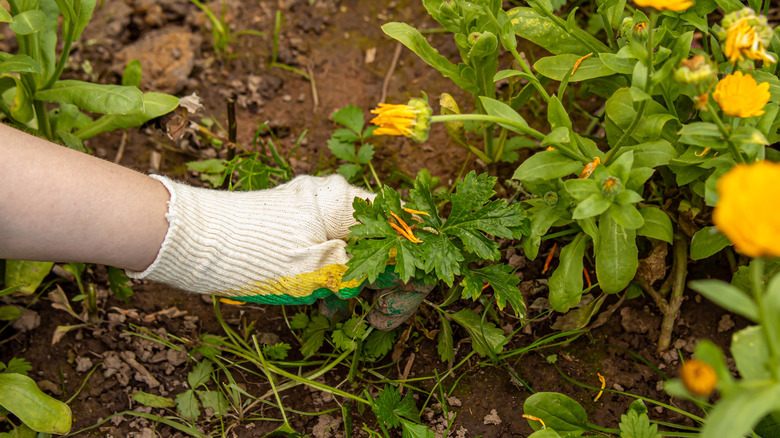
When we first plant our flower beds, we imagine them turning out beautiful with swathes of colorful blooms, pleasant aromas, and fluttering butterflies or birds. Sadly, we also end up spending our weekends pulling out weeds, bent over our squeaky knees. What makes them amply frustrating is that we never seem to catch a break; these invaders are back at being a nuisance every week (le sigh!). So, if you're tired of weeds taking over your flower beds and are looking for something — anything — to free you from this maintenance chore, here's one stunning preventative garden solution to try: planting hostas (Hosta spp.).
Hostas are shade-loving perennials prized for their big, bold foliage, available in a wide range of hues or variegation of green, blue, and gold. However, they aren't just a way to add color to gardens; they can also help keep your flower beds weed-free without the use of harmful chemicals. From their rosettes, lush, glossy leaves emerge, large enough to prevent sunlight from reaching the soil. As they mature, their mounds fill out beautifully, creating layers of dense canopy that effectively deny germinating weed seeds and seedlings resources and space to settle in. The best part, though? They age like fine wine. Unlike organic mulches that decompose over time, your hostas — when planted in optimal conditions — reliably return year after year in all their stunning glory. These are such a brilliant, long-term, low-maintenance solution for reclaiming your flower beds!
Hostas work their magic in shaded flower beds
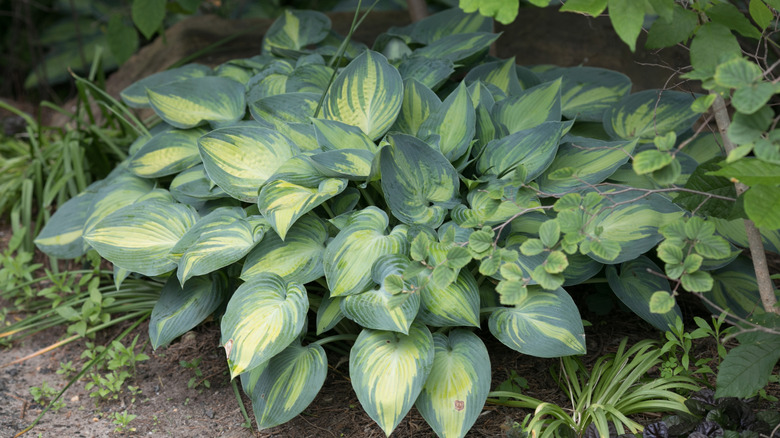
To use hostas as ground covers to help choke out unwanted weeds, you must provide them with the right conditions. This means planting them in flower beds that receive some shade, especially during the afternoon, or are filtered throughout the day through tall tree canopies. Even though you can find cultivars tolerant of full sun exposure, they often require heavy watering and fertilization to stay vibrant and sharp. Despite your best efforts, you may still wind up with a sorry plant with burnt, crispy edges and faded variegation, especially in southern climes where summers can be very hot and dry. So, stick them in beds planted across the north-facing walls where they receive morning sun, or in woodland gardens.
Moreover, hostas perform and look their best in moist, organically rich soils. So, stick them in flower beds that receive the necessary soak and feeding, rather than leaving them off in neglected or low-maintenance areas. Avoid heavy or compacted soils unless amended with composted manure. In poorly-draining, waterlogged soils, their roots may rot, while slugs and snails may strip clean their foliage, as they're attracted to such sites. Without slug-resistant cultivars in place (they have extremely thick leaves that these pests have difficulty maneuvering), you may have to resort to using a pantry essential to have slugs and snails scurrying from your garden.
Best hosta varieties for weed suppression, and some caveats
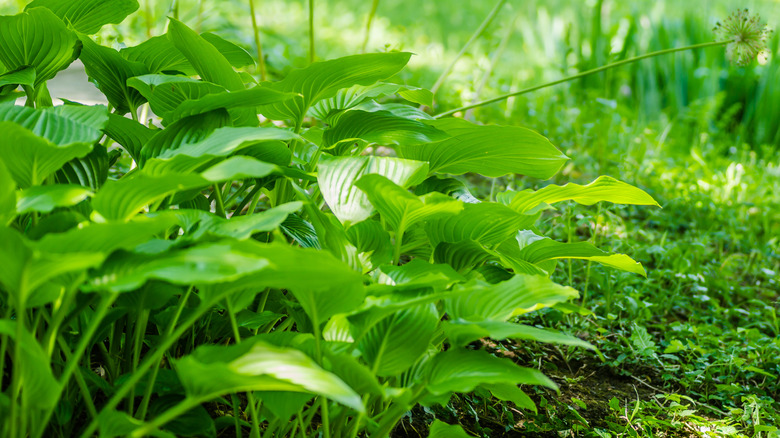
Hostas boast a wide variety, not just in hues, but also in their mature sizes, forms, and textures. But for maximum weed suppression, you must look for varieties with large leaves and a full habit that effectively blocks out light. If you're looking to tuck in tiny mounds in bare spaces or are in the mood for allowing these perennials to roam free in front of the beds, limit yourself to small or medium-sized hostas that mature to final heights of under 18 inches. 'Kiwi Golden Thimble,' 'Dragon Tails,' 'Rock Prince,' and 'Francee' are some examples. If you want more mat-like coverage, rather than clumps, utilize Hosta clausa instead.
Remember, even the fastest-growing hostas are slow to establish and may take over three years to reach their full size. So, in the initial planting year, you must mulch the beds to keep persistent weeds down; the beds will maintain themselves after full establishment. In areas where winter temperatures plummet below 28 degrees Fahrenheit, their foliage can die back. Although they're quick to leaf out in spring, putting down bark should help smother any stubborn weeds. Also, avoid separating their clumps often, as it'll compromise their lateral spread. Hostas may be of little help in areas with a heavy deer or vole pressure without effective fencing in place. Finally, don't forget to limit your pets' access to hosta beds, as they can be toxic.