

22 Tile Shapes & Styles To Try In Your Kitchen And Bathroom
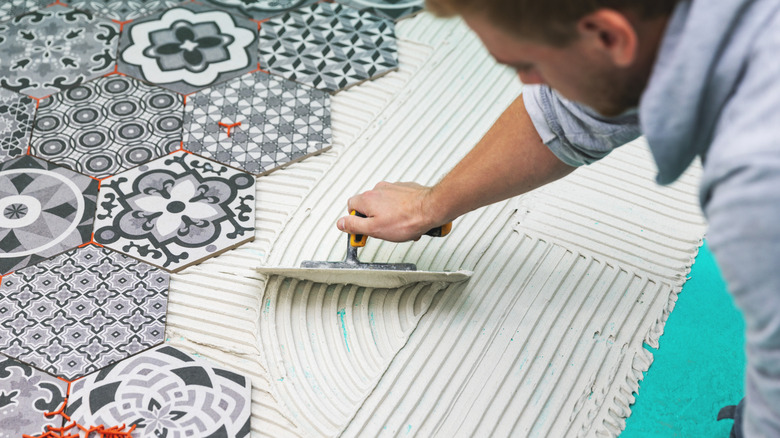
Though you may not always notice the tiles in your kitchen and bathroom, they do play a role in how your home appears. That's why you really want to spend the time and effort doing it right. There are many things to consider, such as whether you want your tile to blend in or make a statement. You must consider the color of the tiles and grout, and the material of the tiles (porcelain, ceramic, etc.).
Finally, you need to decide not only on a tile shape, but also the style — how you want to lay them down. For instance, subway tiles can be stacked vertically or horizontally, or laid in a brick, chevron, or herringbone pattern. You can even mix and match different shapes and styles within a space. When it comes to shapes, subway tiles and squares are classic options, while arabesque and basketweave add a fun flow and movement in a space. Not every tile shape works for every space, and a tile that works for a backsplash may not work for a floor. Although the amount of options can make it overwhelming, you' can always find the perfect tile for any style or budget.
Offset subway tiles
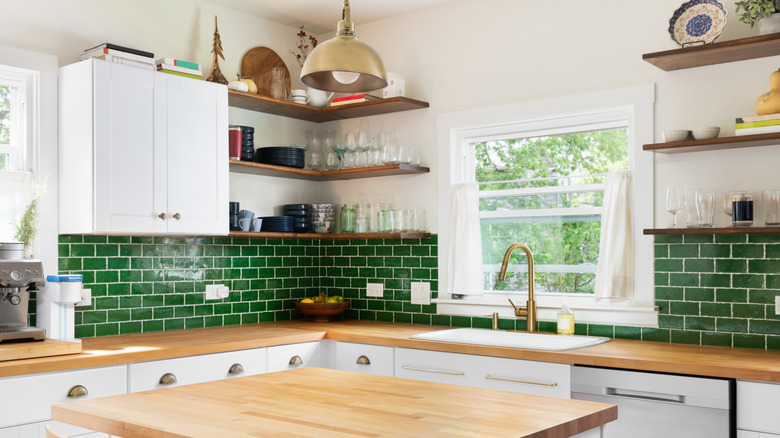
Subway tiles are thin and rectangular, and traditionally staggered in a brick pattern to add a bit of visual interest. The color of your tile and the grout can also help to add a bit of contrast and dimension. Not only do they look nice, but they are durable and cost effective. They also work well as a kitchen backsplash, in a shower, or in your bathroom in general. While white subway tiles are one of the outdated tile trends that went away in 2025; choosing bolder colors can let you get the benefits of these classic tiles with a modern twist.
Cohesive square
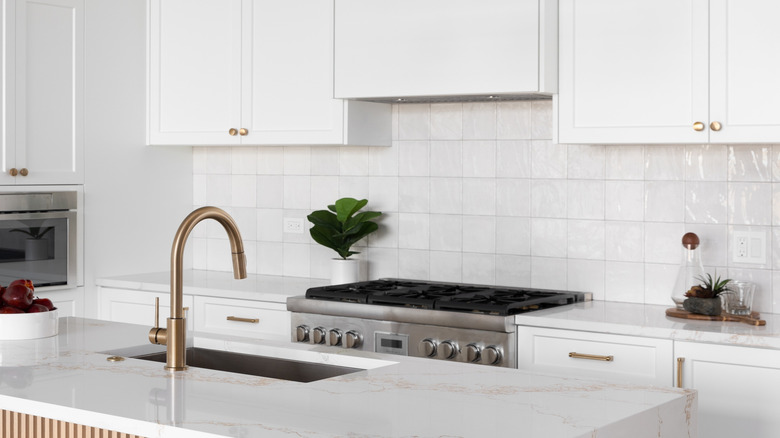
Square tiles can work in large or small spaces. They also do well on floors and as a kitchen backsplash, especially if you go with larger sizes with thin grout, as it can make it easier to clean. Squares are usually placed in a grid formation, but if you want to change up the visual a bit, a staggered bond is also an option. Squares are considered easy to install as well, which may make them ideal for people trying to save some money by doing their floors or walls themselves.
Basketweave
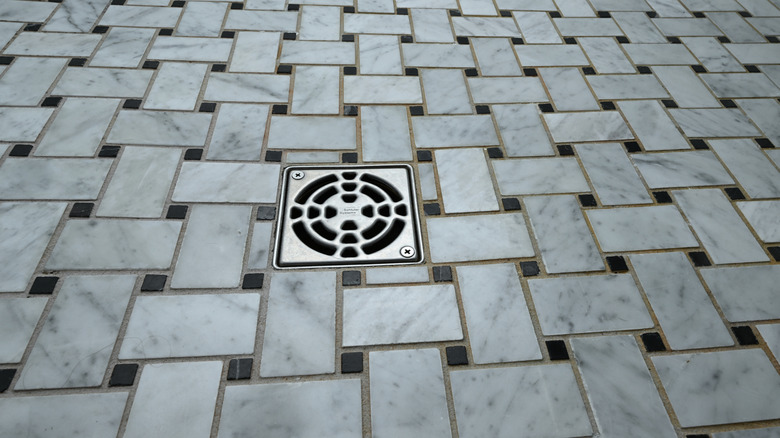
To add a bit of life to your tile, faking a bit of movement and a sense of flexibility can make a huge difference. As this pattern name suggests, it involves making your tile look as if it is woven like a basket. You can use rectangles going in two different directions, with small square tiles in between. This provides a sense of depth and the illusion of gaps like you see in traditional baskets. It can go on your floor or wall, and is fairly common as a bathroom floor, shower pan, or backsplash option. It's some work to plan, but worth it.
Framed
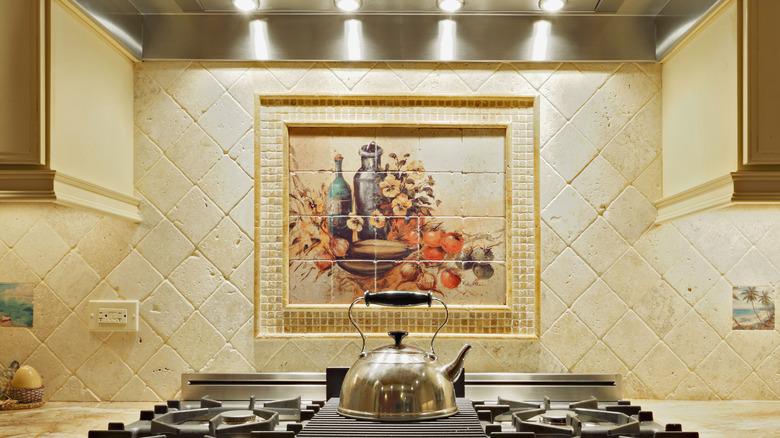
One of the design rules to keep in mind when choosing tile for your bathroom is not to mix and match more than three different types, including shapes. However, if you treat a space like a framed piece of art, you may be able to bend the rules a bit. Usually, this style of tile can be a focal point of a wall, or act as a backsplash. Make a box of visually distinct tile, whether that be in pattern or color, so it mimics framed artwork. You can even use tiles or trim to actually frame the piece.
Checkerboard
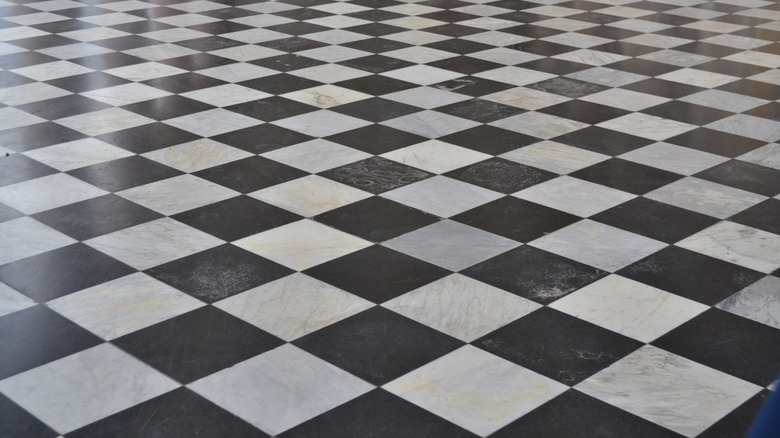
Checkerboard squares are a timeless and functional flooring option for the kitchen or bathroom. Natural stone, porcelain, vinyl, and ceramic are common materials to use with this pattern. If placed on diagonals instead of squares, it adds a bit of movement, similar to chevron and herringbone patterns. This pattern can allow you to add a bit of high or low contrast in a room, depending on the colors and materials you choose. Although highly decorative, it works well in rooms with vintage, modern, and traditional styles.
Hexagon
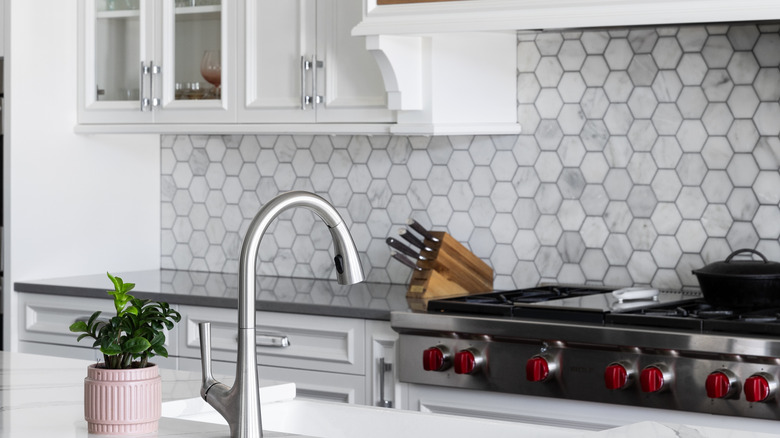
Hexagon tiles add a bit of depth thanks to their small shapes. Though they have flatter edges, the smaller options do give off an almost rounded feel from a distance, letting you have the best of both worlds. These small tiles work great in bigger spaces, like a large bathroom, or in pockets, such as the alcove in your shower . They may even be an option on the floor, though all the grout can make it hard to clean. You can choose larger options as well for an interesting shape that's not too busy.
Stacked
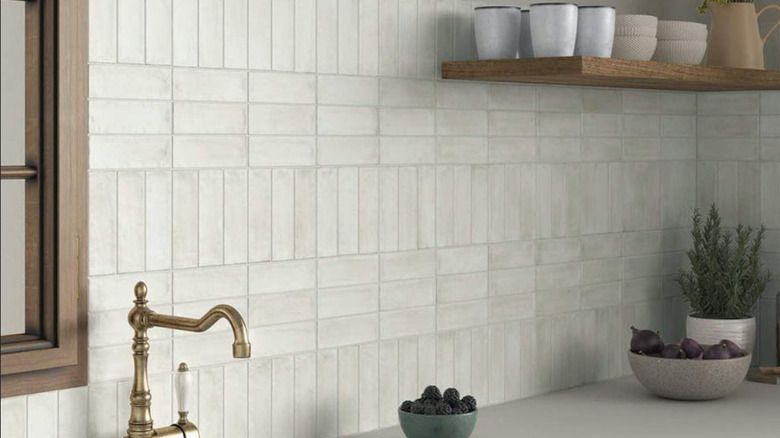
Another way to make your kitchen or bathroom a bit more visually distinct is to change up the direction of the tiles you are using. This is most often done with rectangular tile, stacking them horizontally or vertically rather than in a staggered brick pattern. The image above alternates between the two, creating squares out of rectangular tiles. Stacking tiles is a great way to give traditional subway tiles a modern twist.
Arabesque
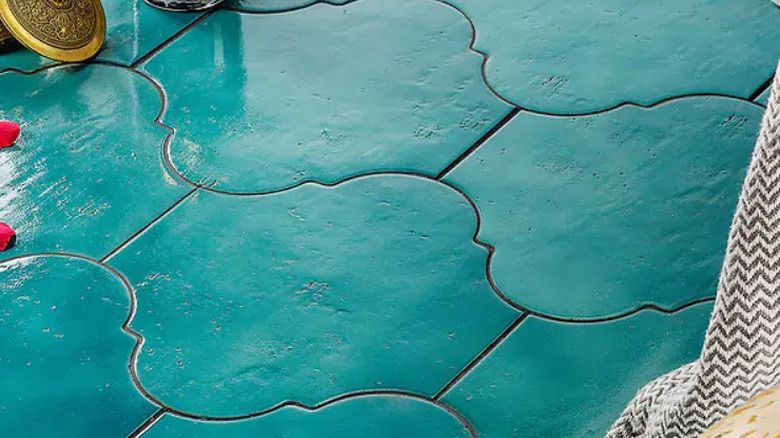
If you are looking for something interesting and eye-catching, arabesque tiles are a great option. They come in quite a few different forms and sizes, but the main point is that they are interlocking tiles with unusual shapes, sometimes mimicking lanterns. The word tends to describe objects that faintly represent plants, vases, animals, and figures, and you can see these silhouettes in different arabesque shapes. These work as flooring, backsplashes, and accent walls. Though it's a historic tile, the more handcrafted feeling and rounded shapes fit perfectly with modern trends.
Fluted
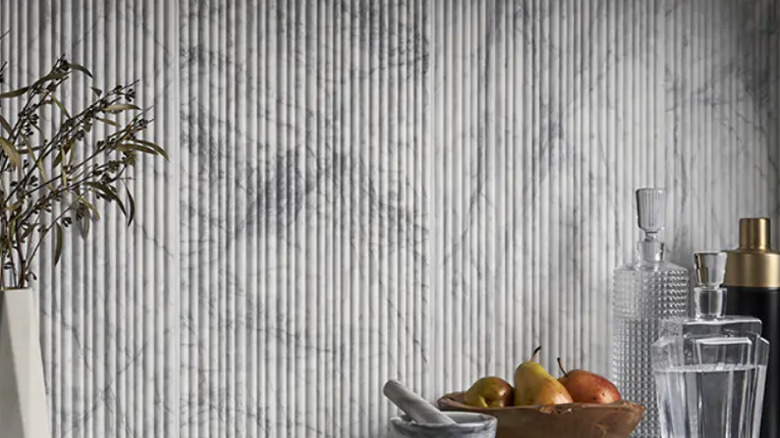
Fluted tiles are generally square or rectangular and feature a series of rounded ridges that make them almost look striped. Since about 2023, they have been popular as backsplash and accent walls, though their design can make them difficult to clean. They do a great job adding a bit of visual detail with texture, rather than with different colors or complicated patterns and shapes. Additionally, the directional stripes can help a room feel bigger or taller than it actually is, and they add a sense of movement and playfulness.
Octagons and dots
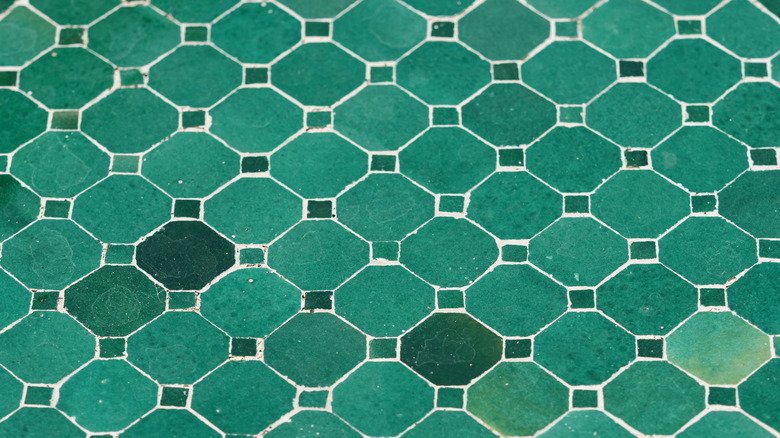
These are similar to hexagons, but because the octagons don't fit perfectly together, there are usually smaller tiles placed in between, adding a bit of visual difference to break up what could be monotonous patterns, especially on the floor. Because of this, a lot of thought has to be given to the details, such as the size, grout color, tile shades, and the material you choose. It's a lot of work, but it can be worth it to get the perfect bold statement in your bathroom or kitchen.
Scalloped
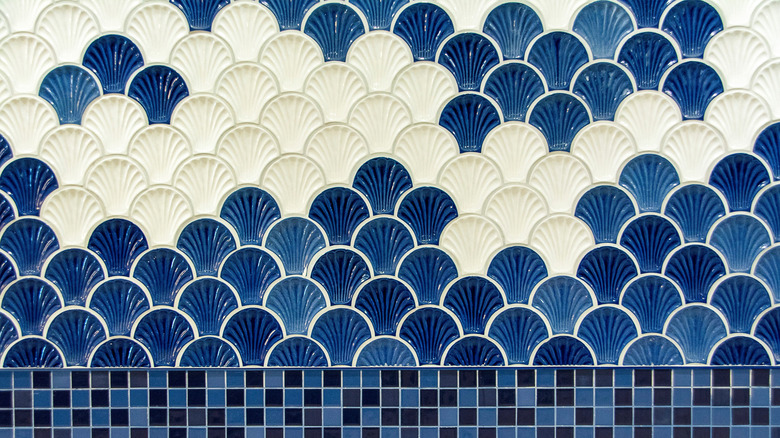
Tiles with personality were one of the bathroom tile flooring trends that was popular in 2025 and it seems to be continuing to 2026. Therefore, a unique-shaped tile like scalloped is a great choice for both your bathroom and kitchen. They are charming and create a whimsical feel reminiscent of mermaids or the ocean. These tiles are smooth and rounded, creating that desirable softness while adding a sense of movement. Tiles in this shape can work as a kitchen backsplash, in your shower, or as an accent piece.
Wavy
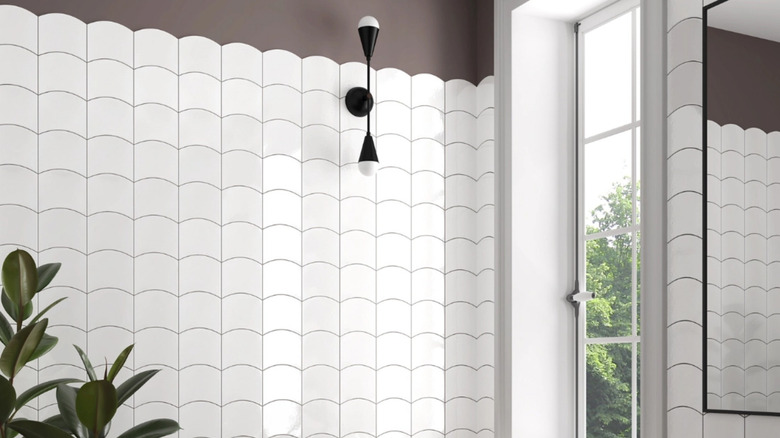
There are two kinds of wavy tiles. One is a tile cut to mimic waves and adds a bit of movement with uneven edges, like the image above. The other is textured tiles that make each piece appear like small ocean ripples were turned to stone. Both add a bit of movement and some unique patterns, and are especially fun as a backsplash, in a shower, or as an accent wall. However, some do hold onto grime a little more than regular tiles because of their unusual shapes and texture.
Chevron
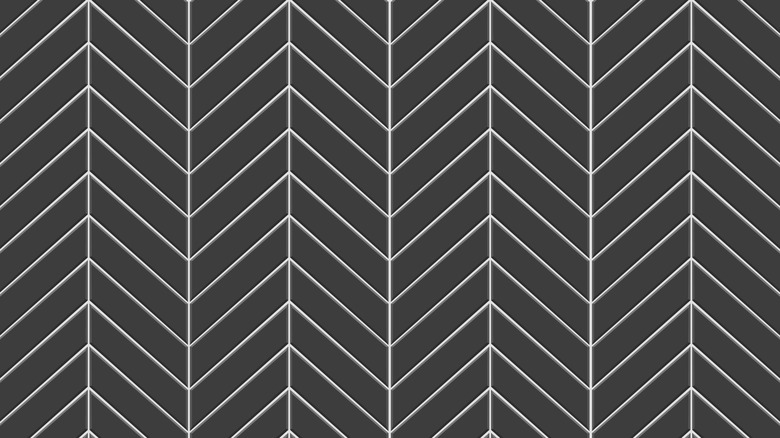
Chevron tiles add a lot of movement and visual appeal to a space. They are timeless and sturdy, working for any part of the home, including the kitchen backsplash, the bathroom walls, and the floor. Also, since these are just thin and long, lined up in a series of pointed ends, you can get this shape in almost any kind of material. You can add some more texture by going with smaller chevrons or making the space less busy using bigger tiles. They may overwhelm small spaces, so they may not be ideal for tiny bathrooms.
Curved chevron
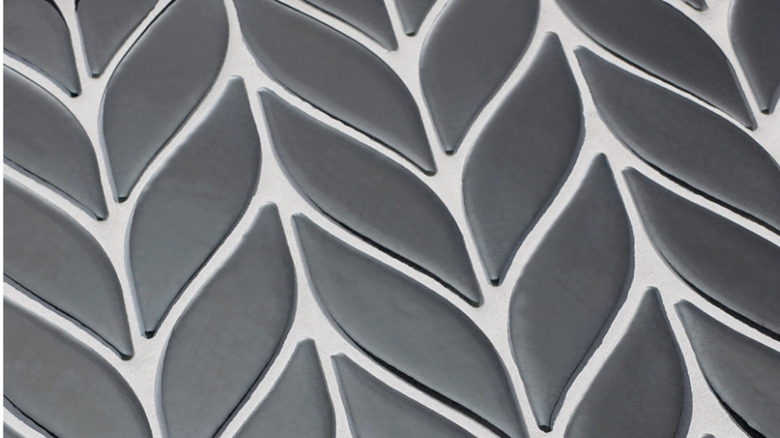
If you like the idea of chevrons, but you want something a little more rounded and nature-inspired to fit with 2026 trends, try a curved chevron. These follow the same general idea, where the two ends press together in a "V" shape, however, these are curved instead of straight. When stacked, they look a little like leafy stems, adding an organic feeling. These add a fun pattern to your kitchen or bathroom walls. Depending on the way the point is facing, they can help to make a space look taller or wider, and the arrow shape can feel inviting.
Picket
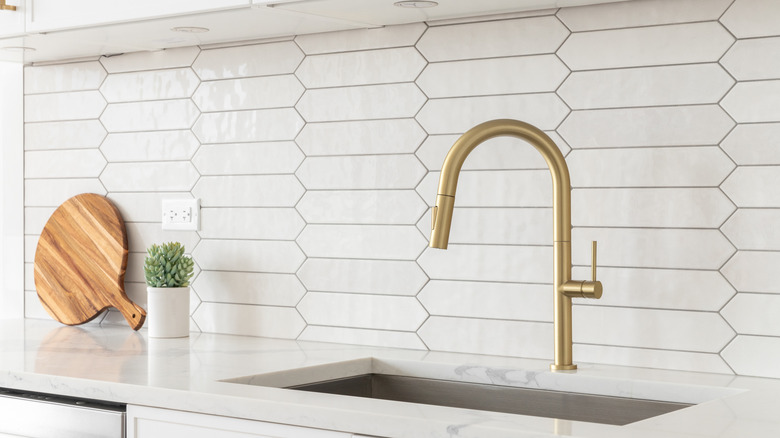
Another interesting tile that offers a mix between a subway and a hexagon shape is the picket. These are long shapes with pointed edges that are semi-reminiscent of picket fences. You can choose tiles as wide or as narrow as you want. Like subway tiles, they can be laid in many different arrangements, such as stacked, offset, herringbone, or chevron. They are a great way to make a cramped room feel a bit wider, or, when placed vertically, to add some height to a space that feels a little small.
Multi-tile pattern
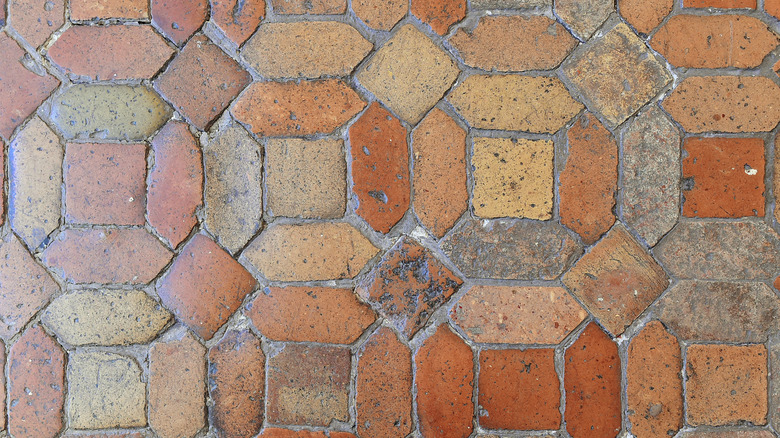
If you are looking to use multiple tiles shapes, you can try a multi-tile pattern. This usually involves taking tiles of different shapes and sizes and placing them together. For example, you can create a unique interlocking pattern with picket and square tiles for a vintage feel, or keep to different-sized squares an rectangles for more symmetry. Some designs appear totally random, while others involve a few different shapes repeating their pattern over and over again. This is a great option for your floors.
Herringbone
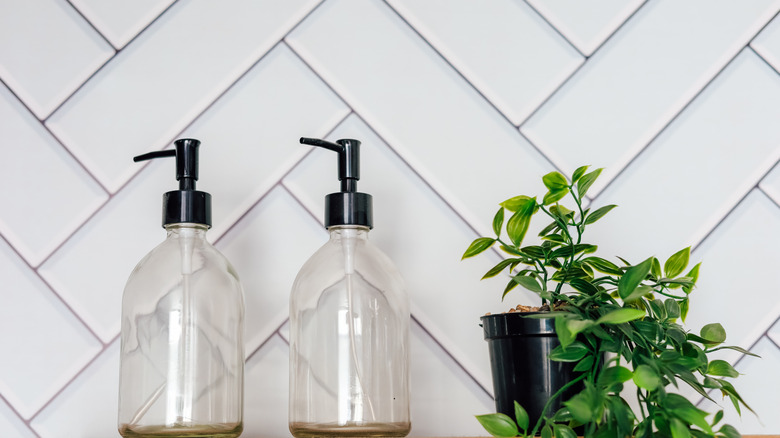
Herringbone is a pattern typically used with subway tiles. It looks similar to chevron, but tiles are staggered in appearance and cut at a 90-degree angle instead of a 45. However, a herringbone pattern is generally considered more elegant and subtle compared to the more bold and visible chevron, which may help sway your decision. They are great for creating some movement and work best for places that are long and skinny. Laying tiles in a herringbone pattern is more difficult than other formations, and will typically cost a bit more for installation.
Cross and star
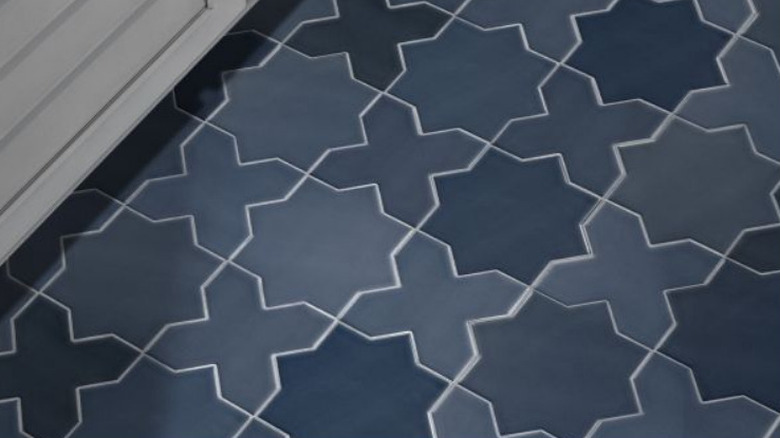
Another fun option with a lot of visual appeal is the cross and star pattern. This features a series of eight-pointed stars with pointed crosses fitting in between. It's a great option for an accent wall or a backsplash. Some people even use them as floor tile. While you can choose one color, two or more add a lot of diversity and enhance the pattern. It's a classic design that can work well in a home looking to add pattern and playfulness to a room. Try it in a terracotta for a truly Mediterranean feel.
Floral
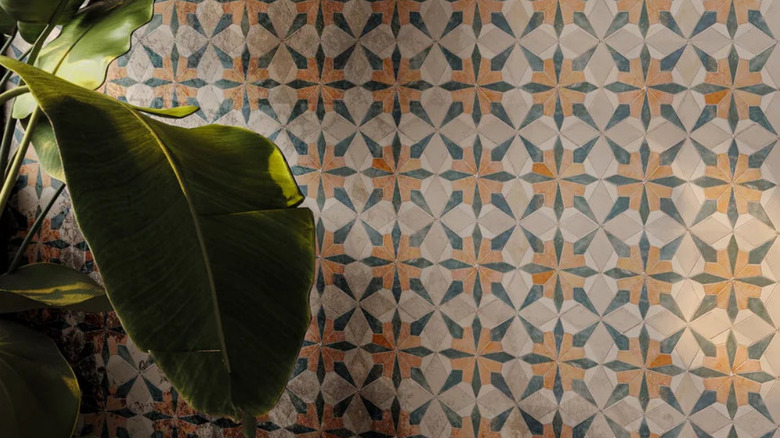
If you want a mix of multiple colors and a unique pattern, floral tiles are a great option. They usually involve repeating patterns of different-shaped tile pieces in a pattern reminiscent of a flower. Usually, the design involves two or three different colors as well, to really define each shape and catch the eye. Florals are a type of mosaic tile, and have a charming and homemade feel. However, the pattern can come across as a little busy, so keep it to small areas like a powder room floor or accent backsplash behind the stove.
Penny rounds
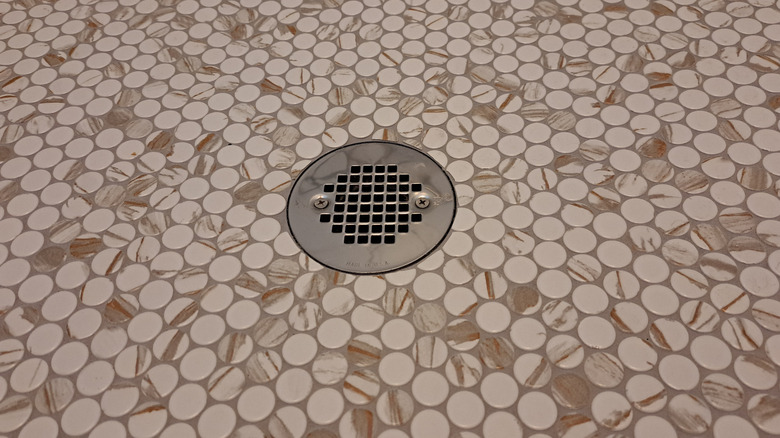
If rounded designs in tile are the trend right now, why not go all-in with penny rounds? As the name suggests, these are rounded tiles that are usually pretty small, though they don't necessarily have to be the size of a penny. They add a lot of texture, even if you choose a singular color. The shape can be a little harder to clean, because of the amount of grout. However, the durability makes it an easy win as flooring, a statement piece, or a backsplash.
Large-format
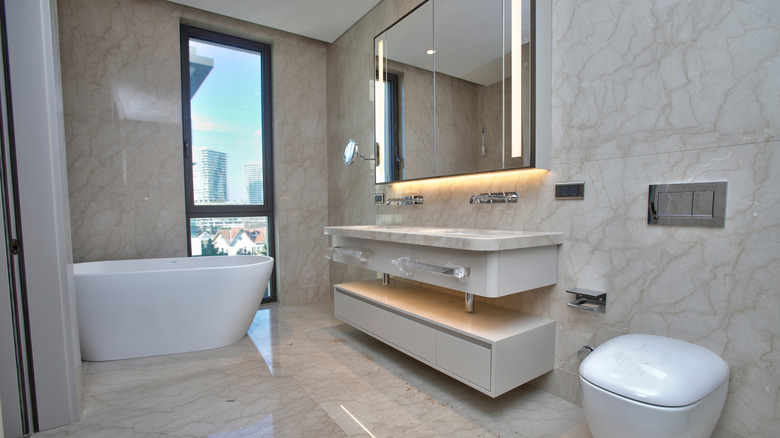
Large-format tiles are rectangle or square in shape, with one side at least 15 inches in length. A big benefit to using larger tiles is that there are fewer grout lines, so they are less busy and easier to keep clean. Large-format tiles work well if you want to try the tile drenching trend, which involves covering the whole bathroom or kitchen in the same kind of tile. This includes both the walls and the floors, however, both need to be completely level to accommodate these tiles. They add a modern look and an immersive experience to any room.
Pinwheel
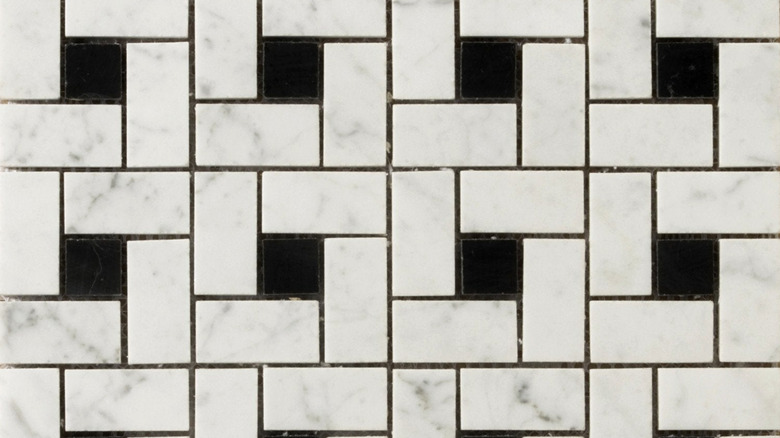
A pinwheel style involves taking a single, small tile and boxing it in with four larger tiles. Generally, the center is a square, but the outside can be either large squares or medium rectangles. Additionally, you can play around a bit with different shapes to make it more rounded. Like many other styles, you can add even more visual appeal by making the small and large tiles different colors, or reduce the effect by going with the same color.