

The Low-Maintenance Composting Method That Comes With Drawbacks
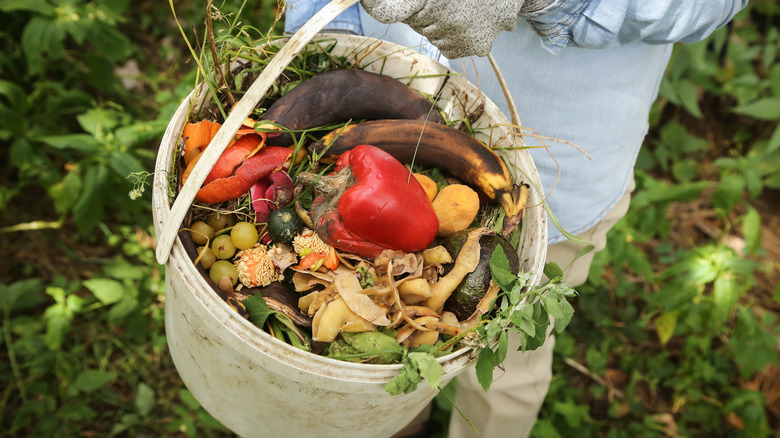
Most gardeners understand the biggest benefits of composting at home: making your own powerful soil amendment that boosts soil structure and fertility. You may have recognized the benefits but felt it was too time-consuming. After all, you have to achieve the right nitrogen-to-carbon ratio for hot composting, regularly turn the compost, monitor moisture and temperature, and spread it in your garden to let it do its magic. How about a composting method that British Columbia's Compost Education Centre ranks at two on a one-to-five effort scale, where one is the easiest? The method is called trench composting, and aside from the need to dig a trench, it is indeed a low-maintenance composting method with several pluses. The downsides extend beyond the ditch-digging, though. They include the continued need to dig trenches, increased methane production, a slow decomposition rate, and the potential for scavengers.
The trench method is a form of cold composting, so no worries about maintaining nitrogen-to-carbon ratios, no turning, no constant monitoring, and no need to move finished compost because it's already in the ground. Because it helps compost retain moisture, the technique works well in dry locales where you want to grow water-loving plants. The method involves digging a trench, placing kitchen scraps and other materials in it, and covering them with soil. Trench composting is the easiest way to start composting without a bin, but we do need to take a look at those drawbacks, some of which can be mitigated.
The downsides of trench composting
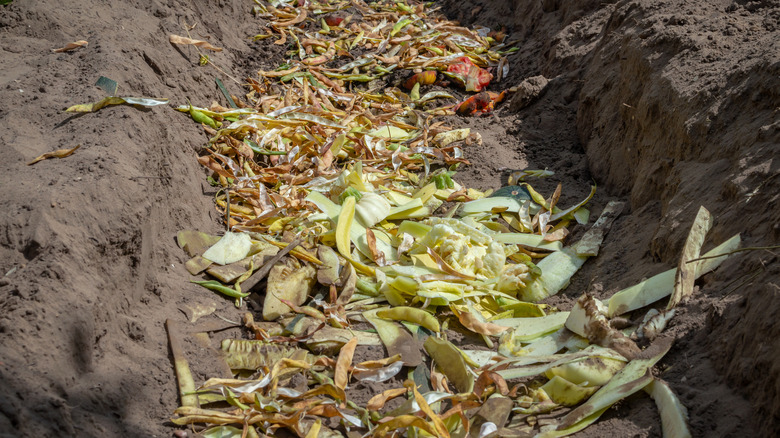
If digging is difficult for you, trench composting will be challenging. This is not only due to the initial trench, but also because you may need to keep extending the trench as your composting needs expand. If you plan to plant atop your trench, you will need to dig an entirely new trench after planting. You can use a trenching tool to make it a little easier, though. As with cold-composting, it takes patience because materials decompose slowly, and if you're working with just one trench, you'll have to wait at least six months for decomposition before planting on top of the trench. Chopping materials into small pieces or pre-fermenting them before composting can speed up the process. If you anticipate needing more than one trench, this method can take up a lot of space, which is an additional downside.
Although more methane gas is released during trench composting than in other methods, the amount is small and likely has no more environmental impact than sending your garbage to the landfill. Another con is that hungry pests and animals could dig into your trench. Placing a pest-resistant mesh between the compost and the soil can help prevent this, though.
Trench composting may not be the best choice if you have extremely wet soil or a weed problem that the compost's nourishing organic material would exacerbate. If you'd like to give the cheap and easy trench-composting method a go, despite the drawbacks, dig a 12-inch-wide, 18-inch-deep trench. Toss your kitchen scraps and other compostable materials in, and backfill it with at least 8 inches of soil. Then, wait for decomposition and plant along the top of the filled trench.