

How To Bring The Shine Back To Your Quartz Countertops
We may receive a commission on purchases made from links.
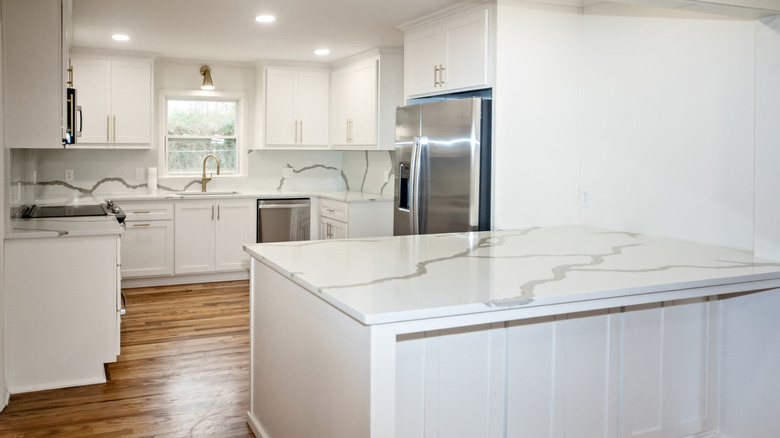
Your quartz countertops were once the shining centerpieces of your kitchen, thanks to their deep, brilliant gloss. Lately, though, that dazzling luster may have been replaced by a noticeably dull finish. If you've started to research heavy-duty polishing or even refinishing, stop right there. Unlike natural stone like granite or marble, engineered quartz doesn't respond well to aggressive, abrasive treatments. Fortunately, the secret to restoring your quartz's like-new glamour lies in simply picking up a bottle of specialized quartz-specific cleaner from the store.
To care for quartz countertops properly, it helps to understand what they actually are: an engineered material made up of about 90% ground natural quartz crystals bound together by resins, polymers, and pigments. The resin is precisely why quartz is non-porous and super resistant to stains; it's also what gives it that high-gloss sheen. When the shine begins to fade, the issue isn't with the stone itself. Instead, it's usually just residue buildup (like soap scum, hard water stains, or buildup from cleaners).
Because the shine we love comes from the resin, those abrasive polishing powders and heavy machinery are actually counterproductive here, and even risky. They can damage the resin binding and end up leaving you with irreversible etching, hazing, and permanent dullness. Using them is a mistake for your countertops. The goal here is simply to bring back the shine, so all you need to do is remove that dull residue and condition the existing resin so it reflects well again.
What tools are needed to make quartz countertops shine again?

Restoring the luster of your quartz is simpler than you might think if you've got the correct tools. The first step is preparation: thoroughly clean the countertop before applying any polishing product. We recommend using a non-abrasive, pH-neutral cleaner like dish soap and water to scrub away all grime, cooking oils, or other built-up gunk. After cleaning, use a soft microfiber cloth to ensure your countertop is absolutely dry and streak-free.
Now you can bring in the best quartz countertop cleaners, or the one you like best – Weiman's Quartz Countertop Cleaner and Polish is a good choice. Quartz-specific cleaners are designed to take care of the material, since it's not just a natural stone surface and has resin mixed in. Many standard household cleaners aren't suitable for quartz countertops, often having too much acid or damaging chemicals like bleach or ammonia. Take your polish, and apply a small amount onto a clean cloth and work it into the surface one section at a time, and always follow any instructions on the bottle.
The final (and, dare we say, most satisfying) step is buffing. Using a separate clean, dry microfiber cloth, buff the polished area until the surface gleams evenly and you can't see any streaks on it. You don't need to do this often — maybe only a few times a year to help keep any dull buildup at bay and your counters looking shiny. Otherwise, just make sure you're keeping away from these things you should never do if you have quartz countertops, and you'll be fine.