

The Best Time To Dormant Seed A Lawn (& How To Do It Correctly)

Dormant seeding is the practice of sowing grass seed during the cold season when soil temperatures are too low for germination. This allows the seed to sit dormant over winter until spring warmth triggers growth. Dormant seeding works because winter's freeze–thaw cycles help sow seed by creating small honeycomb-like holes in the soil that seeds can settle into. Later, spring warming provides grass seeds with ideal conditions to sprout, often earlier than spring-sown seed, helping your lawn to become lush in the spring. For gardeners, dormant seeding offers several benefits. It gives you a head start on spring growth, helps fill in patchy lawn holes, requires little watering thanks to winter moisture, and reduces competition from early-season weeds when new grass emerges.
Dormant seeding isn't the right choice for every lawn, though. This technique should be done with cool-season grasses only, such as Kentucky bluegrass and tall fescue. Dormant seeding is also not ideal for warm or fluctuating winter climates. Seeds can sprout during a warm spell only to be killed by the next freeze. If your lawn sits on a slope or in an exposed area, winter rain and snowfall can wash away seeds before spring. In these areas, you can either seed in early fall when roots can get established before winter or use seed starting mats to help keep your seeds in place. In ideal environments, dormant seeding should be done from late fall to late winter.
How to dormant seed your lawn
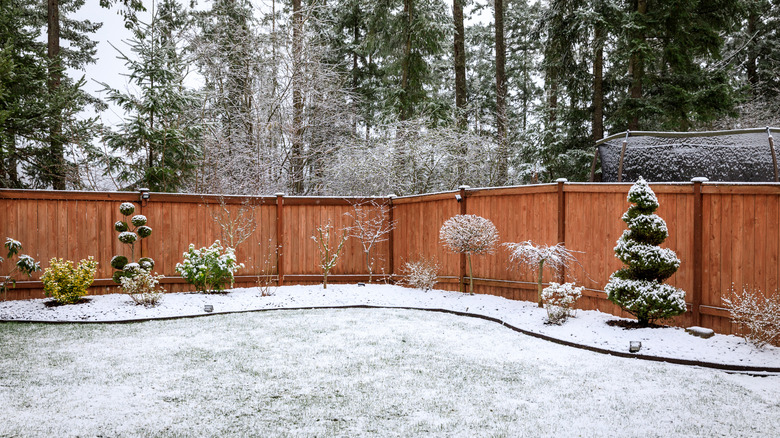
As mentioned, success with the dormant seeding method relies mainly on timing. Dormant seeding should be done in late fall to late winter, though the specific timing can vary based on your climate. You can dormant seed over top of snowfall, but it's easier to do so on bare ground so you can see the parts of your lawn that need seeding. Whether or not snow has fallen, you should seed when soils are consistently at or below about 40 degrees Fahrenheit, and there's no heavy snow cover.
When you're ready to seed, start by removing any debris and dead leaves from your lawn to ensure all your seeds rest in the soil. Then, spread the seed evenly either by hand or with a seed spreader. You won't need to rake over the soil. Winter rain and snowfall will help to embed the seeds and provide moisture, so you won't need to water your lawn as much as you would have to if planting in the spring. As springtime approaches, the dormant seed will begin to germinate, giving you a head start on a green and lush lawn in time for summer.