

What Happens To Returned Mattresses?
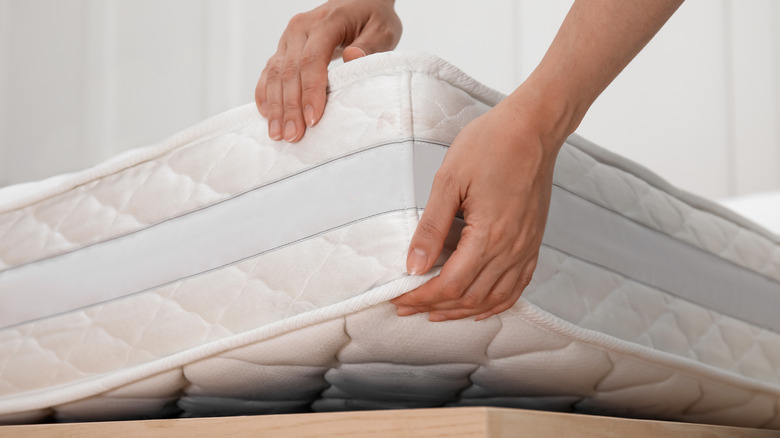
Shopping for a mattress has looked a lot different in the last few decades. The days of going to a furniture store, lying atop the variety of options to choose the best mattress, and then getting it delivered a few days later are all but gone. The at-home delivery of memory foam mattresses has been taking over the market since the mid-2010s, letting individuals test out their mattress in the comfort of their own home. This has led to a much more liberal trial period and has resulted in thousands of mattresses being sent back every day. While most people may assume it's harmless, they often don't have a clear understanding of what happens to their brand new mattress once it is returned.
It is easy to hope that your returned mattress will reenter the retail market, especially when you consider that the cost of a new quality mattress can often enter the four digit range. However, a much more complex process actually takes place. Since mattress companies want to give their customers the opportunity to fully test their products, the cost of returned mattresses is already included in the price of the product. Knowing retailers don't absorb the loss in profits makes us wonder who actually pays for the heavy block of foam that arrives in your home. On top of the many mistakes everyone makes when buying a mattress, it is important to understand the potential consequences of this consumer practice.
What do companies do with returned mattresses

A lot of factors go into the return of a mattress, which even comes down to state-by-state laws that tell companies exactly what is allowed. This includes everything from recycling regulations to restrictions around the reselling of a used mattress. Since return policies can range anywhere from 30 to 365 days, many returned mattresses have already been slept on for quite a while. This adds a more complicated layer to the return process. Not to mention, the bed-in-a-box mattress trend allows for an incredibly bulky item to be compressed down into something easier to transport. That changes once the box is open and the memory foam has expanded to its true size.
Depending on the company, they may send you a shipping label or have a person come out to your home to collect the unwanted mattress. This is typically done with the intention to recycle or donate the mattress to charity. Sometimes companies will encourage you to donate or trash the mattress yourself, giving you a full refund for the product and not dealing with the headache of removing it from your home. On occasion, some retailers will attempt to repackage and resell the used mattress, but strict regulations in certain states can prevent that. Other companies may choose to rebuild the mattress by adding a new top layer and cover, and putting it through a sterilization process to make sure it's safe to use. However, even with some regulations in place, there is still a major environmental concern to consider when returning your mattress.
The environmental impacts of returned mattresses

In the U.S. alone, nearly 50,000 mattresses are discarded every day, and many of them end up in landfills — even though about 90% of them can be recycled. The mattress in a box trend has exasperated the problem of mattress disposal, as easy return policies have incentivized consumers to purchase products with seemingly no consequences. The product is bulky by nature and takes up a lot of space in landfills, potentially adding to methane emissions. At the end of the day, you can't always find someone who can easily remove such a large product. While some third party companies have tried to mitigate mattress waste by partnering with local entities to pick up unwanted mattresses for free, there are many restrictions that can prevent recycling from actually happening.
States like California have strict policies against donating used mattresses to charities, and many New York City charities may not have the money or resources to pick up a product. Certain states like Massachusetts have tried to handle this problem by banning mattresses from being thrown into their waste management system. This actually puts responsibility onto consumers to ensure that they are purchasing and returning mattresses in a sustainable way. However, the mattress industry has a lot of work to do to curtail the environmental impact of its product. If this is a concern for you, or you're just not a fan of this trend, there are still ways to get your mattress delivered the old way.