

The Popular Variety Of Lemon You Can Successfully Grow Indoors

Imagine plucking a fresh lemon from a tree you grew yourself. Think about the smooth and glossy leaves, the lingering smell of citrus in the air, the visually appealing silhouette of the tree. Lemon trees are often thought of as outdoor-only plants in those balmy, warm-year-round areas, and living anywhere else could mean you're simply out of luck when it comes to growing your own lemon tree ... right? While at first glance a lemon tree may seem just out of reach for your situation, there's actually one variety you can grow completely indoors, allowing you to enjoy this eye-catching citrus no matter your local climate.
Have you ever seen someone showing off a gorgeous potted lemon tree? Chances are, it was a Meyer lemon (Citrus x limon 'Meyer'), a small, compact lemon tree variety that grows well in containers. As a result, it's versatile enough to grow indoors or outdoors depending on your environment, making your dream of having your own lemon tree possible no matter where you are.
While choosing this lemon over other varieties makes indoor growing a breeze, it's still essential to provide Meyer lemon trees with the right care. This means paying attention to its growing needs as well as supplementing pollination as needed when grown entirely indoors.
How to grow Meyer lemons indoors
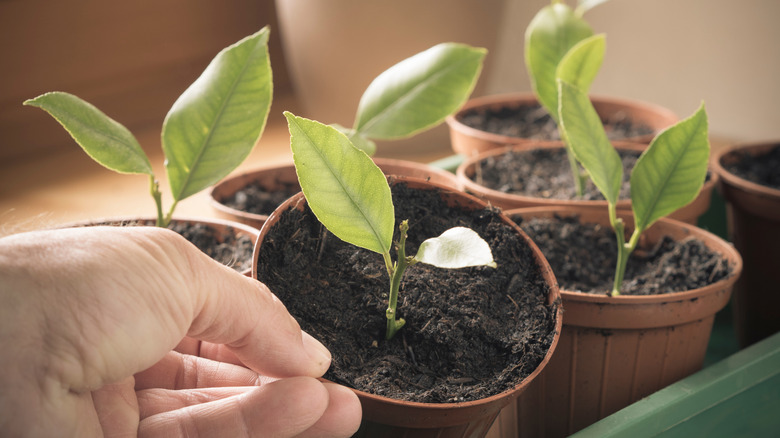
Growing a Meyer lemon tree indoors begins with choosing the right tree for you. You can do this by shopping at a local nursery, choosing a tree that is healthy and thriving with no noticeable signs of complications, or by growing your Meyer lemon from seed. Just keep in mind that, if you opt for a seed start for your lemon tree, it can take up to a decade (or longer) to see fruit.
As for growing conditions, Meyer lemons grow best in light conditions ranging from partial shade to full sun. An unobstructed south-facing window in your home will offer the most sunlight throughout the day, helping hit that six-hour requirement for full sun. East- or west-facing windows will provide direct sunlight for a few hours each day, aligning better with partial shade. Avoid placing your Meyer lemon tree in a north-facing window, as these typically don't receive any direct light. These trees do best in soil that is neutral or slightly acidic, and while they like consistently moist soil, good drainage is a must.
Now, what about pollination? Meyer lemons can self-fertilize, but they still need a helping hand when it comes to moving pollen from flower to flower. If you live in an area with warm enough weather, you can move your tree outside during the day while flowering, allowing pollinators to work their magic. Otherwise, one tip for a successful indoor Meyer lemon tree is to hand fertilize.