

The Kitchen Leftover Your Snake Plant Will Love
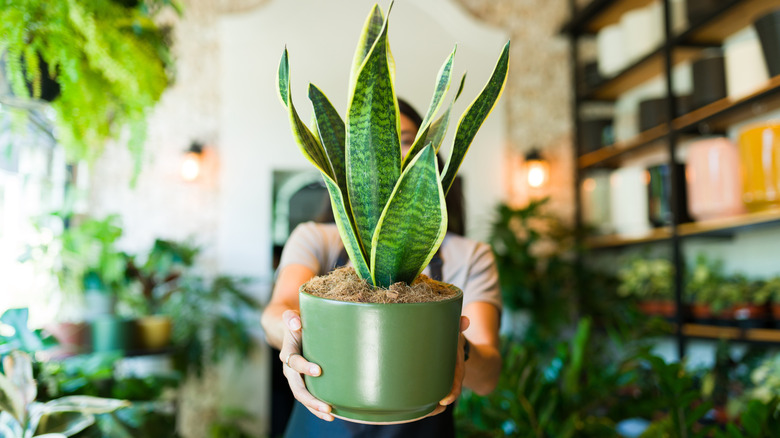
The next time you make rice, you may want to keep any excess water you have leftover. Believe it or not, there are some uncommon household uses for rice you may not have seen before. While you may have heard about using rice water for your own health benefits, including hair and nail growth, there is another creature in your home that may appreciate that leftover liquid: your snake plant (Dracaena trifasciata). Whether you boil rice on the stove and have some water leftover in the pot, or you rinse the grain before tossing it in your rice cooker, that cloudy, milky substance can be like liquid gold for some plants thanks to its nutritional content. Instead of tossing your leftover rice water down the drain, pour the contents into an airtight container and save it for later.
Snake plants are generally easygoing plants, able to thrive both inside and outside with basic sunlight and soil requirements. An indoor snake plant can grow in practically any room of your home, and it also does not require frequent watering. What these plants do appreciate, however, is nutritional boosts of carbohydrates, phosphorus, potassium, and nitrogen: four nutrients that rice water helpfully contains. What is currently up for debate is when or how often you should add rice water to your plants. While there aren't a ton of studies available that say how much rice water to add to your plants, one study from 2022 revealed that adding washed rice water to the soil's surface at the beginning of the plant cycle benefited its nutrients and microbes. (Note that this study was not completed on snake plants.)
Here are three different ways to make rice water
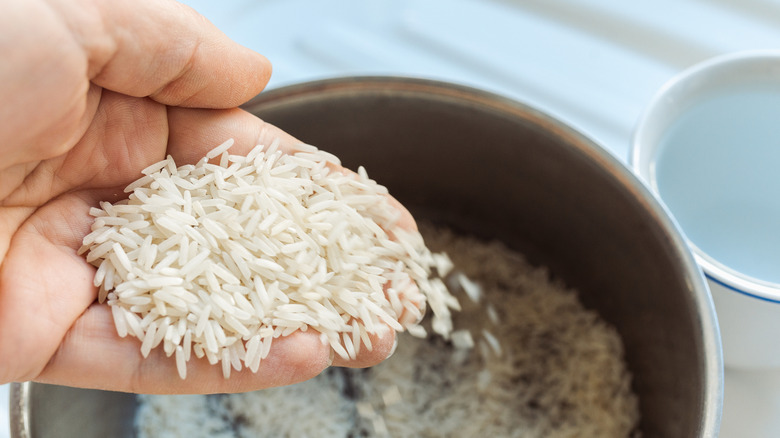
If you don't typically make rice at home, or you're unsure what type of rice water method to use for your plants, there are a few tricks you can try to create this helpful soil boost. The first, and easiest method, is to save the excess water from rinsing your rice. When you toss your rice into a strainer to run water over the top, place a container underneath to catch the runoff liquid. You can also rinse the grains in a bowl and carefully separate the cloudy water into a separate glass. If you tend to boil your rice, you can add extra water to the pot to strain off at the end. Lastly, you can sacrifice a cup or so of rice to boil in water just to make your own fertilizer.
An additional step you can take is to ferment your rice water, which can help increase its nutritional content and even up its microbial activity. To do this, pour your rice water into a container and let it sit out for at least three to nine days. You can cover it lightly to keep it protected from any pests. Before you use the fermented liquid, you will need to dilute it with water. The recommended ratio is typically 1:1. Always remember to keep your rice water, because your plants will love it.