

Everyone Does It, But Here's Why You Shouldn't Feed The Deer In Your Yard During Winter
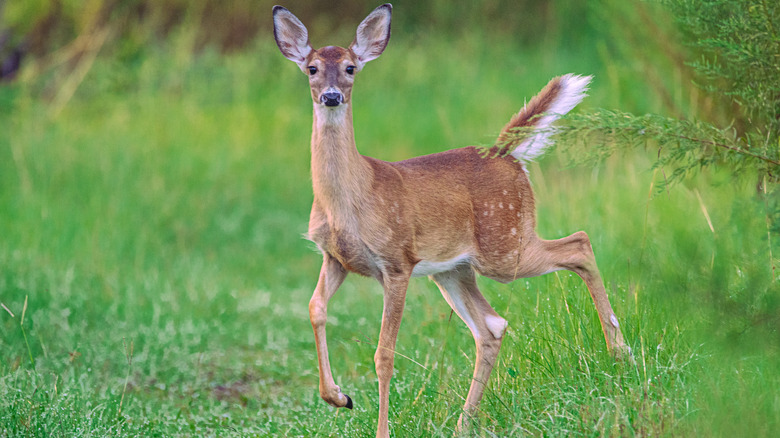
While deer might be a novelty in some parts of the country, in Texas, it feels like we have as many white-tailed deer as we do pets. With their big, doe eyes, long eyelashes, and large, upright ears, it's almost impossible to resist feeding them when they venture past your yard, especially when winter comes. It seems only natural you'd want to make sure they have plenty of food to fill their bellies. But the truth is that deer are actually well-adapted to handle cold temperatures. Besides putting on extra pounds and growing a heavier coat, deer switch to eating a woody diet of twigs and bark. Giving them anything else can be worse than not feeding them at all.
The effects of feeding deer aren't always immediately seen. A deer might seem healthy for weeks before it starts to slow down, become confused, or can no longer move. Many die quietly away from people, so most may not realize the negative effects their actions have on these adorable creatures. In many areas, feeding deer isn't only discouraged, it's against the law. Local cities and counties could even have stricter laws against it.
If you don't even want to be tempted, bar soap is the bathroom essential that will save your garden from hungry deer and keep them at bay. Although your heart might be in the right place, it's best to leave deer to it, even when winter seems harsh.
Negative consequences of feeding deer in winter
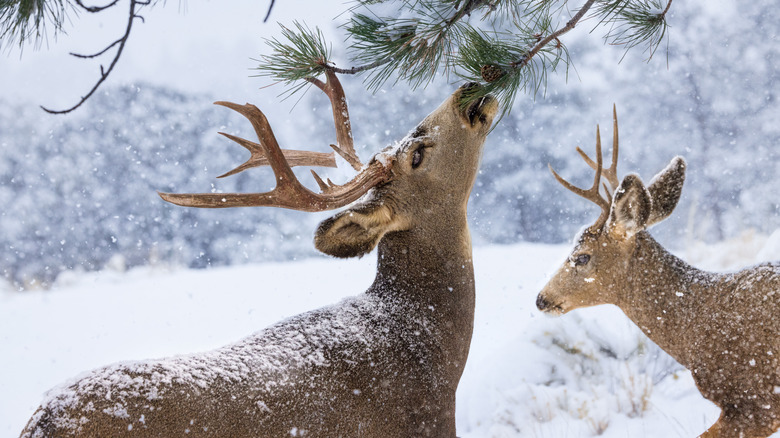
Feeding deer during the winter goes further than impacting their health. It can change how they act, which has negative consequences for both them and us. Once deer learn that food is available in residential areas, they could stop looking for food naturally and habitually return to the same spots, even if they aren't safe. Deer can begin to bravely cross busy streets, risking their lives — and yours — in a vehicle collision. Over time, they can lose their natural fear of people, which makes them easier targets for predators like coyotes, wolves, or mountain lions. But it can also increase their aggressiveness when they associate people with food. Even the calmest appearing deer can suddenly become aggressive when food is involved.
When you leave food out for browsing deer, they can start congregating around your yard in larger quantities than normal, which helps spread illnesses, including Chronic Wasting Disease. One person's space can quickly turn into a source of sickness for the whole local population. One potential fix is to avoid growing azaleas, which are a huge deer attraction. Also, adding a fence at the perfect height can help deter deer from venturing into your yard and munching on your landscape. Although deer are super adorable and uber majestic, it's in their and your best interest to admire them in their natural habitat from afar.