

Not Eggshells Or Banana Peels: This Forgotten Kitchen Liquid Helps Tomato Plants Thrive
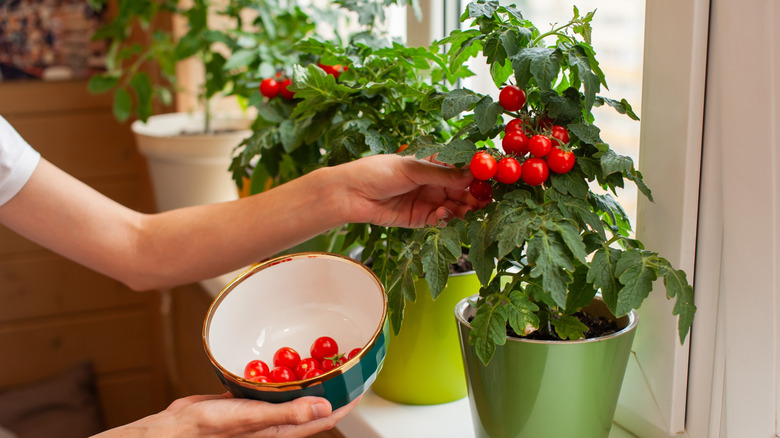
When you want your plants to thrive, eggshells or banana peels can be great nutrient-rich additions to your garden soil. But a lesser-known kitchen liquid also has the ability to help your tomato plants flourish, and it won't cost you a dime. Rice water (yes, the leftover water from soaking or boiling rice) contains growth-boosting nutrients such as potassium, nitrogen, and phosphorus. It may even contain other useful nutrients, like B vitamins, magnesium, iron, calcium, and sulfur, to support strong, healthy tomato plants.
You should always keep your rice water, as there are many plants that love it, and using it couldn't be easier. All you need to do is collect it, dilute it, and add it to your plants. Aside from the boost of nutrients it provides to tomato plants, its starch content is also beneficial, helping to turn microbes in the soil into food for the roots. Here's how to make and use this natural fertilizer.
How to fertilize tomatoes with rice water
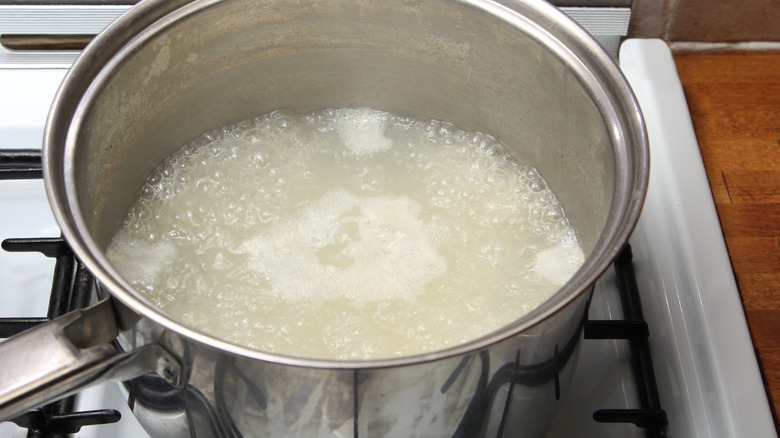
There are multiple types of rice water to use on plants, with processes including rinsing, boiling, fermenting, and soaking. Since soaking and boiling are often built-in steps in preparing rice, they are typically the easiest ways to obtain rice water. All you need to do is strain the rice after soaking or boiling, then add the murky water to a jar. Since rice water acts as a fertilizer, you'll want to dilute it so it doesn't burn your tomato plants. You can mix one part rice water with five parts plain water and add it to your soil.
The frequency at which you use the rice water on your tomato plants depends on the growth stage and soil quality. Nutrient-poor soil and smaller tomato plants can benefit from more frequent waterings, while well-developed tomatoes need less. You can use it every week to once per month, depending on the stage of your plants. If your plant's topsoil looks coagulated after using it, it's time to cut back. Using too much is a common fertilizer mistake that's sure to hinder your tomato harvest, while using it less frequently may lead to a more fruitful bounty.