

Common Whitefly Varieties (& The Plants They Love To Target)
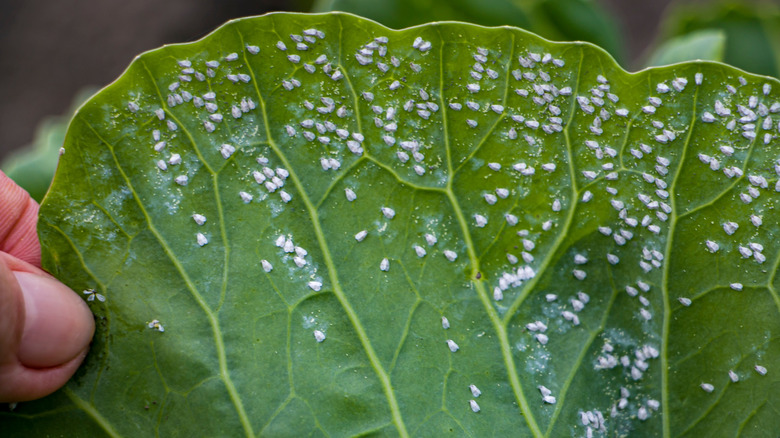
Whiteflies are one of the most destructive pests of vegetable crops and ornamental plants in the world. If you have a garden, chances are, you have dealt with them before. But what many people don't realize is that whitefly is not just a single pest. It is actually a bunch of species that thrive on different crops. For instance, the greenhouse whitefly, as its name suggests, targets vegetables and ornamental plants grown in greenhouses. In contrast, the cabbage whitefly attacks plants in the cabbage family, while the citrus whitefly typically focuses only on citrus trees.
Understanding the differences among various types of whiteflies is critical, as they vary significantly in the level and type of damage they cause. Also, not all whitefly pest species react the same to control and eradication methods. And, you don't want to take any risks. Whiteflies may look tiny, but the damage they cause is very significant. First of all, they use their piercing mouthparts to tap into plant sap directly, sucking the juices out and stealing the plant's vital nutrients.
Also, as they feed, they secrete honeydew, which attracts sooty mold. Sooty mold not only looks unsightly on plants, but also blocks sunlight, making the plants even weaker. And if that wasn't enough, whiteflies also transmit various viruses and diseases. So, if you don't control them in time, soon you will find yourself searching for ways to dispose of your dead plants. Luckily, though, there are many ways to get rid of whiteflies if you can tell which type you are dealing with.
Host Plants and Damage of Common Whiteflies
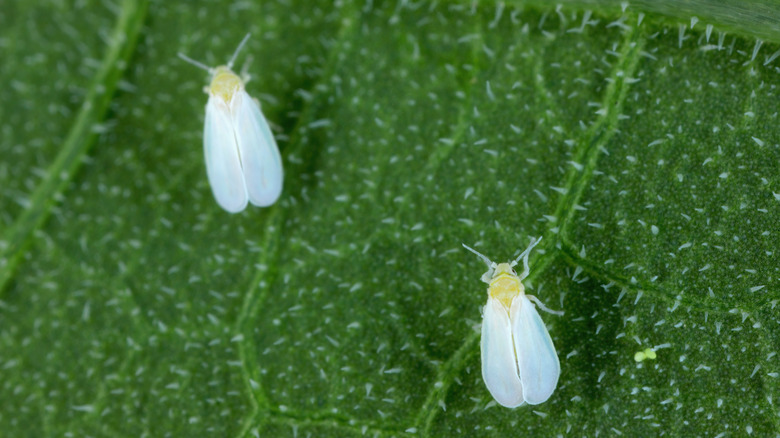
Greenhouse whitefly (Trialeurodes vaporariorum) affects nearly 250 species of vegetables and ornamentals, especially those grown indoors or in greenhouses. Some examples of affected plants include grapes, tomatoes, cucumbers, calendulas, begonias, and poinsettias. Plants affected quickly turn pale and weak over time. Left untreated, they completely ruin ornamental crops. Cabbage whitefly (Aleyrodes proletella), on the other hand, is a pest of the brassica family. Experts blame its spread on climate change, and plants it affects include kale, Brussels sprouts, and also cabbage, one of the essential crops that climate change is already making harder to grow. Luckily, the damage they cause is usually limited only to the outer foliage.
Third on the list is the Citrus whitefly (Dialeurodes citri). It can often be seen on the lower side of the leaves of its host plants, which include citrus as well as pomegranate, gardenia, chinaberry, and Japanese persimmon. Just like other whitefly types, the damage they cause is due to their feeding on sap and attracting mold, which blocks sunlight and makes plants weaker and less vigorous. Then there is the Silverleaf whitefly (Bemisia tabaci). It is one of the hardest whitefly types to control, and it attacks plants like sweet potato, melons, lettuce, broccoli, and beans. Their damage can delay harvest, and young plants almost never survive severe whitefly damage.
Banded-winged whitefly (Trialeurodes abutiloneus) is another very common whitefly variety. It looks very similar to greenhouse whitefly, but can be differentiated from it by two gray zigzag lines on its back, which also give it its name. It affects nearly 140 plant species, including aster, petunia, hibiscus, and impatiens.