

Simple Steps To Keep Your Boxwoods Safe From Winter Damage
We may receive a commission on purchases made from links.
Whether you're cultivating a classic English landscape or a cozy cottage garden, some plants fit seamlessly into any garden aesthetic. Boxwoods (Buxus spp.) are an example of just such a plant, adding beauty to any front yard with their evergreen appeal. They're popular for plant sculpting, but all of your work shaping them into whimsical topiaries or neat hedges can go to waste if you don't take steps to protect them from winter damage. Failure to properly winterize is one of the most common mistakes gardeners make when growing boxwoods. There are several steps you should take in the fall and winter (as well as some you shouldn't) to ensure your boxwoods come out healthy in the spring, including watering, mulching, and providing wind protection.
Boxwoods are hardy in USDA Hardiness Zones 5 to 9, with some hybrids suitable down to Zone 4, so they're not the most tender shrubs in the garden. However, they're generally considered a medium-maintenance plant, meaning they require a little extra care, especially to prepare for cold weather in northern climates. Winter protection for boxwoods doesn't have to be complicated, but it is an essential process to protect your boxwoods from winter burn. This condition, which can leave your boxwoods browned, bleached, or leaf-barren at the end of winter, can happen when they transpire more moisture than they can bring up from their roots, usually because the ground is frozen.
Why water, mulch, and wind protection are essential
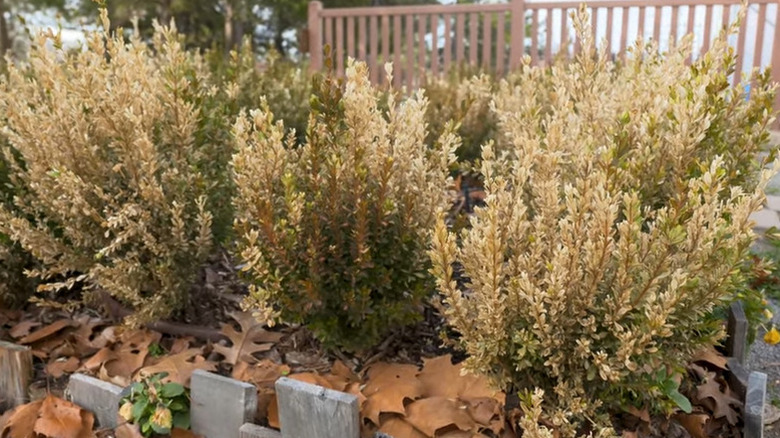
The most obvious way to ensure your boxwoods are healthy in the spring is to choose an appropriate variety for your growing zone. Hardy varieties like Korean boxwood (Buxus sinica var. insularis) can be grown in zone 4 but are prone to yellowing or browning in freezing temperatures. Common boxwood (Buxus sempervirens) is hardy to zone 5, but may require some protection from the wind in colder climates to ensure it overwinters nicely. If you don't have a windbreak like a building or row of trees, you may have to wrap your boxwoods with burlap or something like the AlpineReach Plant Cover to prevent winter burn.
Many gardeners overlook watering in the fall, since it's a cooler time of year and rain is often plentiful. However, boxwoods will fare much better going into the winter fully hydrated, so consider watering your boxwoods thoroughly in the weeks leading up to the first hard frost. This is especially important if your soil is still dried out from a long, hot summer or if your region experiences a dry spell in the fall. Mulching also assists with keeping roots hydrated throughout the winter, and if you're pushing the limits on your climate zone, a 2 to 3-inch layer of mulch can provide some protection from moisture loss and prevent dessication of the leaves.
Avoid these things to keep boxwoods safe in winter
During the winter, some of the branches on your boxwoods may lose leaves or look like they're dead. While it's usually safe to follow the three D rule to properly prune your plants — which simply means taking out anything dead, diseased, or damaged — experts recommend just leaving your boxwoods alone during the fall and winter. New growth on species like common boxwood is quite cold-sensitive, so pruning should occur well before the end of summer. This is also the same reason that you don't want to fertilize too late in the fall. Instead, boxwoods should be pruned and fertilized in the spring as part of your evergreen shrub recovery practices.
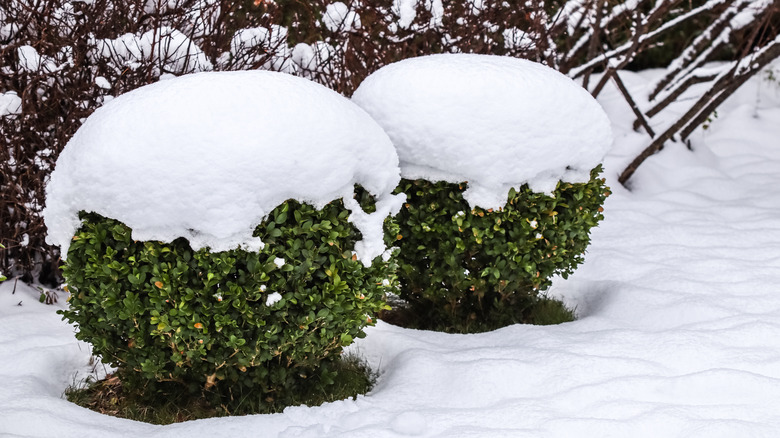
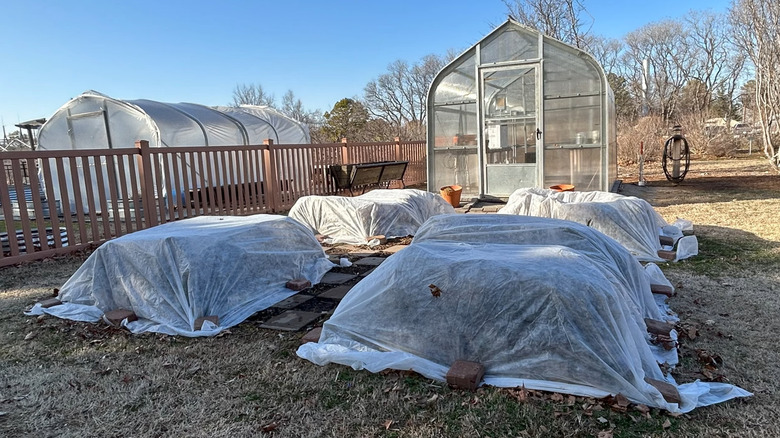
If you decide to wrap your boxwoods to protect them against winter burn or heavy snow loads, be sure to use a breathable fabric and wrap it loosely. Materials like plastic sheeting and tarps can trap more moisture, leading to even greater damage. Remove the covering as soon as the temperatures allow. You should also never shake the branches of any boxwood that's covered in ice. The freezing temperatures can make the branches brittle, which puts them at greater risk of snapping.
Lastly, if you take all of these precautions and still notice your boxwoods looking worse for wear in the spring, another issue may be at play, such as pests, salt damage, or drought. While winter injury is the greatest threat to boxwoods, they are also susceptible to their fair share of diseases and pests.