

How To Shovel Snow The Right Way To Keep Your Back Safe
We may receive a commission on purchases made from links.
Even if you've survived holiday crowds and won a decorative battle with a bunch of tangled string lights, waking up to a driveway buried beneath a mountain of snow can feel like the ultimate winter challenge. When hiring a snowplow vehicle or investing in one of the top-rated snow blowers just doesn't fit into your budget, there are few things worse than the icy dread that hits when you realize you'll need to trudge outside for an hour or two and shovel snow. While some people have decided to ditch the shovel and try another snow removal method instead, many others still shovel snow the old way, and it can wreak havoc on their backs.
A shovel full of wet snow can weigh more than 40 pounds, and repeatedly lifting too much of it can put intense stress on your shoulders, discs, and muscles. Even small mistakes, like twisting the wrong way, grabbing a super heavy scoop, or working for too long without a break, can lead to serious back strain. Bending and twisting aren't the only risk factors. Crunchy snow and icy surfaces hiding beneath it can make it hard to get your footing secure, making it more likely that you'll risk slipping a few times while shoveling. Heart strain is another serious risk, especially if you aren't fit. It's essentially a full-body workout in freezing temperatures.
Fortunately, there are smart ways to approach this chilly task. Bending and lifting with the knees (and not with your back) is still arguably the most important aspect of proper snow shoveling, but there are more helpful things to know about this task. With a little strategy, the right gear, and good technique, you can clear a walkway, patio, or driveway efficiently while keeping your spine (and your sanity) intact.
Choose gear that reduces strain and keeps you protected
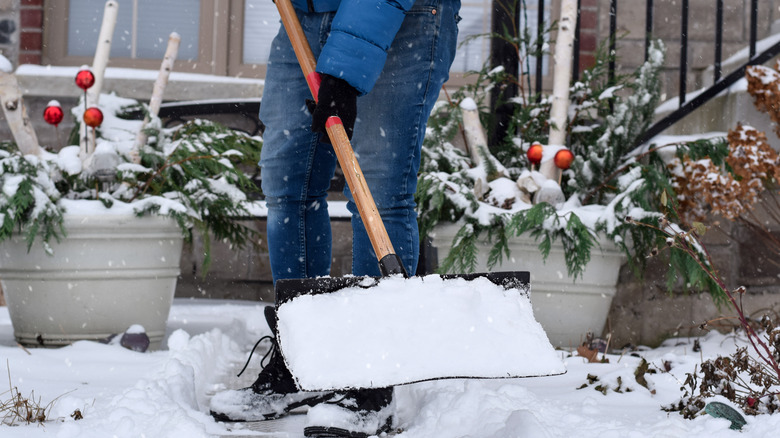
Not all snow shovels are created equal, and using the wrong one can be a disaster for your back. Lightweight shovels are often best, especially ones with plastic or aluminum blades that weigh way less than steel while still offering plenty of durability and stability. The handle design matters, too. Ergonomic, curved, or adjustable handles can help you maintain better posture, and the handle should have a "D" shape to keep your wrist in a comfortable position.
Pick a shovel with a longer handle so you don't have to bend over quite as much. The handle should reach your chest, which is the best way to check its length; ideally, the tip of the handle should reach your elbows when you're standing with proper posture. You may even find a unique spring-assisted handle makes the challenging winter task quicker and easier, with the popular Snow Joe Shovelution seeming to do the trick for many Amazon customers.
Investing in good footwear is also really important. Your ratty old sneakers may be fine for mowing the grass, but they're asking for trouble when it comes to shoveling snow. Instead, you'll want to wear a pair of boots that are preferably insulated and waterproof; most importantly, they should have high traction, since this will help prevent slips and falls that can turn into a serious back problem. Similarly, gloves with good grip and insulation protection will help you keep a strong grasp on your snow shovel, making it easier to lift even when it's piled high with snow. The highly-rated Odtmger Waterproof Breathable Snow Gloves from Amazon should do the trick.
Treat snow shoveling like a heavy workout, with warm-ups and stretches
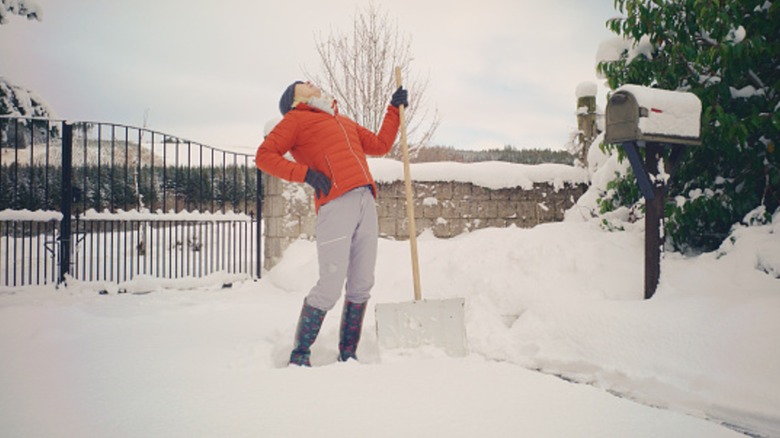
Although it may not be the first activity you think of when you're trying to make major muscular gains, snow shoveling is actually a pretty hardcore type of exercise. In just an hour, routine snow shoveling can burn over 500 calories while stretching practically every muscle you've got. As such, you should treat it like any high-intensity workout. (You might feel a little silly doing stretches in your driveway while bundled up in your parka and gloves, but if you want to protect your back, it's an important step you won't want to miss.)
Muscles perform best when they're loose and warm, so it's a good idea to start with a few gentle stretches and basic movements to get your blood pumping before shoveling snow. You can simply march in place, swing your arms around, or gently twist at the hips. Focus especially on loosening your shoulders, hips, and lower back, since these areas take the brunt of all the bending, lifting, and twisting you'll be doing. Make sure you're hydrated before you get started, too.
Resist the temptation to power through the entire driveway at once. Pacing yourself is critical when shoveling, so taking small breaks every 20 minutes or so is ideal, with even more if you have any heart conditions or are very out of shape. If you start to feel cold or fatigued, head back inside for a bit. Your muscles and spine will thank you later, and by taking your time, you're less likely to have bad form that contributes to injuries.
Push instead of lift whenever you can
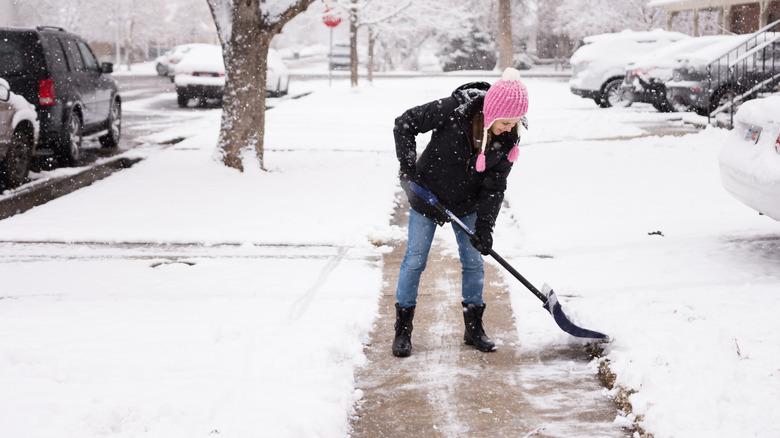
Understanding the risks, investing in good gear, picking the best type of snow shovel, and warming up are all important, but using proper technique is the single most important way you can protect your back. Start by examining the area you want to shovel, considering all the places where you can push rather than lift snow out of the way. High-quality snow pushers, like The Snowplow from Amazon, allow you to push snow with little to no bending. Sliding or pushing significantly reduces the load on your spine by relying more on leg and core strength. It also keeps your body in a more natural position.
As such, the ideal way to keep your body safe while shoveling snow is to push as much of it as possible before commencing normal shoveling. On walkways, this may mean pushing snow for several feet before slowly lifting the pile you create toward the yard. For driveways, push long paths of snow away from entryways. From there, you can shovel the conveniently piled snow.
Just because you can lift a heavy shovel full of snow doesn't mean you should. While it may feel more efficient in the short term, spending even 10 or 15 minutes lifting massive shovels full is the fastest way to give yourself back strain that can take weeks or months to fully heal. No matter how much your shovel weighs, always bend at your knees instead of your waist to let your legs do most of the lifting. Keep your back as straight as possible, holding your shovel close to your body. This will help you maintain your balance and engage your core more easily.