

Why Your Cabinet Hinges Are Rusting And How To Quickly Fix It
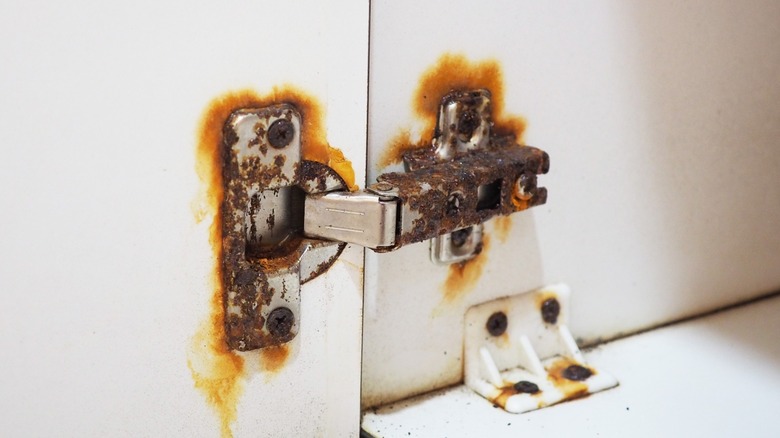
There are plenty of gross things in a bathroom, but cabinet hinges should not be one of them. Unfortunately, rusty hinges can look messy and ruin a restroom's hygienic feel, even if you spent all day scrubbing and disinfecting. Some rust-removal methods can temporarily improve the look, but with all of the moisture they're exposed to, both in the bathroom and kitchen, your hinges are bound to rust again rather quickly. If you want a more permanent solution, you will need to properly prepare the hinges or buy a set that is designed to handle a high-humidity environment.
While they may be plated in other materials, hinges on bathroom and kitchen cabinets are often made of steel or stainless steel, both of which can rust under the right conditions. Both metals have iron in them, though stainless steel usually has less iron and is highly rust-resistant as a result. The iron in the metals reacts with oxygen in the moist air, and the reaction causes the appearance of rust. Some metal hinges have protective coatings that can help prevent rust, but over time, the coatings can be damaged due to scratches, contact with chemicals, or heat exposure.
Bathrooms and kitchens with poor ventilation or cabinetry very close to water sources are more likely to produce rusty hinges, so if you want to reduce rust formation, use a dehumidifier or learn the best way to vent a bathroom to keep it mold-free. Additionally, fix your rusty hinge problem by removing the rust or buying new hinges, and make sure that they have a rust-resistant coating.
How to remove rust and protect your hinges
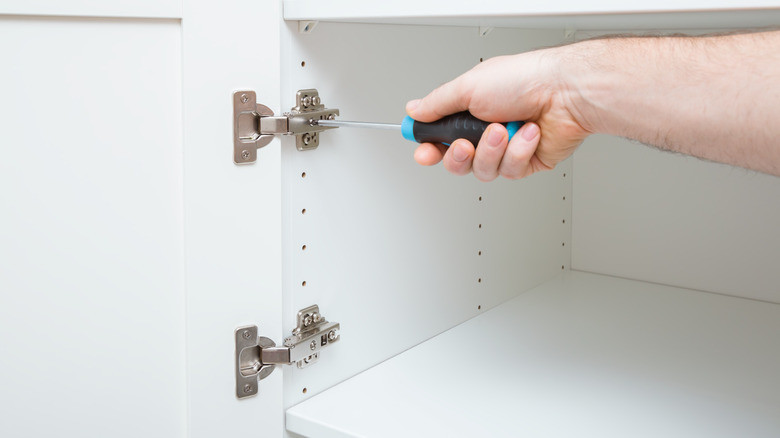
To deal with rusty hinges, start by removing them from the cabinet. For rusty screws, a penetrating oil or a few light taps from a hammer on your screwdriver can break the seal of rust and make removal easier. Next, clean the hinges by using rust remover, soaking the hinges in a bowl of equal parts vinegar and water for a few hours, or applying a baking soda and water paste before scrubbing gently with an old toothbrush or abrasive wire brush. While the hinges should look shiny and new again now, you should take some preventative measures before reattaching them.
One option is to use a spray-on rust prevention protective coating. These sprays, whether they are clear coatings or galvanizing sprays, create a barrier between the metal and the moist air, preventing rust. Be sure to follow the instructions and use any recommended safety gear when applying. When the protective coating is completely dry, follow one of the many genius tips for using WD-40 at home and lubricate the hinge using this product. Proper lubrication creates another barrier and reduces friction that can wear down the rust-proof coating.
If you decide to skip the work and toss your rusty hinges, there are some features to look for when buying new ones. First, choose stainless steel, zinc-plated stainless steel, or solid brass for maximum rust resistance. Be sure to install the hinges properly and clean and lubricate them regularly to prevent rust. Finally, you may benefit from knowing a hack to keep your toilet hardware from rusting.