

The Fruit That Should Be Pruned In Winter
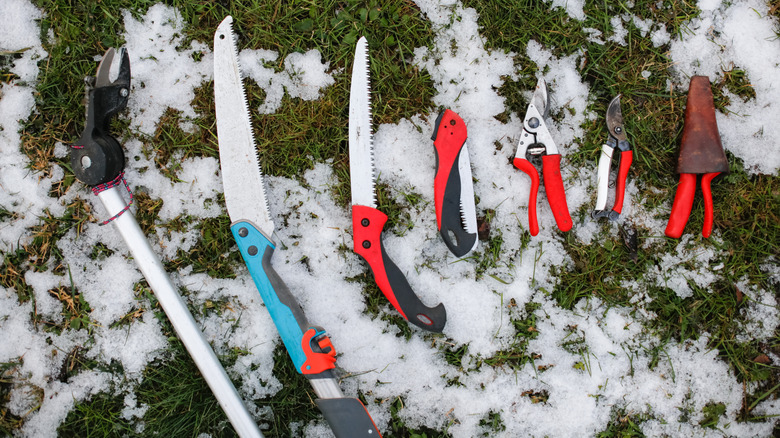
Although winter is downtime for many plants and trees, it can also be an important time for specific plant care tasks like pruning. While there are some plants you should avoid pruning in winter at all costs, it's a great time to take care of the ones that are in their dormant phase. Pruning isn't just about keeping the grapevines in shape, it's also about productivity. Pruning at the wrong time can reduce how much fruit your plants produce and can also limit their growth. One popular fruit-producing plant that should always be pruned during the winter months is the grapevine (Vitis vinifera). Although you may be worried that grapes are hard to maintain, once you know what to do, everything becomes a lot easier.
Grapevines follow a very distinct growing pattern that makes winter the perfect time for pruning. After grapevines lose their leaves in the late fall, they enter into the dormant phase that lasts until spring when the growth cycle starts again. Pruning while the grapevines are dormant helps to avoid interfering with any growth phases and the production of grapes. If you skip pruning tasks with your grapevines they can become overgrown and will produce lower-quality and fewer grapes. While there are plenty of tips and tricks for pruning grapevines, knowing how to prune them properly is just as important as timing. The benefits of proper pruning include improved airflow, it allows the sun to reach the grapes more efficiently, and it helps reduce the chances of diseases by helping the foliage dry out.
How winter pruning sets your grapevines up for better growth
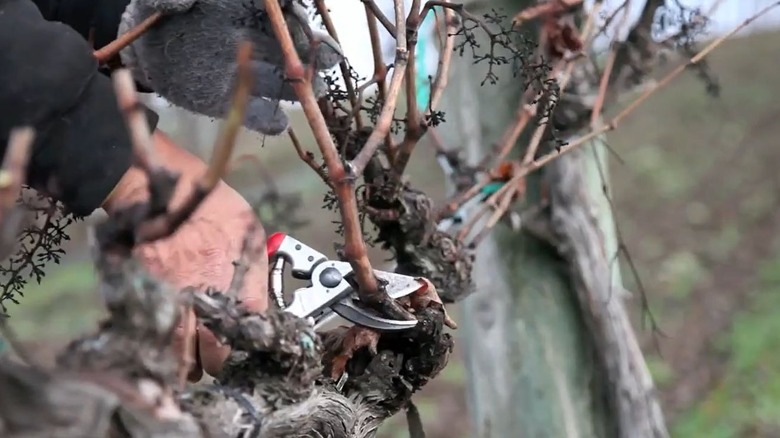
When you are ready to tackle pruning your grapevines, focusing on the basics will make the whole process much easier. A good place to start is by following the three D rule for proper pruning, which involves removing all the diseased, dead, and damaged parts of the grapevine. Don't forget to prune with clean, sharpened pruners and disinfect them during the pruning process, in between vines, if you are dealing with any diseased parts. Too much growth causes grapevines to become unruly, overcrowded, and hard to manage. The next pruning step is thinning this excess growth, which will keep your grapevines healthy and make them easier to care for. With all the overgrowth cleared out, more air and sunlight is able to get to your vines and grapes resulting in great harvests and healthier vines overall.
When your grapevines start growing again in spring, the winter pruning you did will start to pay off in better, more robust growth. With all the overgrowth and problematic parts of the vines gone, grapevines can focus on developing quality fruit rather than on the excessive growth that would just steal the vines' energy resulting in lesser quality fruit. Pruning is an important part of having healthy vines and delicious, quality grapes. It's not a task that should be hit or miss. Making winter pruning a regular habit will help your grapevines stay productive and healthy for a long time to come.