

Want To Attract More Robins To Your Yard? Consider Planting This Beautiful Bush
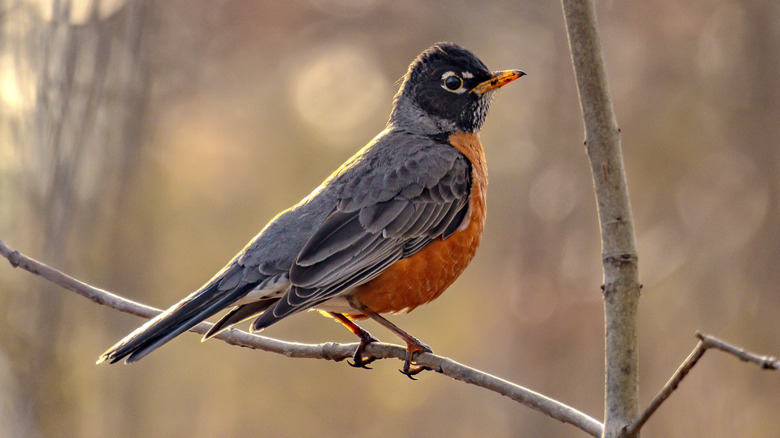
There are tons of benefits to building out your yard and gardens to attract birds: they help control insect populations, tamp down weed growth, pollinate flowers, and above all else? They're beautiful, adding a certain extra majesty to watching nature play just outside of your home. One common species across North America is the American robin, which migrates early before spring and is recognized for its cheery singing voice. Notably, American robins are actually members of the thrush family (only distantly related to other robins), but you can attract them as you would with any other bird — plant flora of varying heights that produce fruit, berries, or nectar. In fact, one great option for American robins is holly bushes (Ilex aquifolium).
Holly is a thorny, weedy plant that's moderately poisonous to humans (especially children), and can be dangerous for pets like cats and dogs, too. However, it's a plant with cultural significance across human history. In particular, there's a lot to be said about how the ancient Roman festival of Saturnalia was co-opted by Christians during the rise of the Holy Roman Empire, leading to holly becoming associated with the birth of Jesus Christ via hymns like "The Holly and the Ivy." More importantly for the American robin, holly begins to flower during colder months, which makes it one of the best winter plants for birds and other wildlife.
Growing holly bushes for birds like robins requires some yard prep
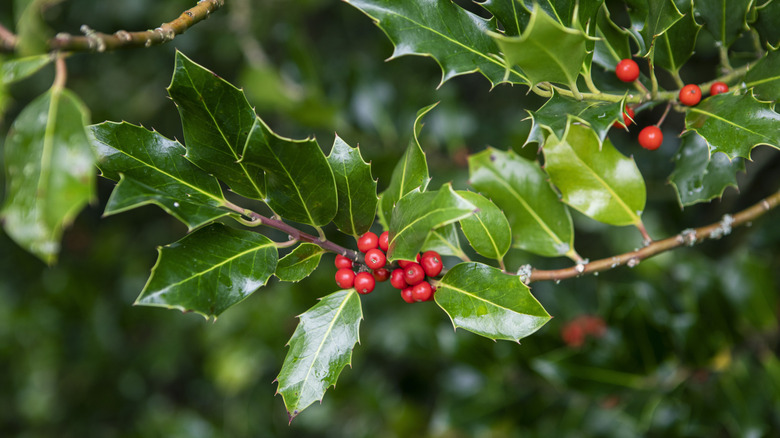
Despite common holly berries developing early, making their bushes a great pollinator plant to attract bees and songbirds, holly isn't the most winter-hardy flora out there. It thrives best in USDA hardiness zones 7 through 9, which puts holly more at home in the lower-middle stretch of the United States. Places that are too hot and humid won't be ideal, but you also want to plant holly bushes in a tucked-away area that will shield them from harsh, cold winds. So long as there's access to full (or at least partial) light conditions, and enough space for visiting American robins to snack on those bright red berries as they grow upwards of 30 feet by 16 feet, you should have more than enough to let these pollinator plants thrive.
Successfully growing and caring for holly bushes will require moist soil with good drainage, ideally a clay or sandy texture with organic matter and a slightly acidic pH. It's worth noting that holly will naturally spread to become the dominant shrub in its environment, and while this may be a good source of food for robins, you'll want to be careful not to let the holly crowd out anything else in your garden. If you're looking for more privacy, this could help you create a screen of plant life around the border of your yard.
Holly and its companion plants make a good environment for migrating robins
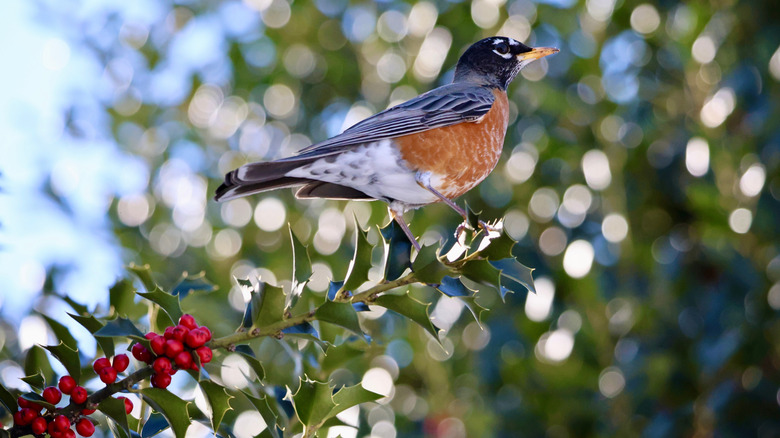
Leaning into berry-producing bushes like holly is ideal if you're a birdwatcher who wants to create a thriving space for robins in your yard. These birds will not eat seed mixes from traditional feeders; fruits and berries are their main food source during the winter, but they mostly go after worms and insects (their diets shift depending on the time of day). Well-fed worms can help you create garden compost that will add to the organic matter you need for plants like holly bushes, and there are extra benefits if you can double those worms as potential food for robins.
American robins also appreciate having plants with dense foliage and lots of horizontal branches to use for potential nests. Some other shrubs that pair well with holly bushes in a garden include azaleas and clematis, and robins will take large collections of dead twigs and grasses to press together for their nests. With a proper spread of food provided by berries like holly, it should be easy enough to groom a space that's suitable for robins and other passing birds. Most American robins will migrate south during the fall season, so you might not see as much activity around your holly in the dead of winter, but it's a good way to provide shelter and care during their return journeys.