

Fruits That Turn Cardinals Into Eager Visitors To Your Yard
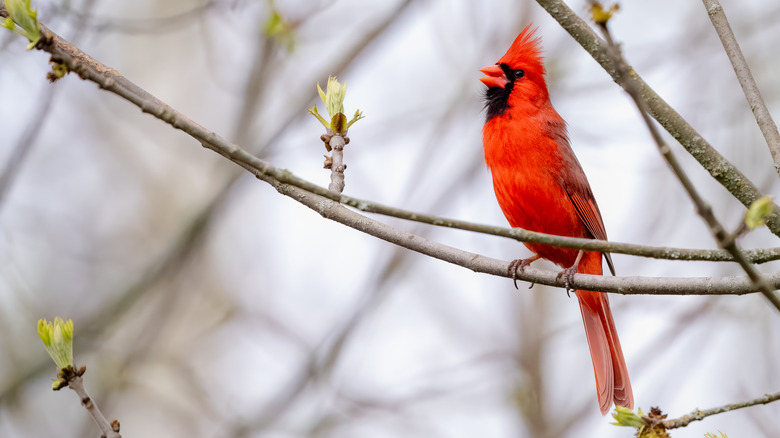
The cardinal is one of the most widely recognizable backyard birds in the United States. The male's bright red plumage is easily spotted in any backyard setting. They sing with the less-brightly colored females for mating and to signal danger, and their birdsong is quite melodious. If you hear a cardinal calling out from your bird feeder, it likely means they recognize your yard as having a reliable food source. Some people view them as a bit mystical and believe that when a cardinal visits, it's a message from a departed loved one. Even if the pretty red bird holds no special significance for you, their presence is sure to bring a smile to your face.
Attracting these birds is not difficult if you have good food and some bushes and shrubs for them to nest in and hide from predators. You will want to avoid these 9 mistakes if you want to attract more cardinals to your yard, though. A big one is forgetting to put out enough food and water. Cardinals don't migrate the way other species do, and during the winter months, food becomes scarce. This is the perfect time to treat them with some of their favorite fruits. Fruit provides them with plenty of carbs to help them maintain their body temperature during the cold months. And here's a fun fact: the cardinal's gorgeous red color comes from carotenoids found in the fruits they eat!
Berries and other fruits provide energy and hydration during the lean winter months
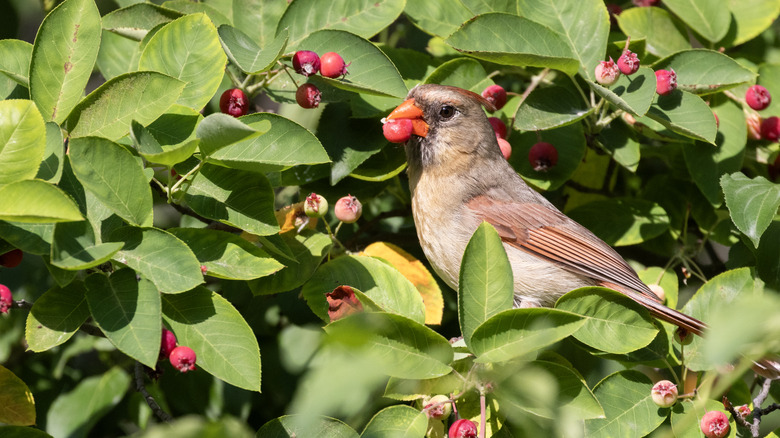
In the summer, cardinals primarily eat insects for the protein they provide. But in fall and winter, when insects are not as plentiful, they rely on seeds and fruit. Cardinals love berries like mulberries, blackberries, raspberries, and elderberries. They also like the berries and shelter of evergreen of trees and shrubs like sumac, juniper, and holly. Berries provide a good source of sugar for energy and hydration in the fall and winter. Grapes, apples, and pears are also great options. The best way to feed these fresh fruit treats is on a platform feeder. While fresh fruits are great, you can also feed dried fruits like raisins, cranberries, cherries, and apples. Just avoid feeding fruit with any additives or preservatives, because this could be harmful.
When feeding fruit, keep it dry and fresh to avoid mold or mildew. Placement of your bird feeder also matters, especially in winter when there are no leaves to provide hiding places from predators. Avoid this placement mistake to keep cardinals away from your yard in winter by placing the feeder about 10 feet from evergreen trees and shrubs. Fruit should not be the only thing in your feeder if you want to attract cardinals. Seeds and nuts like sunflower seeds, white millet, and cracked corn provide oils and fats that cardinals also need in their diet.