

Should You Avoid Cleaning Enameled Cast Iron Cookware With Vinegar?
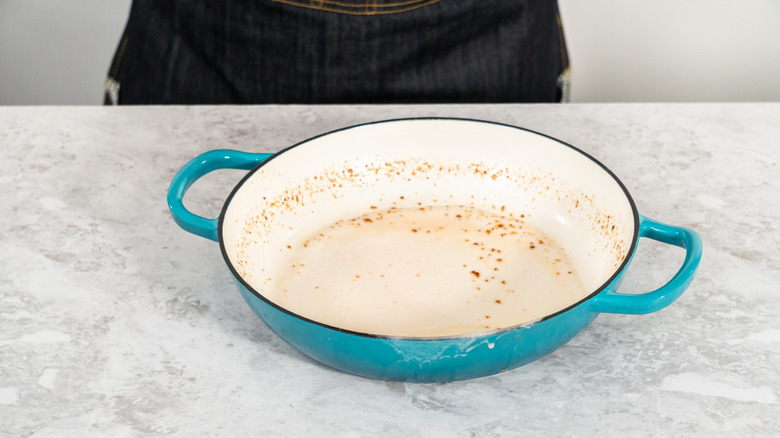
Cast iron cookware is a must-have in a well-equipped kitchen. It's virtually indestructible. It stays hot and evenly distributes heat. In a pinch, a Dutch oven can replace a regular oven. It doesn't need to be washed when it's used correctly — it's self-seasoning and nonstick. However, food sticks, dirt builds up, and rust develops with inappropriate use. The best way to season a cast iron skillet is a hot topic, with everyone insisting their way is the only way. These discussions simmer down when enameled cast iron enters the conversation. Cast iron with an enamel coating is easier to keep clean and is almost as tough as traditional cast iron. It doesn't need seasoning, is nonreactive, and is available in many colors. If you have an especially tough mess to clean up, there's no need to avoid cleaning enameled cast iron with vinegar.
Everyday cleaning of enameled cast iron cookware is easy; it shouldn't require any heavier-duty cleaners like vinegar. Stuck-on gunk, however, might need something tougher. A large, enameled pot with a tight-fitting lid is ideal for dishes like sauerbraten or braised pork. These recipes call for long cooking times and lots of vinegar or acidic apple cider. It's doubtful that manufacturers of enameled cast iron would suggest cooking these types of dishes in their product if the acidity was bad for the cookware. If vinegar is your preferred cleaner for tough stains, there's no harm in using it on your pots. Chips in the enamel from rough handling are much more of a concern than damage from one cleaning product or another. Vigorous scrubbing with a steel wool pad can scratch the surface, too.
Cleaning enameled cast iron cookware with vinegar
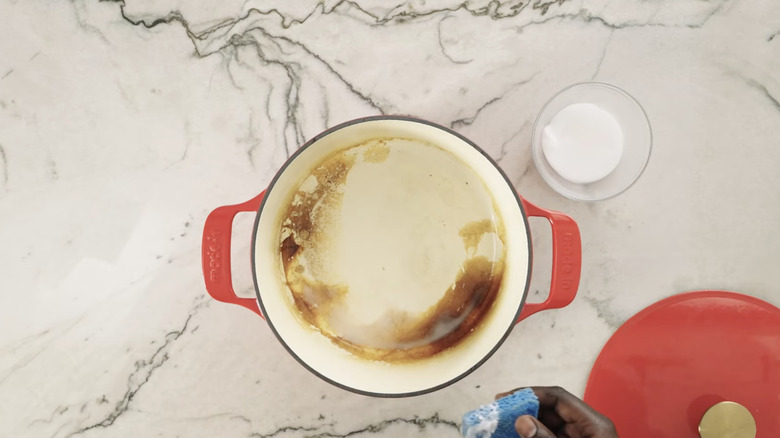
Ready to use this everyday ingredient to get your mucky enamel cast iron cookware sparkling again? First, fill the pot with enough white vinegar to cover any stuck-on messes. Then add a tablespoon of baking soda and put the pot on a stovetop element set to low. Leave the mixture to simmer for a short while. Don't be surprised if the mixture bubbles up the sides of the pot when you add the baking soda. It's a harmless natural chemical reaction that will settle down in a minute or two. Your only worry should be whether or not the mixture bubbles over. Fair warning, this cleaning method will leave your house smelling like vinegar. Hydrogen peroxide is a good, scent-free substitute. As it turns out, baking soda and hydrogen peroxide are also a go-to mixture for porcelain sinks.
There are a number of other methods to clean enameled cast iron that don't involve vinegar. The simplest method is to let the pot or pan cool and then wash it with a soft sponge and warm, soapy water. Rinse, dry, and you're done. (You can also clean traditional uncoated cast iron with soap.) For oil residue or stuck-on food, fill the pot with warm, soapy water and leave it to soak. As a last resort, fill the pan with warm water, add one or two tablespoons of baking soda (sans the vinegar), and simmer for about 10 minutes. Or make a paste of baking soda and water, rub it onto the spot with a soft sponge, and allow to sit overnight. Commercial cleaners like Bar Keepers Friend can be effective, and some manufacturers have proprietary products, like the Lodge Enameled Cast Iron & Ceramic Stoneware Cleaner Care Kit.