

Enjoy Fresh Produce Year Round By Growing These Plants In Hanging Pots
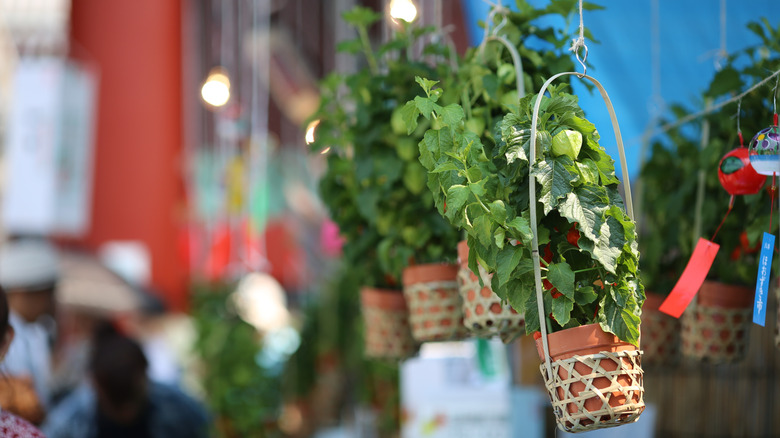
Growing your own food can be an extremely fulfilling and worthwhile experience. But unless you're lucky enough to have a backyard greenhouse or you live in a mild climate, there's a limited amount of time you'll have to harvest fruits and veggies. However, savvy gardeners can extend their growing season by adopting a hanging pot garden. From creeping thyme to trailing cherry tomatoes, there are an array of options to choose from.
Each type of produce will have its own unique set of requirements for success. However, there are some best practices to keep in mind if you're ready to pursue a hanging basket garden. First and foremost, assess how much sunshine you can provide to your plants. Generally, most edible plants will require about six hours of sunlight every day. But there are some shade-tolerant options you can explore. If you have a south-facing window, you're in luck — it provides the most sunshine possible.
The basket itself is a key factor to consider as well. In most cases, a 12-inch hanging basket will be the ideal size for growing food plants. Proper drainage is also vital. Coconut fiber baskets are a great option since they offer great drainage and they're lightweight. Use lightweight soil to cut back on the overall weight. As you plan out your hanging garden, be sure to factor in the projected weight of your plants as well. Some smaller plants might be great candidates for basket companion gardening. Here are 15 options to consider.
Strawberries
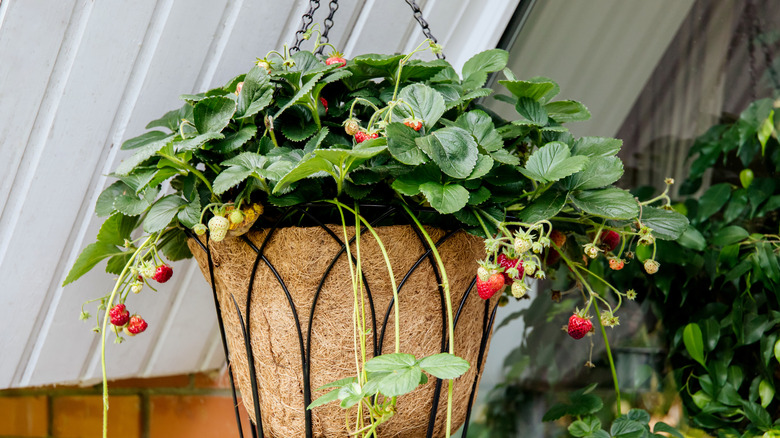
Want the chance to grow your favorite sweet treat all year long? Strawberries (Fragaria x ananassa) are an excellent option for basket gardening. These low-maintenance plants thrive indoors and look stunning in a hanging basket too. Pick an ever-bearing or day-neutral strawberry variety. Use starter plants to fill out your hanging basket and establish in well-drained organic loam. Place somewhere sunny and rotate every week or so. Water your plant frequently. Also, keep in mind that there aren't any pollinators indoors, so you'll have to do so by hand.
Cherry tomatoes
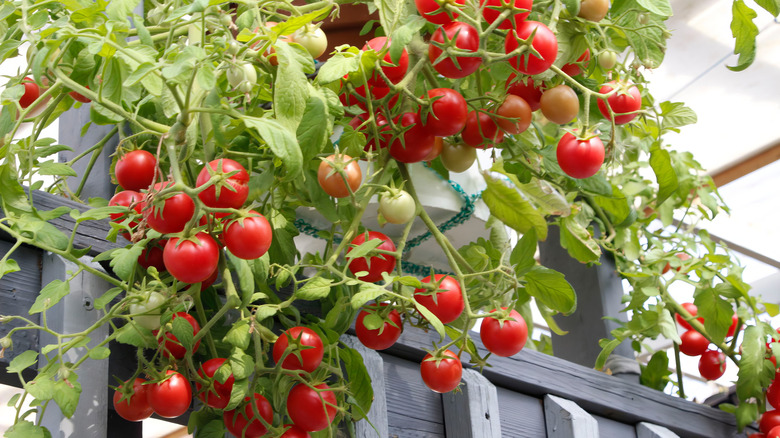
There is an assortment of cherry tomatoes (Solanum lycopersicum) perfectly tailored for container planting. Cultivars such as 'Cherry Falls' and 'Tumbling Tom' trail beautifully, while 'Patio Choice' and 'Tiny Tim' are also ideal for smaller containers. Your tomatoes will require six hours or more of sunlight. Supplement with artificial light if necessary. Remember, tomatoes love moisture, so don't allow your baskets to dry out. This crop is also a heavy feeder and will need to be fed more while growing in a basket. Once you see flowers, gently shake your plant to spread the pollen.
Nasturtium
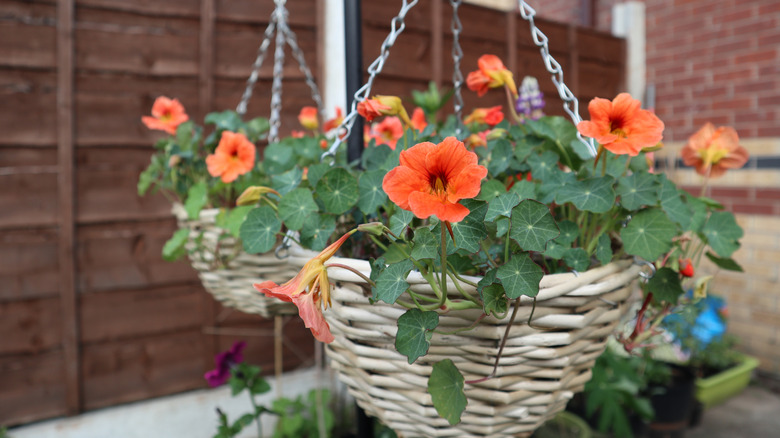
Nasturtium (Tropaeolum majus) isn't just a pretty orange flower – it also serves as a great salad topper and source of vitamin C and lutein. You can easily start your plant from seed. This sun-loving plant will need to be hung in a bright window where it can receive about six hours of sunlight a day. It should also remain at a minimum temperature of 55 degrees Fahrenheit but not exceed 90 degrees Fahrenheit. This shouldn't be too hard to achieve indoors. You'll know it's time to water your nasturtiums when the top of the soil dries out.
Snap peas
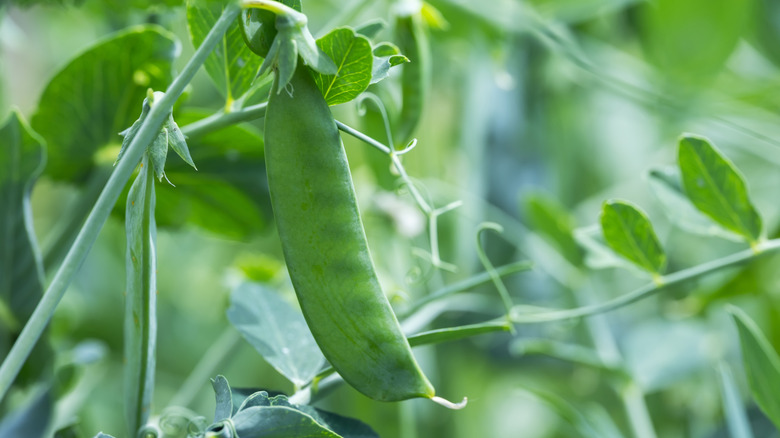
If you're looking to grow a delicious snack plant indoors, try your hand at cultivating snap peas (Pisum sativum). Some great varieties to try for your hanging basket garden are 'Dwarf Grey Sugar', 'Super Sugar Snap', and 'Purple Mist Organic'. You can sow your seeds directly into your growing medium about 2 inches apart. Take care not to overcrowd the planter. You can opt to thin out the weaker seedlings as they grow. Install weighted strings to train your vines downward. Give your plant eight to 10 hours of light a day and keep the soil moist.
Hot peppers
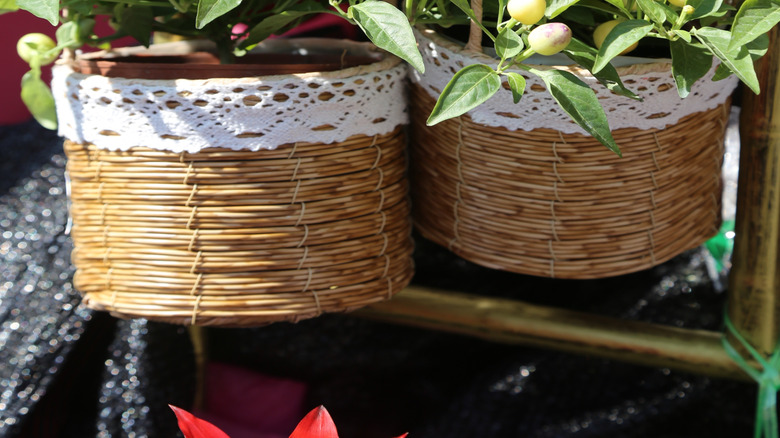
Fans of spicy food can grow hot peppers (Capsicum annuum) in hanging baskets. These plants require roughly six to eight hours of sunlight a day, so be sure they're in a sunny window. You can use a starter plant or germinate seeds yourself. To do so, place your seeds in a moist paper towel. Store them in a plastic bag somewhere warm. In about a week, check if any seeds have germinated. If they have, you can plant them in your container. Keep seedlings moist, but only water mature plants once the soil dries out completely.
Trailing rosemary
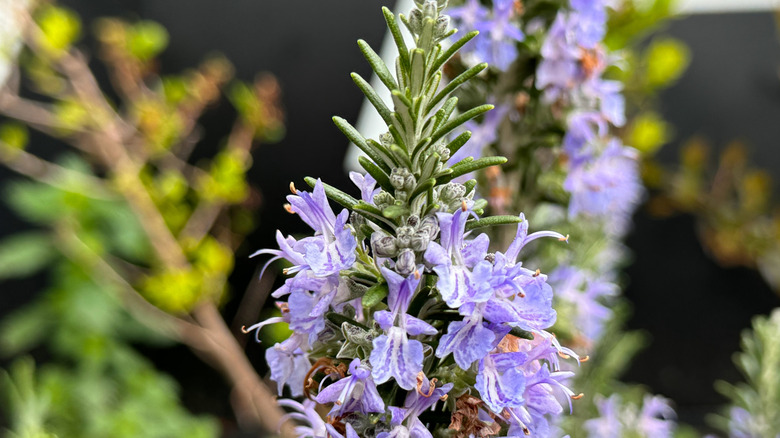
Not only does trailing rosemary (Rosmarinus officinalis 'Prostratus') provide an essential herb right at your fingertips, but it also looks stunning in a hanging basket. Some chefs prefer this variety since it has a softer stem than other types of rosemary. While this plant can make it with just four hours of sunlight daily, you'll get more leaves to collect if it gets around eight hours. Fill your hanging basket with well-drained soil, sand, and compost before transplanting your starter plant. As your plant grows, you can regularly prune back a third of the plant and keep the trimmings for your kitchen.
Sweet potatoes
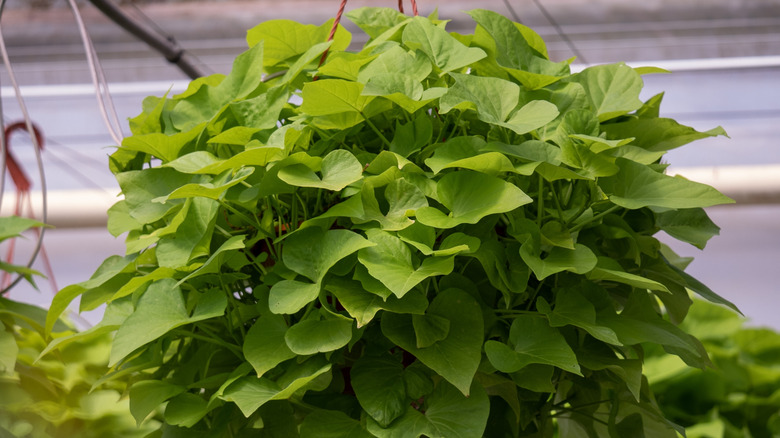
Sweet potatoes (Ipomoea batatas) feature a beautiful vine that looks fantastic in hanging baskets. You can start your plant from an organic grocery store potato. To do so, you'll need to keep the potato in a cool, dark place until it sprouts. Next, put the potato sprout-side down into a glass of water. Leave it there for four to eight weeks. It should develop several root slips. Cut these off and plant one slip per container. Be sure your basket is at least 12 inches deep and 2 feet across. Your sweet potatoes will be ready to harvest in 90 to 120 days.
Creeping thyme

Another excellent herb you can grow in hanging baskets is creeping thyme (Thymus serpyllum). This hardy, low-maintenance plant is fairly drought-resistant. Just keep your plant moist right after transplanting. Be sure to soak your starter plant plug before establishing it in your basket as well. Creeping thyme prefers sandy loam as a growing medium, and likes to hang near a window that will offer six to eight hours of sunlight. You can also supplement with artificial light if necessary.
Calendula
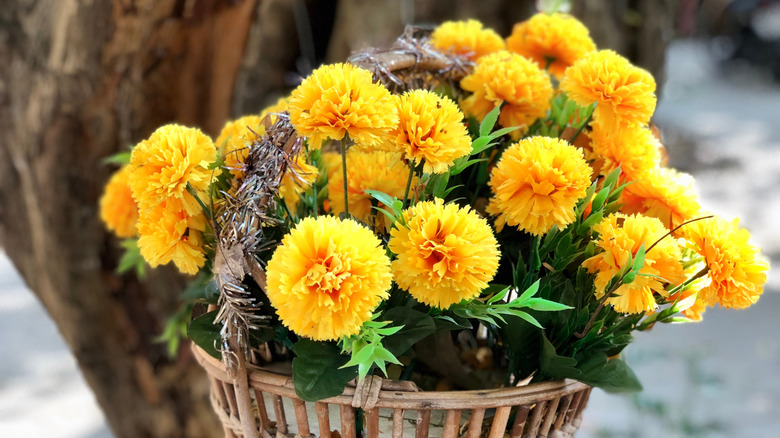
Calendula (Calendula officinalis) is revered for its value as a topical medicinal; however, its leaves and petals are also edible. You can easily grow this plant in a hanging pot from seed. Plant your seeds in well-drained soil about half an inch deep. Then, hang your basket in full sun. You'll see the first sign of sprouts in about five to 15 days. Once established, water your plant moderately. There's no need to fertilize this plant; instead, as blooms emerge, you can encourage more growth by deadheading mature flowers.
Mini carrots
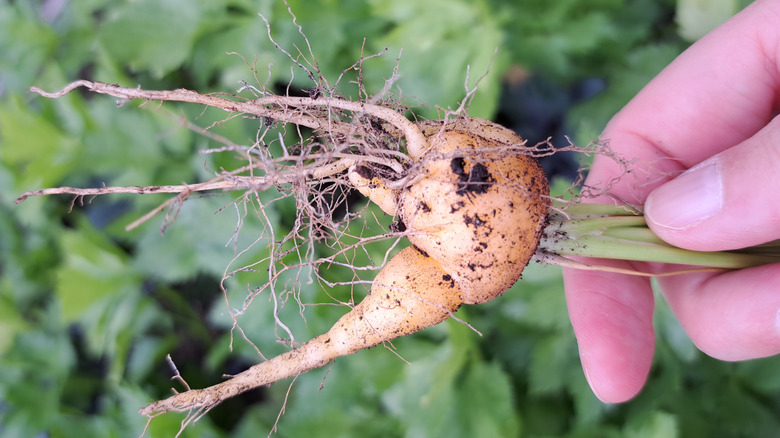
Carrots (Daucus carota subsp. sativus) may not be the first veggie you'd think of for a hanging garden, but they are actually pretty great candidates for container growing. Opt for a shorter variety such as 'Paris Market' carrot or 'Little Finger' carrots. It's critical that you use loose, well-drained planting medium so your carrots can grow properly. A combination of potting soil, compost, and bone meal for added phosphorus is a great mix for carrots. Plant your seeds about a quarter inch deep. Your plant will need six to eight hours of sunlight. When watering, use a mist setting to avoid disturbing the small seeds.
Chamomile
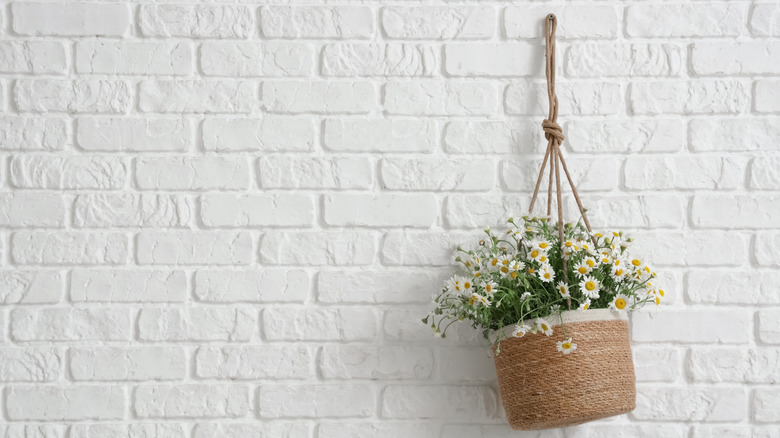
Tea lovers should consider growing their own chamomile (Matricaria chamomilla) in a hanging basket. It only requires four hours of sunlight a day. Additionally, you can plant the seeds directly into the basket. Start by wetting your soil, and then you can press the seeds right into the growing medium. Be sure your home remains at a temperature of about 68 degrees Fahrenheit so the seeds can properly germinate. Continue to keep the soil moist. You'll be able to harvest your chamomile for tea in 60 to 90 days.
Dwarf blueberries

Another fruit crop you can grow in a hanging basket is the dwarf blueberry plant (Vaccinium myrsinites). This smaller blueberry variety is perfect for container gardening, and you can source a starter plant from your local nursery or online. You'll want to maintain a growing medium pH of 4.5 to 5.0. To achieve this, you can create a soilless medium of one part sphagnum and one part shredded pine bark. Supplement with acidic fertilizer every two weeks. Finally, be sure your plant receives six or more hours of sunshine a day.
Mini cucumbers

Grow your own snack-sized mini cucumbers (Cucumis sativus) in your hanging basket garden. These more compact cucumbers are the perfect size to grow indoors. Fill your basket with well-drained, slightly acidic soil. Be sure to include nitrogen-rich compost in your soil as well. You can establish a starter plant or you can grow your mini cucumbers from seed. Plant a few seeds and weed out the weaker ones in favor of the strongest plant. Keep your soil moist and be even more diligent about watering once fruit appears. Hang your basket in a window where it can receive six to eight hours of sunlight.
Lemon balm

Another fantastic tea herb you can grow in a hanging basket is lemon balm (Melissa officinalis). It's not a fussy plant to work with at all, and you can easily grow it from seed. Lemon balm does just fine in full sun or partial shade. It also does well in an array of soil conditions. Just make sure the soil doesn't get soggy. Apply a liquid fertilizer every couple weeks to get a higher yield. As soon as you see flowers forming, be sure to pinch them off to avoid bolting. If you don't, it can cause your lemon balm to taste off.
Malabar spinach
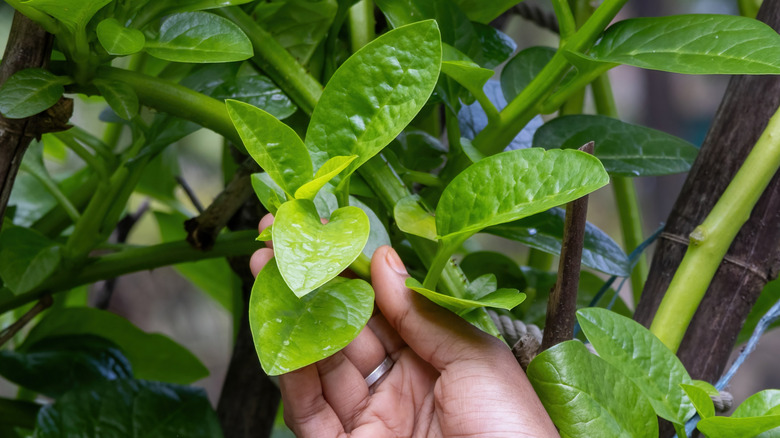
Salad lovers should try their hand at growing malabar spinach (Basella alba) in their hanging baskets. This leafy green is actually not true spinach but a fast-growing, vining alternative. The leaves have a citrus-like, peppery flavor and are suitable to eat raw or cooked. Plant your malabar spinach in well-drained, fertile soil. Hang it up in a window where it can receive full sun, and be sure to keep the soil moist but not soggy.