

13 Ways To Amp Up Home Security Without Using Electronics

We may receive a commission on purchases made from links.
You keep your garage door closed and lock your doors and windows at night. But how secure is your home really? Chances are, there are likely ways you can make your home more secure, even if you already have an alarm system in place. In some cases, the cost to install a security system and to have ongoing monitoring is too expensive, so homeowners look for more affordable options. No matter what gadgets and electronics you use to monitor your house, it's still a good idea to look at some non-electronic ideas that could make or break your home's security.
Making your home safer starts with asking yourself one simple question: Where would a burglar try to enter the home? Then, your goal is to make those entry points less accessible or less appealing — changing your landscaping and exterior lighting while increasing the strength of locks on doors and windows are effective methods. It also helps to get to know your neighbors, so you can look out for one another and notice when something suspicious is happening. Just don't reveal too much information to anyone (and don't let people get a good look at your valuables) — you could make yourself a prime target if would-be thieves learn your routines and plans. These 13 tips will help you make your home less attractive to criminals.
Limit hiding spots and access by keeping your landscaping under control

Making your home safer starts in the yard by keeping shrubs pruned and trees far away from second-story windows. Sure, those tall, thick shrubs give you a feeling of cozy privacy — like you're living in your own little bubble. But they also provide a hiding spot for a burglar who wants to enter your home. Tall growth near potential entry points, like windows and doors, is particularly helpful to thieves, which is why you want to cut the plants back and make it more difficult for anyone to approach your house undetected. Trees growing near the house could also be helpful to agile criminals, who could use the branches to reach second-story balconies or windows.
To determine what needs to go, look at your house from all angles to identify potential hiding spots. Look up toward the second story to see how close the tree branches are. It's also helpful to look out your windows and make sure you have a clear view of the street and your neighbors' homes. When cutting back your plants, it's best for the shrub's health to remove no more than a third of the growth per year to avoid stressing the plant. That means you might have to scale back the size of your hedges gradually if they're large, unless you want to remove them completely. Then, keep your shrubs and trees pruned regularly to keep them under control and manage the size effectively.
Make painful and noisy landscaping choices
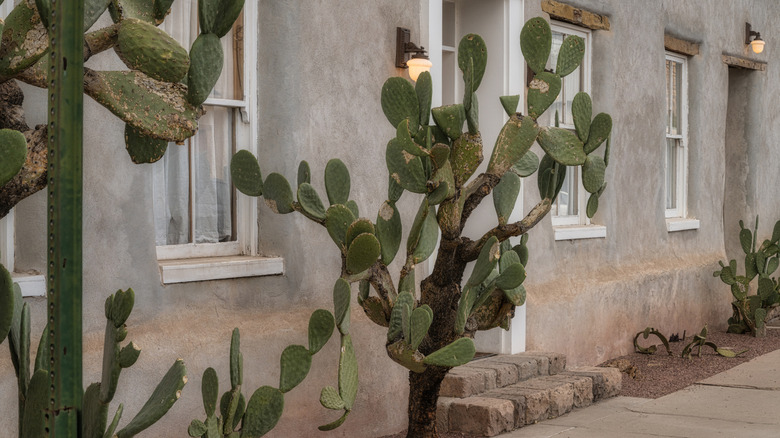
If small, compact landscaping doesn't suit your style, think discomfort — you can upgrade your home security with many stunning landscape plants that are pokey, prickly, or thorny. Someone will have to really want to get inside if your home is surrounded by cacti or thorny rose bushes. Another way to make your home unapproachable is by surrounding those painful plants with rocks, which can create uneven (and even slippery) footing. Even the most balanced burglar may still find rocks too noisy to navigate without alerting people to their location.
Choose the uninviting landscaping specimen based on your climate and style preferences. Roses and bougainvillea offer floral defenses around your home — their colorful blooms hide a painful secret in the form of thorns. In desert climates, agave and cacti planted near your home practically create a living barbed-wire fence. Agave leaves come to sharp points — look for varieties with saw-like, teethed edges for maximum security effects. Keep in mind that these plants can also be dangerous for pets and kids who spend time in the yard. This strategy might not work well if that describes your family.
Light up your home's exterior to make a sneaky approach difficult
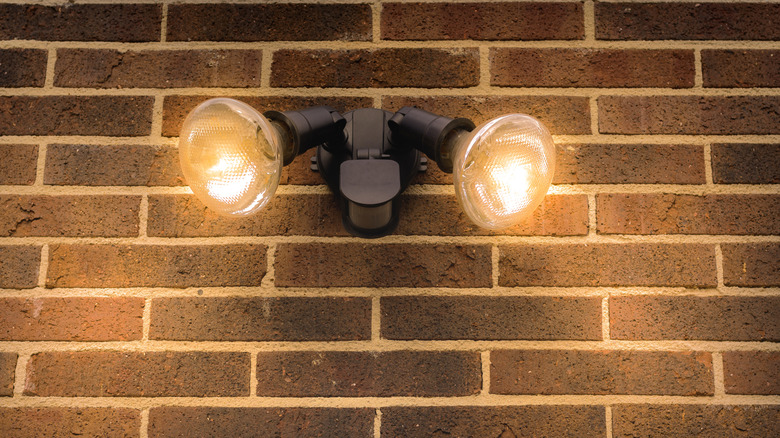
Maximizing outdoor lighting to improve home security can also improve your home's curb appeal while also giving burglars fewer opportunities to approach your home undetected at night. Simply lighting up your home's exterior could deter thieves from targeting you. Adequate lighting is also important if you have a surveillance video system, as it helps you get clearer images. However, it's also possible to create dark spots if you use landscape lighting poorly — that could end up providing shadowy hiding spots that make it easier for people to get close to your home.
Every home is different, so customizing the lighting to fit your yard is important. Common spots to illuminate include doors, windows, garages, driveways, and walkways. When deciding where to position lights, look for dark areas that could serve as cover. The angle of each light is important for eliminating shadows. Using lights with sensors that automatically come on at dusk and shut off at dawn ensures that the lights are on every night, whether or not you remember them. If you're concerned about having lots of lights on all the time, consider motion-sensor floodlights.
Upgrade window locks and security features
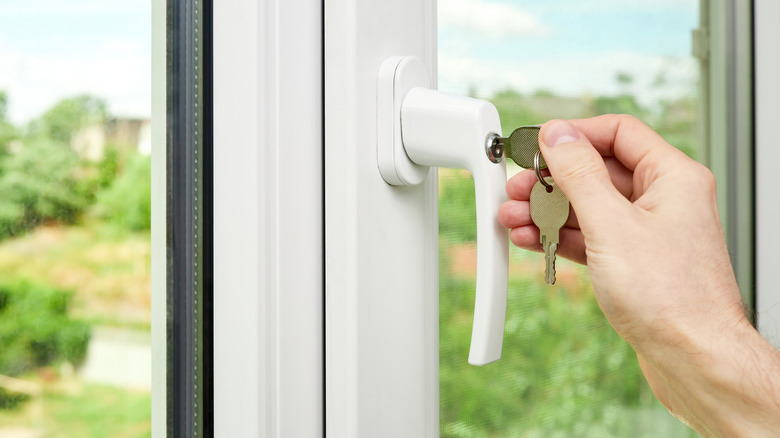
Windows typically come with locks, but they aren't usually the most secure options, which makes them easy to bypass. For example, sash locks can be broken easily if someone knows how to force open the window. Replacing broken locks or adding more secure lock types can make your windows more difficult to open from the outside. There's also the option of jammers, security bars, and similar devices that stop the window from sliding when they're engaged. Home intruders typically look for fast, easy entry, so adding layers of protection on your windows could slow them down enough to send them running away.
Start by checking the strength of your windows — outdated, weak windows and frames are easier to force open with less pressure than newer, reinforced frames. If the windows are in good condition, consider adding secondary locks to reinforce what's already there. If you have traditional double-hung windows, locking pins are an option — they go through both sashes to keep the window from opening. Ventilating locks let you open the window slightly for some air while keeping it from being forced open more. Hinge wedge locks are similar, letting you open the window a little bit. There's also the option of a keyed lock, but keep in mind that you'll need the key to open it, which can slow you down if you need the window as an emergency escape route. Regardless of which type you choose, the locks only work when you use them consistently, so get in the habit of keeping them latched.
Strengthen windows by applying security window film and security screens

The glass in your windows is a very vulnerable point — intruders may try to smash the glass to reach in and open the lock. One option is to replace your windows with new models that have laminated glass, also known as shatterproof glass. But if your windows are in good condition, an alternative is adding security film over the glass. It's made by combining lots of micro layers of tear-resistant polyester to strengthen the glass, so it's more resistant to forced entry. Upon impact, the film disperses the energy to prevent breakage.
When choosing film for your window, don't get confused between safety and security film. Safety film isn't quite as tough — its main purpose is to prevent shattering during accidents, storms, and similar unexpected impact. While you can install many window films yourself, choosing professional installation increases the chances of the film adhering to the glass correctly and being as effective as possible. The film comes in different thicknesses, with thicker options increasing the amount of protection they offer. In addition to clear film, you can choose tinted or reflective options that add a touch of privacy and can even reduce UV rays.
Replace and upgrade your door locks to prevent unauthorized access
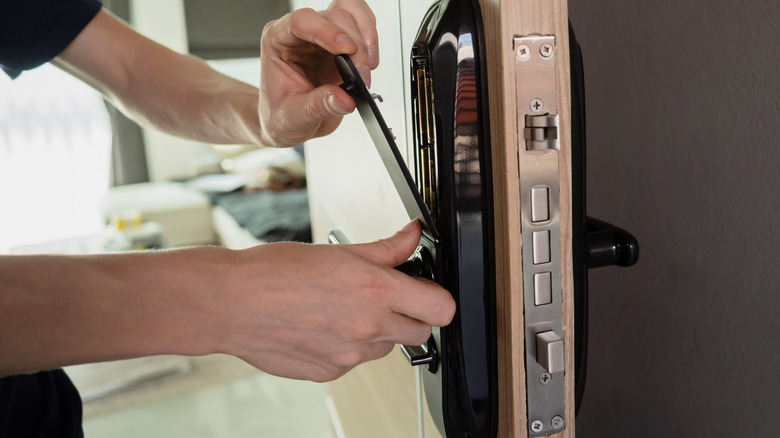
Reinforcing the door frame and installing better locks are easy ways to improve front door security. Exterior doors need deadbolts for effective protection against burglaries — spring-latch locks don't provide enough protection because thieves can easily pry them open. There are different types of deadbolts: single-cylinder locks require a key on the outside but have a knob inside to unlock. It's easy for you to open, but an intruder could also easily turn the knob if they break the sidelight glass. Double-cylinder locks require a key on both sides, which can be dangerous in an emergency but is more secure against break-ins.
If your locks are old or you don't have a deadbolt, it's time to install a new set right away. When should you change your locks outside of those situations? Recommendations vary from every five to 10 years, but it's also smart to change them after major changes or a breach to the door's security. Examples include when someone moves out, you lose your keys, there's an attempted break-in, or you give a set of keys to a contractor. When you install a deadbolt, use long screws — 3-inch screws are ideal.
Use security bars and upgraded locks to secure sliding doors
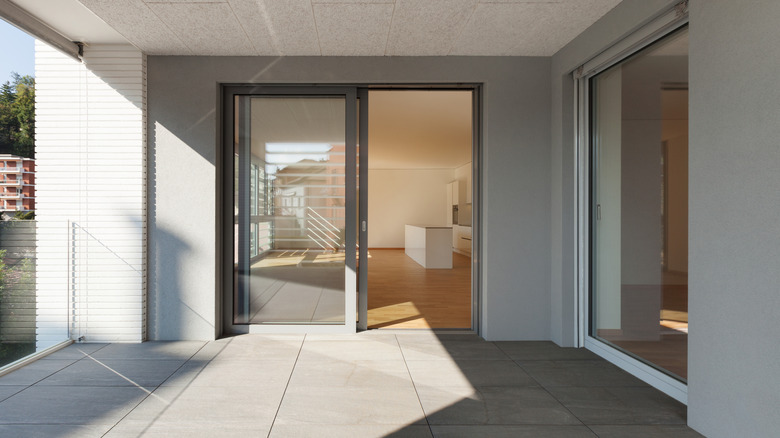
Sliding glass doors are attractive to intruders — they get a clear view into your home, and the locks that come installed on them aren't usually very sturdy. Security bars are the smart solution to secure sliding windows and doors — they keep the door from sliding open, should someone maneuver the lock open. Speaking of locks, there are several options for upgrading sliding glass door locks that people can't pry or jiggle open. These upgrades won't make your sliding glass door impenetrable, but they'll make the job of breaking in much more difficult. And that could cause a thief to give up in frustration.
Security bars, like this BeBecome sliding door security bar, typically adjust to fit snugly in the track of your patio door, creating a physical barrier to prevent it from opening. A metal rod or a thick hardwood dowel cut to fit the track of the sliding door can be an affordable alternative. To upgrade your locks, consider a keyed lock, which is more challenging to break than standard patio locks. You can also choose a multi-point lock system, which engages multiple locks in different locations around the frame.
Keep easy-to-grab valuables out of sight
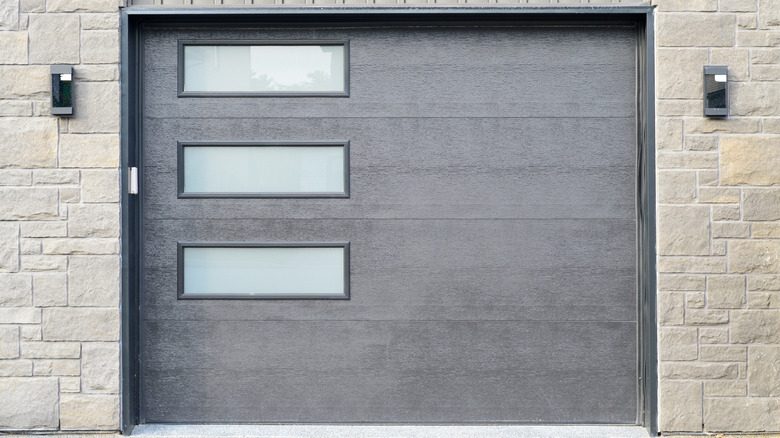
Burglars want high-value items that are easy to grab, so advertising what's inside by keeping it in visible spots could make your house more of a target. For instance, if you have an extensive electronics setup with video games, sound systems, and other components that are in plain sight of a main window, it's easy for people to see what you have. Putting the packaging for new items in your recycling bin where it can be seen by everyone driving by is another way to make yourself a target. Making valuable items less visible and more difficult to access could help protect you.
To start, when you get new electronics or other valuable items, hide the packaging until recycling day or take the cardboard directly to a recycling center, so it doesn't sit in front of your house. Think about what is visible from windows facing the road, especially at night when it's easy to see into your home. You may need to reposition your items or install different window treatments to block the view. If you have valuable items, like coins or jewelry, that you don't use often, having a home safe can protect them. Anchoring the safe to the floor makes it more difficult for thieves to break in or take the safe with them.
Remove pet doors or place them strategically
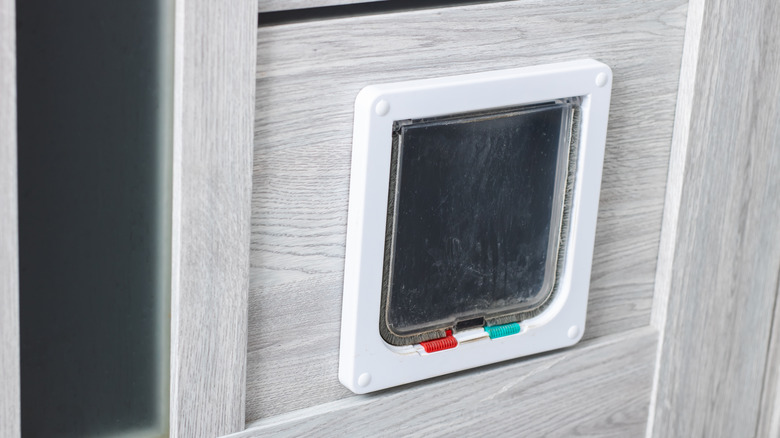
Security issues are among the things you should know before installing a dog door. The convenience of your dog being able to go outside without you opening the door comes with the risk of an intruder being able to access your home. Depending on the size of the pet door, a person could fit through or use the door to reach the lock, which allows them to open the main door easily. Increasing the security of a pet door require placement away from the door lock, along with some sort of locking or control mechanism.
One option is a high-tech door that uses sensors on your dog's collar to open, but if you're trying to avoid electronics, you can choose a model with manual locks. That way, you can lock the door when you're not home or when you're asleep. When adding a doggy door, avoid installing it into a door. Instead, choose a wall installation that's too far away from the door's locks for someone to reach using the doggy door.
Install a wide view peephole to verify who is at your door before opening it
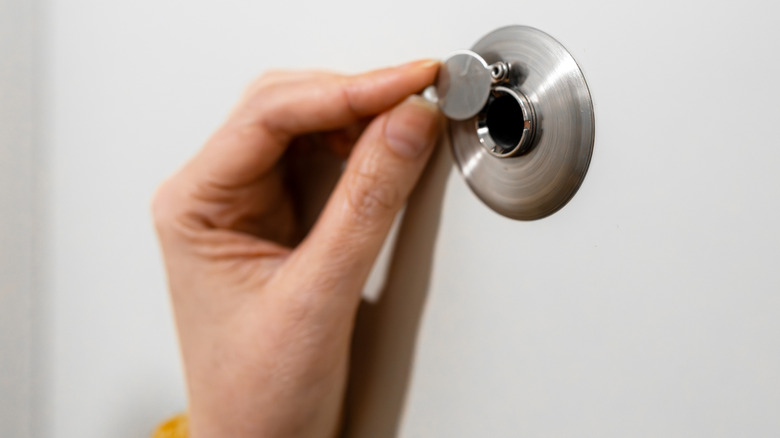
Making your home less attractive and inaccessible is important, but you also need to protect yourself when you're home. One way to do that is by keeping your doors locked and making sure you know who is at the door before you open it. In a world full of camera doorbells, there's still room for peepholes or door viewers for those who prefer a low-tech version. Bonus: A peephole always works since it doesn't rely on electricity, batteries that could die, or wi-fi. Wide-view peepholes give you a better look at the front door area, so you can see if someone is standing off to the side.
When choosing a door viewer, look for one with a 160- to 180-degree field of view to maximize what you can see. It's also important to choose a model with high optical quality, which means you'll get a better view through the lens. Look for an option with a privacy cover — reverse peephole viewers are available to let burglars look through a peephole and see what you have inside your home. The cover is a simple way to block the view.
Stop leaving a spare key outside, even if you think it's secure

We know it's tempting to keep a key somewhere outside, just in case you lock yourself out or lose your keys. Or, maybe you like to leave a key outdoors in case you need to ask a family member to stop by the house unexpectedly. But hiding a spare key could be a safety risk because they're in predictable places and easy to access. And if you've read articles suggesting better places to hide keys, there's always the chance that professional burglars have seen the same content and know where to look.
If you have a key outdoors, especially in obvious spots, like under the door mat or a rock, retrieve it now. Ideally, you shouldn't leave a key outdoors at all, but if you do, put it in a lockbox with a code, so it's more difficult to access. Another option is leaving a key with a neighbor you trust, but that only works as long as they're home when you need to retrieve the spare set of keys. If you do leave a key outdoors and it goes missing, change the locks immediately, and consider upgrading your home's security in other ways in case your house is still a target.
Lock your mailbox to reduce identity theft

It's not always the belongings inside your home that are targets for thieves — some criminals prefer to steal your identity and credit. Your mail could give them information they need to do so. Newer neighborhoods typically have locked cluster mailboxes in central locations, due to the U.S. Postal Service requiring it. However, if you live in an older neighborhood or a rural area, you might still have an individual mailbox on your property. Installing a locking mailbox makes it more difficult for thieves to steal your mail.
Before swapping out your old mailbox for a locking model, review the requirements set forth by the postal service. In particular, the slot on a locking mailbox needs to be big enough for normal mail to fit through. In other words, the mail carrier needs to be able to put the mail in easily without having a key. Choose a durable model that's weather-resistant and won't rust easily, so your mail is protected from the elements.
Don't make it obvious when you're gone
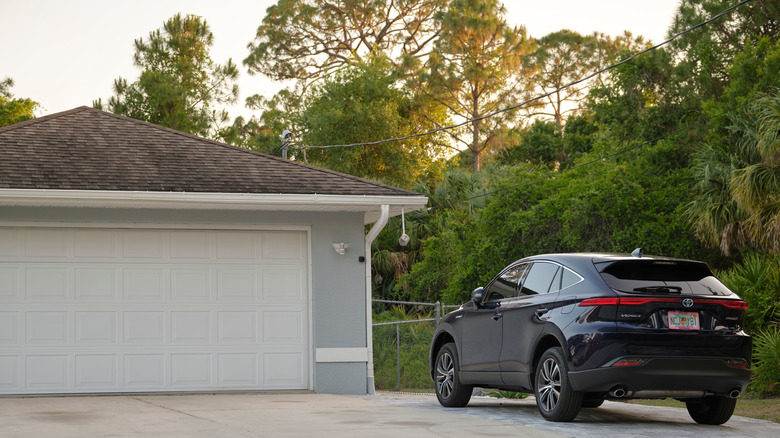
There are many safety tips for extended stays away from home, but one of the most important ones is to keep your plans a secret. Talking about an upcoming trip on social media tips off anyone who can see those posts that you're away, making your home an easy target. Even talking about your plans when you're outside in the yard or at work or the store could allow someone to overhear. Other signs that you're not home include trash cans that remain out all week, no activity in the house, and lawn care that doesn't get done. Keeping quiet about your plans and making your home look like someone is there can help repel burglars.
Never post about a trip or extended period away from home on social media. Be careful about the people you share your plans with as well. At work, if colleagues ask you why you're going to be out of the office, you're not obligated to tell them you'll be out of town. Give the appearance from the outside of the home like you're there — hire a lawn care service to mow while you're gone, or pause your newspaper delivery. Asking a neighbor to park a car in your driveway makes it look like someone is home, especially if they're using the car regularly. You can also leave a TV or radio going to create noise or hire a house sitter to ensure people are coming in and out of the house.