

The Forgotten Pantry Liquid That Makes Dirty Silverware Sparkle And Shine
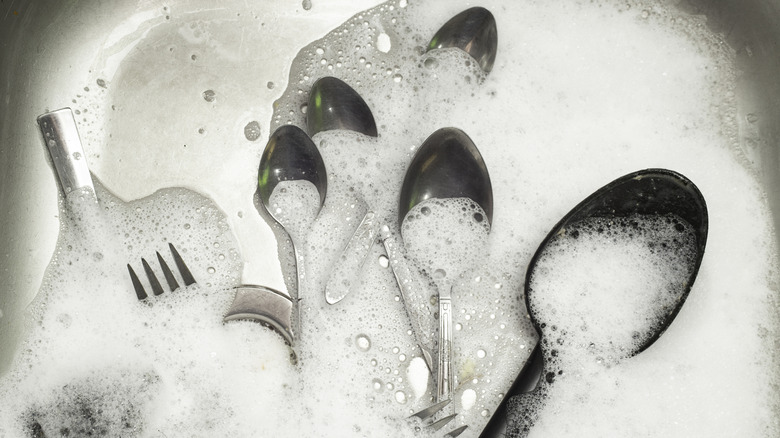
The default approach to cleaning silverware is using dishwashing soap and warm water. As with most kitchen utensils, silverware responds well to this cleaning method, especially when manually washed by hand. Not only does this effectively remove food residues and grime that get trapped in between grooves, but it is also the Martha Stewart way to prevent silverware from tarnishing. However, even careful handwashing doesn't guarantee a lasting shine. When you notice your silverware losing its luster, there's no need to fret because the solution may already be in your pantry. In case you don't know it yet, glycerin can revive dull or tarnished silver utensils, restoring their shine and making them sparkle once again.
According to Muffetta Krueger, a professional cleaner who spoke to Homes & Gardens, glycerin works two ways when used to clean silverware. First, it cleans the utensils; next, it forms a protective barrier that helps preserve the silver while preventing future tarnish. As such, she also has a pro hack to keep silverware shiny and bright for longer. "Store your silverware wrapped up in a glycerin-treated cloth to slow down tarnishing," she said.
Glycerin cleans silverware without scratching the surface
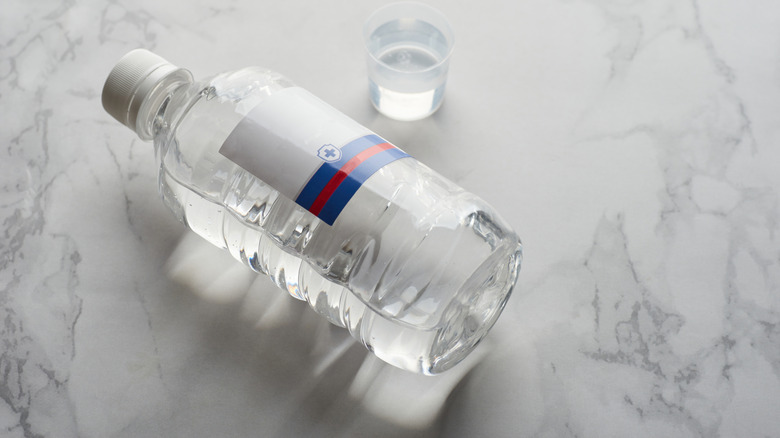
As a common pantry item, glycerin is typically used as a humectant or a moisture retainer when baking cakes and other goods. This clear, odorless, and sweet liquid derived from plant oils or animal fats is not marketed as a household cleaning product, but there are a variety of ways this lesser-known ingredient can clean your home. When used on silverware, glycerin works gently to loosen stuck-on residue, fingerprints, and other dirt without scratching the surface. At the same time, the protective layer it leaves behind may minimize oxidation, which is responsible for tarnishing. In so doing, the compound slows down the rate at which silver flatware becomes dull again.
To clean your silverware with glycerin, mix one part of the compound with two parts water, then gently rub the solution into your forks, spoons, and knives using a microfiber cloth. Once done, rinse with warm water and dry thoroughly using a separate microfiber towel. You may also use the same dry cloth to polish them one by one. If you're tired of seeing cloudy forks and dull spoons in your kitchen drawer, this pantry liquid offers an easy and affordable way to revive your silverware's brilliant shine. Not only that, but it doesn't have a strong odor and doesn't release toxic fumes, unlike more aggressive cleaning solutions.