

Not Landscape Fabric Or Vinegar: This Simple Addition Helps Prevent Weeds In Pea Gravel
We may receive a commission on purchases made from links.
Some of the best stone landscaping ideas make your garden easier to maintain, adding charm by the wheelbarrow load while reducing the time you spend pulling weeds. Pea gravel paths are a favorite because they add charm and texture to your garden, making your plants pop and creating a uniquely satisfying experience with the crunchy sound they make under your feet as you walk. However, if you don't install a solid base of decomposed granite or crushed stone, followed by a layer of weed fabric and pea gravel, weeds can quickly take over.
Many people rely on landscape fabric to help block weeds on gravel paths, but not many use a layered approach that fully prevents weed growth. Whether or not you use tricks like landscape fabric or vinegar, weeds will find a way if your path isn't built properly from the ground up. Many people skip the important base layer of decomposed granite, a material increasingly used as a replacement for concrete paths, which provides a firm surface that compacts well. It also resists shifting, which is a problem with pea gravel since it never packs completely.
Build a compacted base to dramatically reduce weeds
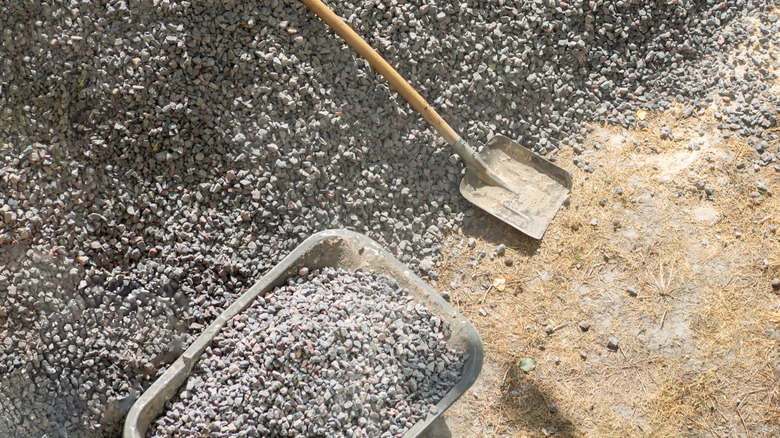
When building a pea gravel path, start by compacting the soil, then add a layer of crushed stone to help stabilize the surface. This helps create an environment where roots struggle to survive. Then, on top of that, you place landscape fabric and pea gravel, which blocks weed growth even further. You need at least two to four inches of pea gravel to have a nice, stable surface that stops weeds from sprouting. Then, with a little light maintenance, you can easily maintain a pea gravel path with occasional raking to remove organic debris. A small amount of hand pulling to keep weeds from spreading on your path may be required, but nothing too difficult.
Skipping any of these steps often leads to persistent weed problems over time. Whether it's neglecting to compact the soil, leaving out the landscape fabric, or skipping the foundation of crushed stone, the result is either a path that sinks, shifts, or becomes overwhelmed with weeds. While pea gravel is an ideal choice for paths and trouble spots in your yard, and it can be fun to pick the perfect pea gravel color for your landscaping, without a properly prepared base, even the most attractive installation will look bad in a few years.
Compact soil, stone, and landscape fabric create a weed-resistant path
Soil compaction is important for path construction because it creates a stable base. It also removes the space between particles of soil that allows air and water to move freely, creating an unfavorable environment for plant roots. Although you may be excited to put the final color in place, the best practice is to start with a compacted base. If you're willing to put in a little elbow grease, you can get an 8-inch-by-8-inch Steel Handle Tamper for about $40. Otherwise, you can rent a compactor at a cost of about $100 per day, and you can get all of your paths done at once.
After compacting the soil, a layer of crushed stone or decomposed granite is essential for blocking root growth. Costs vary for crushed stone depending on where you live, but a layer of this, covered with landscape fabric and a few inches of pea gravel, will allow water to drain all the way through while still blocking weed growth. If necessary, you can add more layers of pea gravel to continue to keep root and weed growth blocked. It's still recommended that you do some light maintenance, including hand pulling, raking, and using natural remedies like boiling water, salt, or vinegar to prevent weeds from growing in gravel, but your pea gravel paths will be much easier to maintain if they're built properly.