

The Easy-To-Grow Houseplant That Looks Like A Mini Tree

Nothing brings the outdoors indoors like a mini tree. But, if you don't have space in your home for a big majesty palm or fiddle-leaf fig, there's another option. Look to Dracaena Cintho, one of the most popular members of the expansive Dracaena genus. Although commonly called a corn plant, the Dracaena Fragrans 'Cintho' is just one of roughly 170 known dracaena species. This group includes surprisingly varied houseplants such as lucky bamboo and the snake plant, both of which look nothing like trees. Regardless of their differences, most dracaena varieties share defining traits: long, spear or grass-shaped leaves that cascade or fan out from thick, cane-like stems, often decorated with dramatic variegation in the form of white stripes, yellow edges, or bold green banding. As a note of caution, dracaena plants contain saponins, compounds that are toxic to dogs and cats if ingested. So pet owners should choose placement wisely.
When grown as an indoor plant, it thrives in windowless rooms and stands out for its unmistakable mini-tree silhouette. It typically tops out around 3 feet, with a woody trunk and a crown of arching, dark and light-green leaves that resemble the blades of corn stalks. This gives the plant an almost palm-like appearance, which is why garden centers often pot multiple canes together in staggered tiers to enhance its sculptural form. Like most dracaena plants, the corn plant is low-maintenance, thriving in bright, indirect sunlight but adapting well to lower light conditions. (Refer to these tips for more information on how to grow and take care of corn plants.) As houseplants, even the largest dracaenas usually remain below 8 feet, making them manageable alternatives to indoor trees.
Other tree-like houseplants to give your home a forest feel
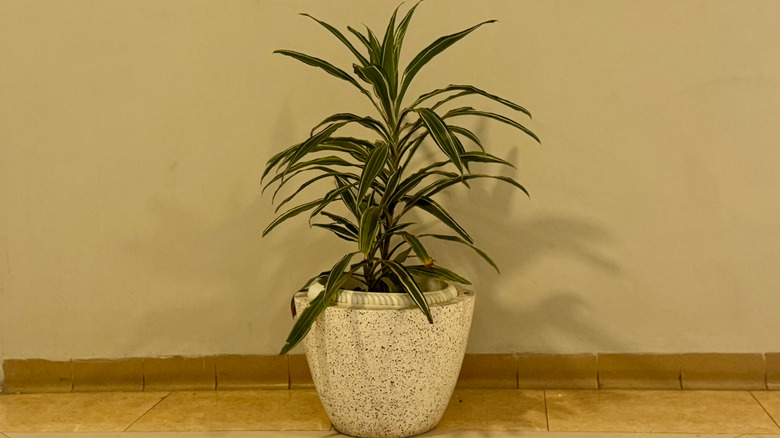
While the Dracaena Cintho most convincingly mimics the look of a miniature tree, several other species in the genus can create the same upright, architectural effect. Options like the dragon tree and the Madagascar dragon tree, or marginata, which can eventually reach around 6 feet, offer striking, treelike silhouettes supported by their narrow stems and fountain-like foliage. Mass cane plants more broadly follow this same structural pattern, with elongated stems and leafy crowns that naturally emphasize height and form in a room. Despite the huge amount of aesthetic variance between species, care instructions remain pretty consistent – you can refer to this guide to properly caring for a dracaena plant at home.
Beyond dracaenas, many classic houseplants contribute to a forest-like feel by adding vertical dimension, and imitating the branching structure of outdoor trees. Indoor trees such as citrus trees, fiddle leaf figs, rubber plants, scheffleras, and money trees contribute varying leaf shapes and trunk forms that enhance the sense of height and drama in a living space. These plants succeed indoors because, much like dracaenas, they adapt well to container growth and can be maintained at manageable heights while still offering the visual weight typically associated with larger outdoor trees. Even a single specimen placed strategically in a corner can shift the atmosphere of a room, creating the impression of a lush, enclosed retreat.