

Help Your Pothos Plants Thrive With An Easy Rice Water Hack
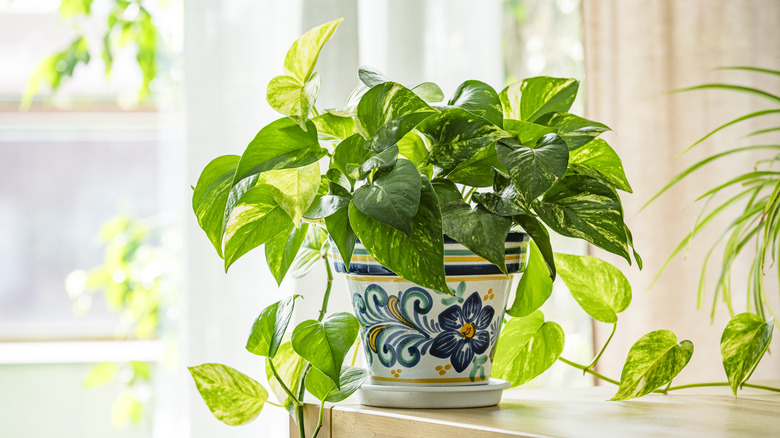
If you want to give your pothos a nutrient boost without buying commercial fertilizer, always keep your rice water after washing or cooking rice. That leftover water can contain anywhere from 7% to 70% of rice's water-soluble nutrients – nutrients that are great for plant health, including potassium, nitrogen, phosphorus, zinc, and B vitamins. When you rinse rice, those nutrients mix with starches that turn the clear water cloudy. Those starches are also beneficial to your pothos – they feed the soil bacteria such as lactobacilli and mycorrhizae fungi, microorganisms that break down nutrients and provide energy to the plant. Because pothos prefer milder fertilizers, rice water offers an easy and natural way to promote stronger vines, greener leaves, and steady, balanced growth. You can also use the fertilizer outdoors, as well since rice can serve as a fertilizer in your garden.
The key is keeping it simple: only use plain, unseasoned rice – short-grain, long-grain, jasmine, or basmati all work. It's useful to note that white rice produces more nutritious rice water than brown rice, according to a 2023 study. Although brown rice grains contain higher mineral content, they don't leach these nutrients into water as readily as white rice grains – white rice water has 5% to 208% more nutrients than brown rice water. You can still use brown rice water to fertilize your plants — just know it's not as potent. Over time, consistent but moderate use of your rice water fertilizer strengthens the soil ecosystem, enabling your pothos to store more energy from starches and activate nutrients as they need them. However, don't feed your pothos with rice water more than once a month.
Different types of rice water to help your pothos thrive

There are three types of rice water to use on plants – rinsed, boiled, and fermented — and each produces a slightly different nutrient profile. Simple rinsed rice water is the fastest: soak uncooked rice for 20 to 30 minutes and occasionally agitate it to release starches and minerals into the water. Boiled rice water contains even more starch because the heat breaks down the grains and releases additional nutrients. Just make sure the water is unsalted and fully cooled before use.
Fermented rice water is the most powerful option of the three. With each day of fermentation, nutrient levels increase — concentrations of almost all elements present increased by 7.4% to 57%, per research published in Heliyon. To make it, place your rice in a jar and fill it with water, leaving some room at the top, then cover it loosely with a cloth. Set the jar aside in a dark place for the next three to nine days. The rice water is considered fermented when the liquid smells slightly sour. White mold on the surface is normal, but dark spotting indicates contamination and means you should discard the batch. After straining the liquid, dilute the fermented rice water at a ratio of one to two with plain water to prevent overwhelming your pothos. And whichever method you choose, use rice water sparingly to avoid buildup or mold.